Introduction
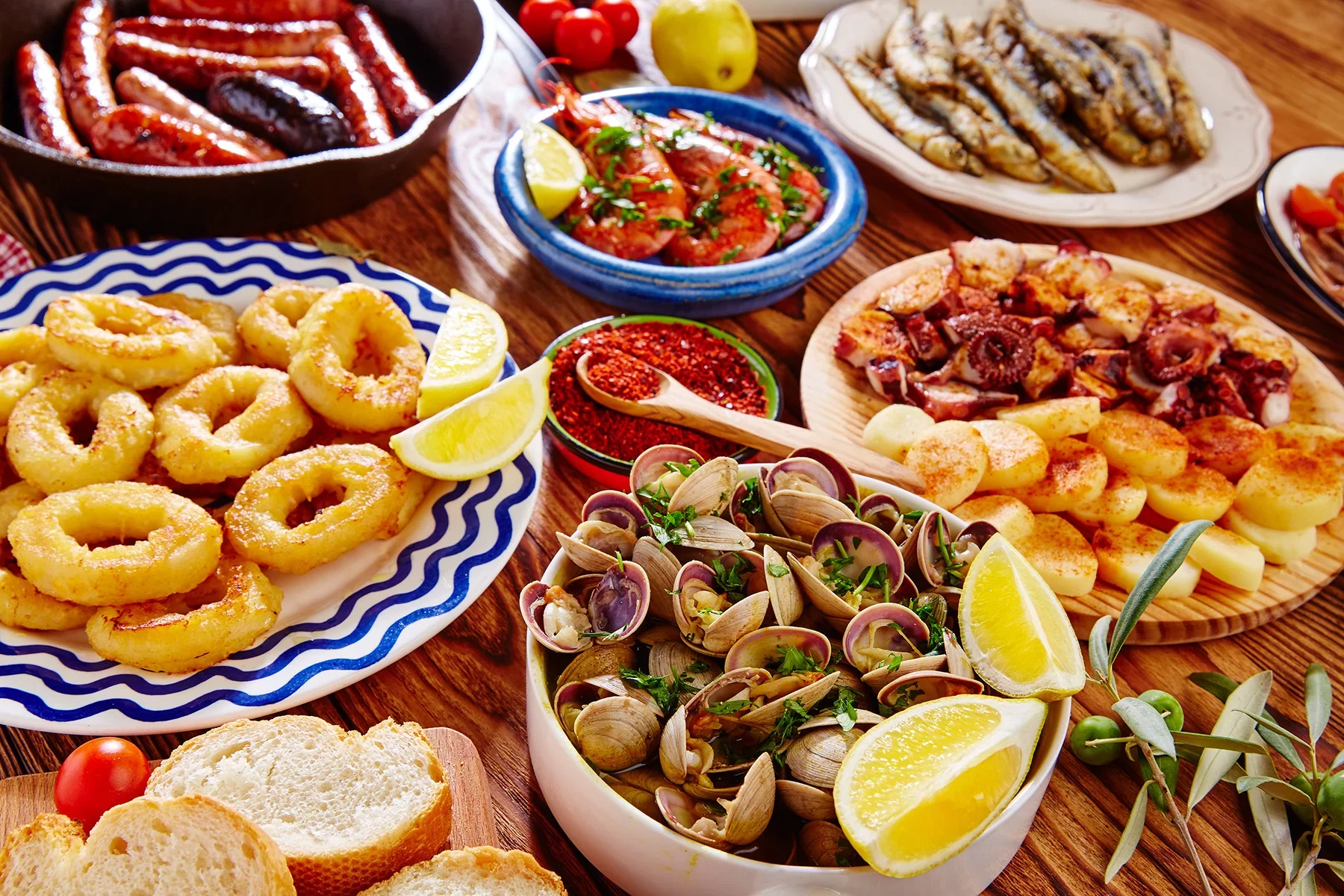
Spanish food is one of the biggest reasons travelers fall in love with Spain. Yet most online guides barely scratch the surface of what authentic Spanish cuisine actually looks like. Many articles repeat the same tourist dishes while ignoring the incredible regional diversity, culinary traditions, and local food culture that make Spain one of Europe’s
greatest gastronomic destinations.
The reality is that Spanish food changes dramatically from region to region. Seafood dominates the northern Atlantic coast, rice dishes thrive along the Mediterranean, mountain villages specialize in slow-cooked meats, and southern Spain celebrates olive oil, tapas, and refreshing cold soups.
What makes food in Spain truly unforgettable is its connection to local life. Meals are social, ingredients are fresh, and recipes are often passed down through generations. Whether you are eating pintxos in San Sebastián, paella in Valencia, or jamón ibérico in Andalusia, every dish tells a story about Spanish culture and history.
This complete guide explores the best Spanish food from Spain, including authentic regional dishes, famous tapas, desserts, drinks, dining customs, hidden culinary gems, and insider food tips travelers should know before visiting Spain in 2026.
Why Spanish Food Is So Famous
Spain is considered one of the world’s top food destinations because of its incredible balance between simplicity and flavor. Unlike cuisines that rely heavily on sauces or complicated techniques, traditional Spanish food focuses on fresh local ingredients prepared with care.
Several factors make Spanish cuisine globally respected.
Fresh Mediterranean Ingredients
Spanish cooking depends heavily on:
- Olive oil
- Tomatoes
- Garlic
- Seafood
- Rice
- Fresh vegetables
- Paprika
- Saffron
The quality of ingredients is often more important than complexity.
Regional Diversity
One of Spain’s greatest culinary strengths is regional variety. Every part of the country has developed its own food identity shaped by climate, geography, and history.
UNESCO Mediterranean Diet
Spain follows the Mediterranean diet, which is often considered one of the healthiest eating styles in the world.
Tapas Culture
Tapas are not just food. They are part of Spanish social life and encourage slow, shared dining experiences.
Culinary Innovation
Spain is also home to some of the world’s most innovative chefs and Michelin-star restaurants.
Quick Overview of Spanish Cuisine
| Feature | Why It Matters |
| Regional diversity | Every region has unique dishes |
| Seafood traditions | Fresh Atlantic & Mediterranean seafood |
| Olive oil culture | Essential part of daily cooking |
| Tapas lifestyle | Social dining experience |
| Historic influences | Roman, Moorish & Mediterranean roots |
What Makes Spanish Cuisine Unique?
Spanish cuisine reflects centuries of cultural influences and local traditions.
Roman Influence
The Romans introduced olive cultivation and wine production to the Iberian Peninsula.
Moorish Influence
The Moors brought:
- Rice
- Citrus fruits
- Almonds
- Spices
- Advanced irrigation systems
These ingredients still shape southern Spanish cooking today.
Mediterranean Lifestyle
Meals in Spain are designed to be enjoyed slowly with friends and family.
Seasonal Eating
Most traditional recipes depend on local seasonal ingredients.
Regional Spanish Cuisine Explained
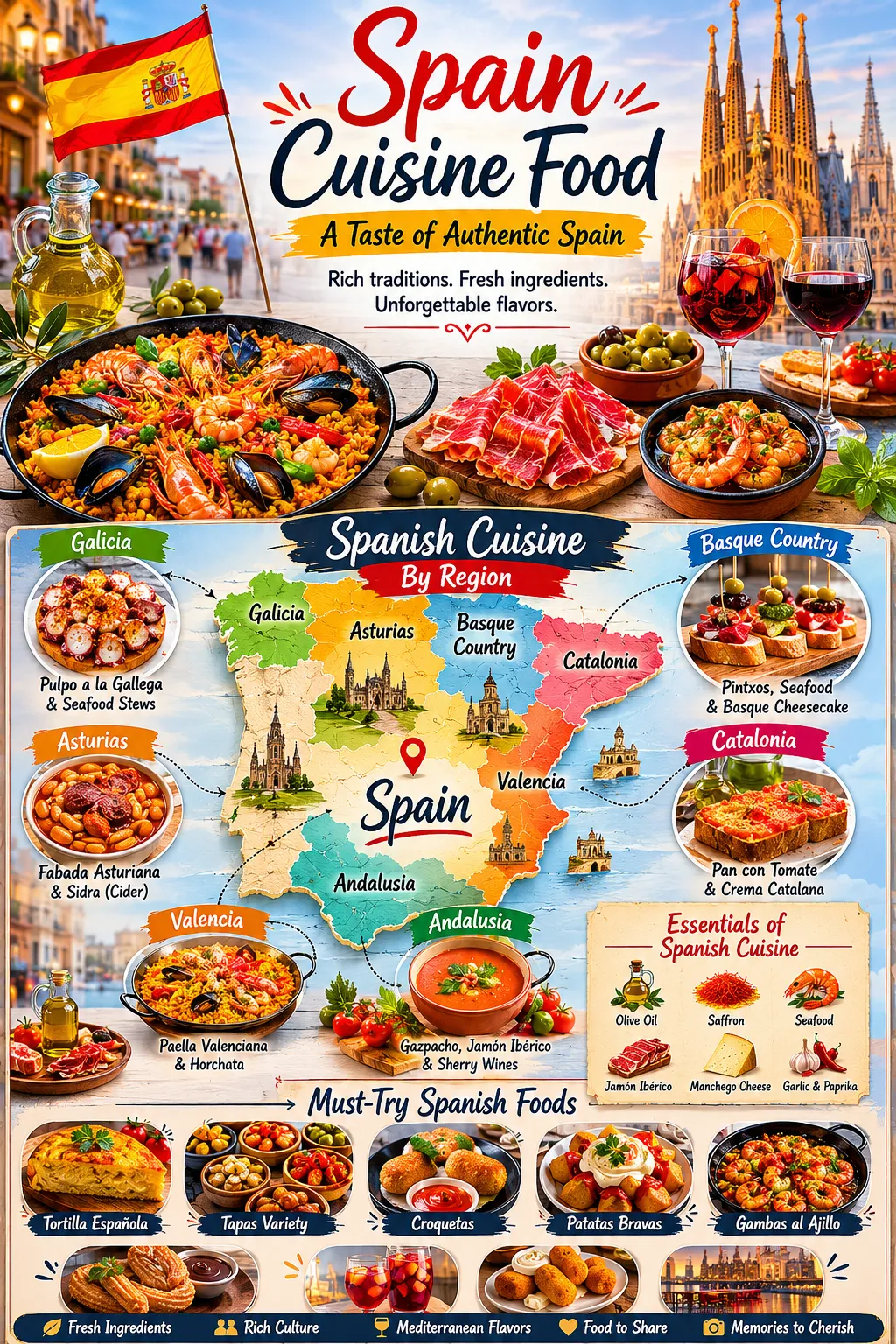
One of the most important things travelers should understand is that there is no single “Spanish food.” Spain’s regions have distinct culinary traditions.
Andalusian Cuisine
Andalusia in southern Spain is famous for olive oil, tapas, seafood, and refreshing cold soups.
Popular dishes include:
- Gazpacho
- Salmorejo
- Fried fish
- Jamón ibérico
- Rabo de toro
Andalusian cuisine reflects strong Moorish influences with garlic, almonds, and citrus flavors.
Best Andalusian Food Cities
- Seville
- Málaga
- Granada
- Córdoba
- Cádiz
Basque Cuisine
The Basque Country is one of Europe’s top food destinations.
Famous Basque foods include:
- Pintxos
- Bacalao al pil pil
- Txangurro
- Basque cheesecake
San Sebastián is globally known for fine dining and Michelin-star restaurants.
Catalan Cuisine
Catalonia combines mountain ingredients with Mediterranean seafood.
Traditional dishes include:
- Pan con tomate
- Escalivada
- Crema catalana
- Fideuà
Barcelona has become one of Europe’s most exciting food cities.
Valencian Cuisine
Valencia is the birthplace of authentic paella.
Popular Valencian foods include:
- Paella Valenciana
- Arroz negro
- Horchata
- Seafood rice dishes
Galician Cuisine
Galicia in northwestern Spain is famous for seafood.
Must-try dishes include:
- Pulpo a la gallega
- Percebes
- Empanada gallega
- Caldo gallego
Galician seafood is considered among the best in Europe.
35 Traditional Spanish Foods You Must Try
1. Paella Valenciana
Authentic Valencian paella contains rabbit, chicken, green beans, saffron, and rice cooked over an open flame.
Real paella is very different from many tourist versions.
2. Jamón Ibérico
This world-famous cured ham comes from Iberian pigs and is one of Spain’s most prized foods.
3. Tortilla Española
Spanish tortilla is a thick potato omelet served across the country.
4. Patatas Bravas
Fried potatoes topped with spicy brava sauce and aioli.
5. Gazpacho
Cold tomato soup from Andalusia perfect for hot summer days.
6. Salmorejo
A creamier Córdoba-style cold soup topped with egg and ham.
7. Croquetas
Crunchy fried béchamel fritters filled with ham, cod, mushrooms, or chicken.
8. Pulpo a la Gallega
Galician octopus with olive oil and paprika.
9. Gambas al Ajillo
Garlic shrimp cooked in sizzling olive oil.
10. Pan con Tomate
Catalan toasted bread rubbed with tomato, garlic, and olive oil.
11. Pimientos de Padrón
Blistered green peppers sprinkled with sea salt.
12. Churros con Chocolate
Fried pastries served with thick hot chocolate.
13. Fabada Asturiana
A rich bean stew from Asturias.
14. Cocido Madrileño
Madrid’s traditional chickpea and meat stew.
15. Fideuà
A noodle-based seafood dish similar to paella.
16. Bacalao al Pil Pil
Basque cod cooked in garlic olive oil sauce.
17. Albóndigas
Spanish meatballs often served in tomato sauce.
18. Migas
Fried breadcrumbs with garlic and pork.
19. Calamares a la Romana
Classic fried squid rings.
20. Boquerones en Vinagre
Anchovies marinated in vinegar and garlic.
21. Empanada Gallega
Savory Galician pie filled with seafood or meat.
22. Escalivada
Roasted vegetables served with olive oil.
23. Arroz Negro
Black rice dish made with squid ink.
24. Leche Frita
Traditional fried milk dessert.
25. Tarta de Santiago
Almond cake from Galicia.
26. Sobrasada
Mallorcan cured sausage spread.
27. Morcilla
Traditional Spanish blood sausage.
28. Txangurro
Stuffed Basque spider crab dish.
29. Cochinillo Asado
Roast suckling pig from Segovia.
30. Cachopo
Breaded meat stuffed with cheese and ham.
31. Rabo de Toro
Slow-cooked oxtail stew from Córdoba.
32. Huevos Rotos
Eggs served over fried potatoes and ham.
33. Percebes
Rare goose barnacles from Galicia.
34. Escabeche Mussels
Seafood marinated in vinegar and spices.
35. Crema Catalana
Catalonia’s famous caramelized custard dessert.
Spanish Tapas Culture Explained
Tapas are one of the most important parts of Spanish food culture.
Rather than eating a single large meal, Spaniards often enjoy multiple small dishes shared among friends.
Popular tapas include:
- Croquetas
- Olives
- Tortilla española
- Patatas bravas
- Seafood
- Cured meats
- Cheese
In cities like Granada, tapas are sometimes served free with drinks.
Best Cities for Tapas
| City | Tapas Experience |
| Granada | Free tapas culture |
| Seville | Traditional tapas bars |
| Madrid | Modern tapas scene |
| Málaga | Seafood tapas |
| San Sebastián | Pintxos culture |
Spanish Meal Times & Dining Culture
Spanish meal schedules are very different from many other countries.
Typical Meal Times in Spain
| Meal | Time |
| Breakfast | 7–9 AM |
| Lunch | 2–4 PM |
| Afternoon snack | 5–6 PM |
| Tapas | 7–9 PM |
| Dinner | 9–11 PM |
Lunch is usually the largest meal of the day.
Meals are social experiences and often last much longer than in other countries.
Essential Ingredients in Spanish Cooking
Spanish cuisine relies heavily on simple but high-quality ingredients.
Most Common Ingredients
- Olive oil
- Garlic
- Tomatoes
- Seafood
- Rice
- Paprika
- Saffron
- Iberian ham
- Bread
- Wine
Ingredient quality matters more than complicated preparation.
Best Spanish Desserts
Spanish desserts are often overlooked by travelers.
Traditional Desserts to Try
Crema Catalana
Catalonia’s version of crème brûlée.
Flan
Creamy caramel custard dessert.
Turrón
Traditional nougat candy popular during Christmas.
Polvorones
Soft crumbly holiday cookies.
Ensaimada
Sweet pastry from Mallorca.
Famous Spanish Drinks
Spain is also known for its excellent drinks culture.
Sangria
Fruit wine punch popular among tourists.
Tinto de Verano
Red wine mixed with soda or lemonade.
Locals often prefer this over sangria.
Vermouth
A traditional pre-lunch drink served in many bars.
Cava
Spanish sparkling wine from Catalonia.
Rioja Wine
One of Spain’s most respected wine regions.
Best Food Cities in Spain
Barcelona
Best for modern gastronomy and Catalan
cuisine.
San Sebastián
Best for Michelin dining and pintxos.
Valencia
Best for authentic paella.
Seville
Best for tapas and Andalusian cuisine.
Madrid
Best for traditional taverns and regional dishes.
Hidden Food Gems Most Tourists Miss
Menú del Día
Many local restaurants offer affordable lunch menus that include:
- Starter
- Main course
- Dessert
- Bread
- Drink
These meals provide excellent value.
Local Food Markets
Visit markets like:
- La Boqueria
- Mercado de San Miguel
- Atarazanas Market
Neighborhood Taverns
Smaller local bars often serve better food than tourist restaurants.
Spain vs Other European Food Destinations
espana vs Italy
| Spain | Italy |
| Tapas sharing culture | Pasta-centered meals |
| Late dinners | Earlier dining |
| Seafood diversity | Pizza & pasta focus |
| Olive oil heavy | Cheese-heavy cuisine |
Spain vs France
it generally feels:
- More relaxed
- More social
- More affordable
- Less formal
Best Time to Visit Spain for Food Lovers
Spring
Best for festivals and seafood.
Summer
Perfect for beach dining and gazpacho.
Fall
Excellent for wine tourism and harvest season.
Winter
Ideal for stews and Christmas desserts.
Budget Food Travel Tips in Spain
Spain can be very affordable for food travelers.
Budget Tips
- Eat lunch instead of dinner
- Look for menú del día
- Avoid restaurants beside landmarks
- Use bakeries for breakfast
- Share tapas
Average Food Costs in Spain
| Item | Average Price |
| Coffee & pastry | €3–6 |
| Tapas plate | €3–8 |
| Menú del día | €12–18 |
| Mid-range dinner | €20–40 |
Luxury Food Experiences in Spain
Spain is also one of Europe’s best luxury culinary destinations.
Top Luxury Experiences
- Michelin-star restaurants
- Wine tours in Rioja
- Gourmet food tours
- Private olive oil tastings
- Basque fine dining
Luxury dining in Spain is often cheaper than Paris or London.
Food Etiquette in Spain
Important Dining Customs
- Sharing dishes is normal
- Bread is served with meals
- Tipping is modest
- Lunches can last hours
- Dinner starts late
Tourist Mistakes to Avoid
Ordering Paella at Night
Authentic paella is traditionally eaten at lunch.
Eating Too Early
Some restaurants do not open until 8 PM.
Choosing Tourist Trap Restaurants
Avoid restaurants with giant photo menus.
Solo, Couple & Family Travel Tips
Solo Travelers
- Sit at tapas bars
- Join food tours
- Explore markets
Couples
- Book rooftop dinners
- Try wine tastings
- Visit Michelin restaurants
Families
Spain is very family-friendly and welcoming to children.
Insider Tips Most Travelers Miss
Vermouth Hour
Locals often drink vermouth before lunch on weekends.
Regional Specialties Matter
Try different dishes in every region.
Small Bars Often Have Better Food
Neighborhood taverns are usually more authentic.
Future Food Travel Trends in Spain (2026)
Spain’s culinary tourism continues evolving.
Emerging Trends
- Sustainable seafood
- Farm-to-table dining
- Culinary tourism
- Wine tourism
- Traditional recipe revival
Travelers increasingly want authentic local experiences over tourist-focused dining.
Frequently Asked Questions
What is the most famous food in Spain?
Paella is Spain’s most internationally famous dish.
What food is Spain known for?
Spain is famous for tapas, seafood, olive oil, jamón ibérico, and Mediterranean cuisine.
Is Spanish food spicy?
Traditional Spanish cuisine is usually flavorful rather than spicy.
What time do Spaniards eat dinner?
Dinner is usually eaten between 9 PM and 11 PM.
What are the best food cities in Spain?
San Sebastián, Barcelona, Valencia, Madrid, Seville, and Málaga
are top culinary destinations.
Is Spain good for vegetarian travelers?
Yes. Many Spanish dishes are vegetarian-friendly.
Final Thoughts
Spanish food from Spain is far more diverse and authentic than most travelers expect. Every region has its own culinary traditions, local ingredients, and historic recipes that reflect centuries of culture and history.
Whether you are enjoying seafood in Galicia, tapas in Seville, pintxos in San Sebastián, or paella in Valencia, food becomes one of the most memorable parts of traveling through Spain.
The true beauty of Spanish cuisine lies in its simplicity, quality ingredients, and social dining culture. Meals are meant to be shared slowly with friends and family.
If you want the best food experiences in Spain, go beyond tourist restaurants, explore regional specialties, and eat where locals eat.
For more Spain travel guides, hidden gems, food experiences, and travel tips, explore more articles on VisitEspanly.com.