Introduction
When people think about Spain, beautiful beaches, historic cities, flamenco music, and world-famous landmarks often come to mind. Yet for many travelers, the real reason to visit is something even more memorable: the incredible connection between food and Spain.
Spanish cuisine is one of the most diverse and celebrated in the world. From authentic paella in Valencia to fresh seafood in Galicia
, pintxos in the Basque Country, and tapas in Andalusia, every region offers unique flavors shaped by centuries of history, geography, and cultural influences.
For first-time visitors, deciding what to eat, where to eat, and which regional specialties are truly worth trying can be overwhelming. This guide solves that problem.
In this complete Spain food guide, you’ll discover the best Spanish dishes, food regions, hidden culinary gems, travel tips, dining etiquette, budgeting advice, luxury experiences, and insider recommendations that help you experience Spain like a local in 2026.
What Is Spanish Food?
Spanish food refers to the culinary traditions developed across Spain’s diverse regions. Unlike many countries with one dominant national cuisine, Spain offers dozens of regional food identities.
Key characteristics include:
- Fresh local ingredients
- High-quality olive oil
- Seafood and fish
- Seasonal vegetables
- Cured meats
- Cheese varieties
- Rice dishes
- Wine culture
- Shared dining experiences
Spanish cuisine combines influences from:
- Roman civilization
- Moorish rule
- Mediterranean trade
- Atlantic fishing traditions
- Indigenous regional cultures
Quick Answer
Spanish food is a diverse cuisine based on fresh ingredients, olive oil, seafood, meats, vegetables, rice, and regional specialties such as paella, tapas, jamón ibérico, tortilla española, and gazpacho.
Why Food Tourism in Spain Is Booming in 2026
Spain consistently ranks among the world’s leading culinary destinations.
Authentic Regional Experiences
Travelers increasingly seek authentic local experiences rather than generic tourist attractions.
Global Recognition
Spain is home to many internationally recognized chefs and Michelin-starred restaurants.
Affordable Quality
Compared to many European destinations, Spain offers exceptional food quality at reasonable prices.
Mediterranean Lifestyle
The Spanish approach to eating emphasizes:
- Leisure
- Family
- Community
- Fresh ingredients
- Healthy living
Mini Summary
combination of authenticity, quality, affordability, and regional diversity makes it one of the world’s best destinations for food-focused travelers.
Best Food Regions in Spain
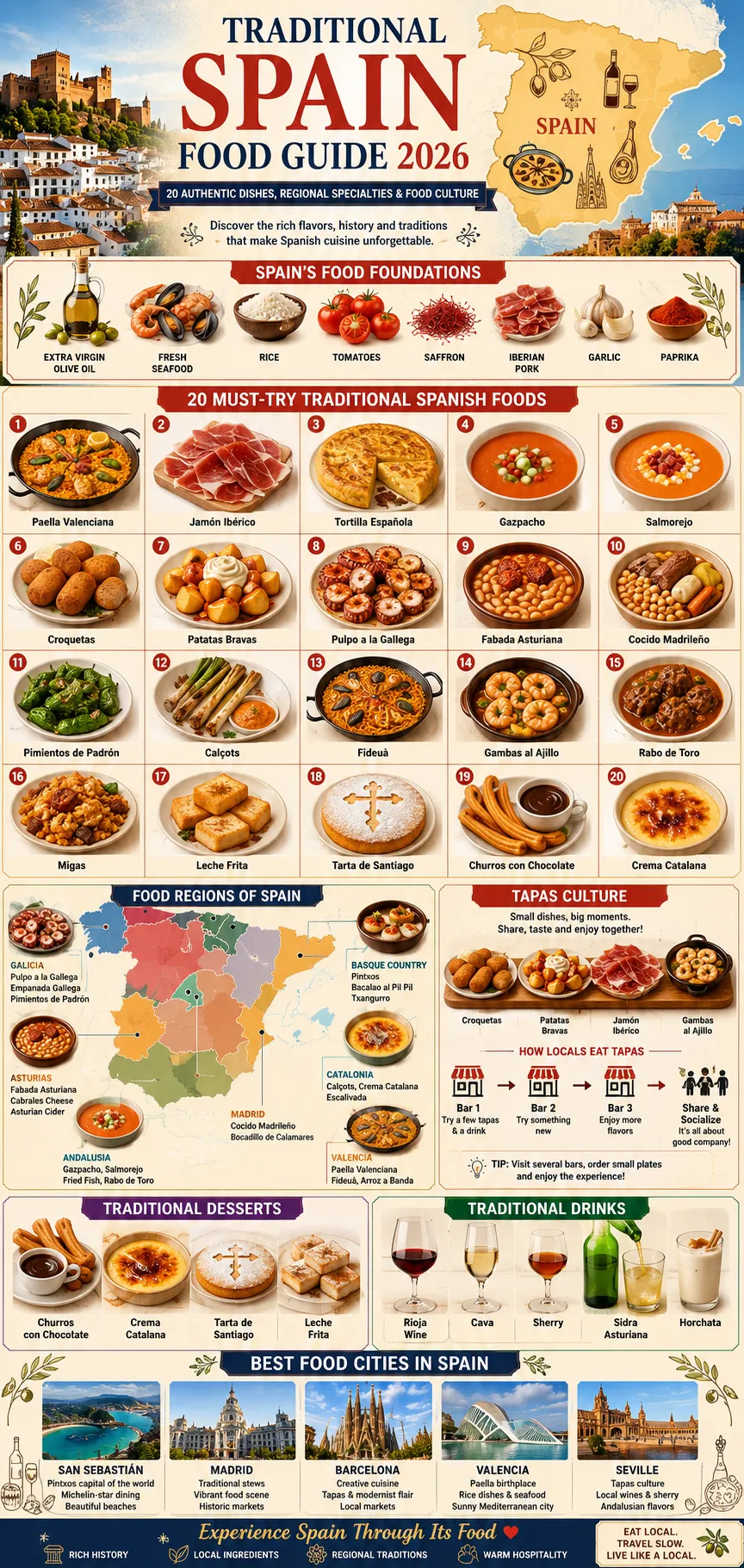
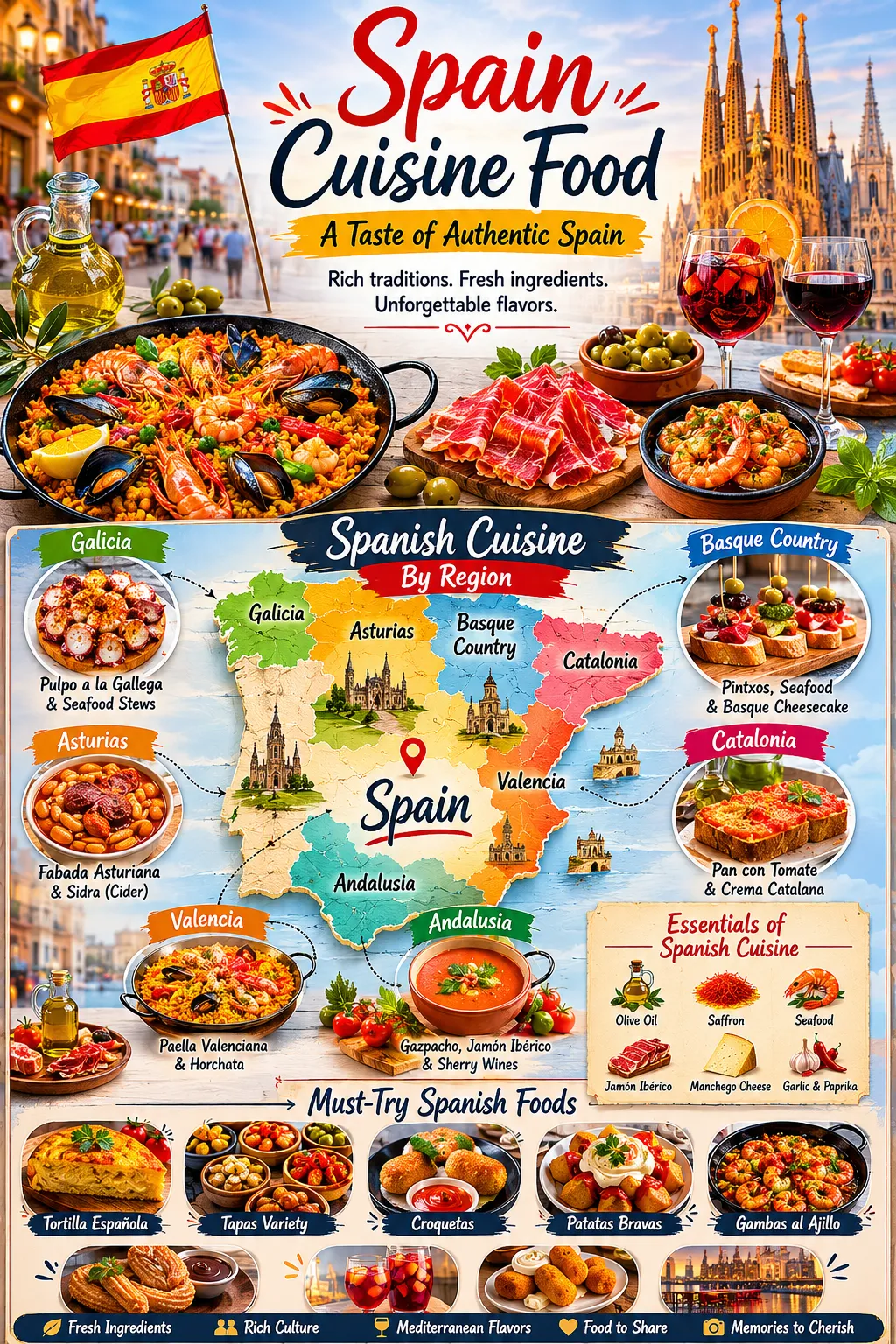
| Region | Famous Foods | Best For |
| Valencia | Paella | Rice dishes |
| Basque Country | Pintxos | Food lovers |
| Andalusia | Gazpacho, Fried Fish | Tapas culture |
| Galicia | Seafood, Octopus | Fresh seafood |
| Catalonia | Escalivada, Crema Catalana | Fine dining |
| Madrid | Cocido Madrileño | Traditional cuisine |
| Asturias | Fabada | Comfort food |
Valencia: Home of Authentic Paella
Valencia is the birthplace of Spain’s most famous dish.
Traditional Valencian paella contains:
- Rice
- Rabbit
- Chicken
- Green beans
- Butter beans
- Saffron
Avoid tourist restaurants offering oversized mixed paella near major attractions.
Basque Country: Spain’s Culinary Capital
Cities such as San Sebastián are considered among Europe’s greatest food destinations.
Highlights include:
- Pintxos bars
- Michelin-star restaurants
- Fresh seafood
- Local wines
Many travelers visit solely for the food scene.
Andalusia: Tapas Paradise
Southern Spain offers:
- Tapas culture
- Gazpacho
- Salmorejo
- Fried seafood
- Sherry wine
Cities like Seville, Granada, and Málaga are excellent culinary destinations.
Galicia: Seafood Heaven
Located in northwestern Spain, Galicia is renowned for:
- Octopus
- Mussels
- Oysters
- Crab
- Lobster
Many Spanish chefs consider Galician seafood among the finest in Europe.
Hidden Culinary Gems Most Tourists Miss
León
Known for free tapas traditions.
Cádiz
Offers exceptional seafood without the crowds found elsewhere.
Logroño
A paradise for wine and tapas lovers.
Extremadura
Famous for:
- Jamón Ibérico
- Cheese
- Traditional rural cooking
Murcia
One of Spain’s most underrated food regions.
Mini Summary
The best culinary experiences often happen outside Spain’s most famous tourist destinations.
35 Must-Try Foods in Spain
| Dish | Region |
| Paella | Valencia |
| Tortilla Española | Nationwide |
| Jamón Ibérico | Extremadura |
| Gazpacho | Andalusia |
| Salmorejo | Córdoba |
| Croquetas | Nationwide |
| Patatas Bravas | Madrid |
| Pulpo a la Gallega | Galicia |
| Fabada | Asturias |
| Pintxos | Basque Country |
| Churros | Nationwide |
| Crema Catalana | Catalonia |
Additional must-try foods include:
- Albóndigas
- Calamares
- Gambas al Ajillo
- Bocadillo de Jamón
- Empanada Gallega
- Pisto
- Migas
- Turrón
- Manchego Cheese
- Sobrasada
- Fideuà
- Arroz Negro
- Cochinillo Asado
- Cachopo
- Boquerones
- Tortas de Aceite
- Ensaladilla Rusa
- Bacalao
- Fabes
- Chorizo
- Morcilla
- Flan
- Polvorones
Best Things to Do for Food Lovers in Spain
Join a Tapas Tour
Perfect for first-time visitors.
Benefits include:
- Local insights
- Hidden restaurants
- Cultural explanations
Visit Local Markets
Top markets include:
- Mercado de San Miguel
- La Boqueria
- Mercado Central
Take a Cooking Class
Learn how to prepare:
- Paella
- Tapas
- Traditional desserts
Wine Tasting
Explore wine regions including:
- Rioja
- Ribera del Duero
- Priorat
Food Festivals
Many towns host annual food celebrations featuring local specialties.
Spain vs Other European Food Destinations
Spain vs Italy
its Pros
- Better tapas culture
- More affordable dining
- Exceptional seafood
Italy Pros
- More globally recognized dishes
- Strong pasta tradition
Spain vs France
Spain Pros
- Better value
- More casual dining
- Greater social food culture
France Pros
- Classical culinary prestige
- Fine dining heritage
Spain vs Portugal
Spain Pros
- Larger culinary diversity
- More regional variation
Portugal Pros
- Simpler seafood cuisine
- Lower prices