Introduction
Spain is one of the world’s greatest food destinations. While many travelers arrive dreaming of paella and tapas, they soon discover that traditional Spain
food is far more diverse than a handful of famous dishes.
Every region of Spain has its own culinary identity shaped by geography, history, climate, and culture. Along the Atlantic coast, seafood dominates local menus. In the mountains of northern Spain, hearty stews provide comfort during cold winters. Mediterranean regions celebrate rice dishes, fresh vegetables, and olive oil-based recipes.
Food is deeply woven into everyday Spanish life. Meals are social occasions, family traditions are preserved through recipes, and regional pride is reflected in every plate.
Whether you’re planning a trip, researching Spanish cuisine, or simply curious about what food Spain is famous for, this guide will help you understand the country’s rich gastronomy, discover iconic dishes, and experience authentic Spanish food like a local.
What Makes Traditional Spanish Food Unique?
Traditional Spanish cuisine is built on simplicity and quality. Rather than masking flavors with heavy sauces, Spanish cooking highlights fresh ingredients and time-tested techniques.
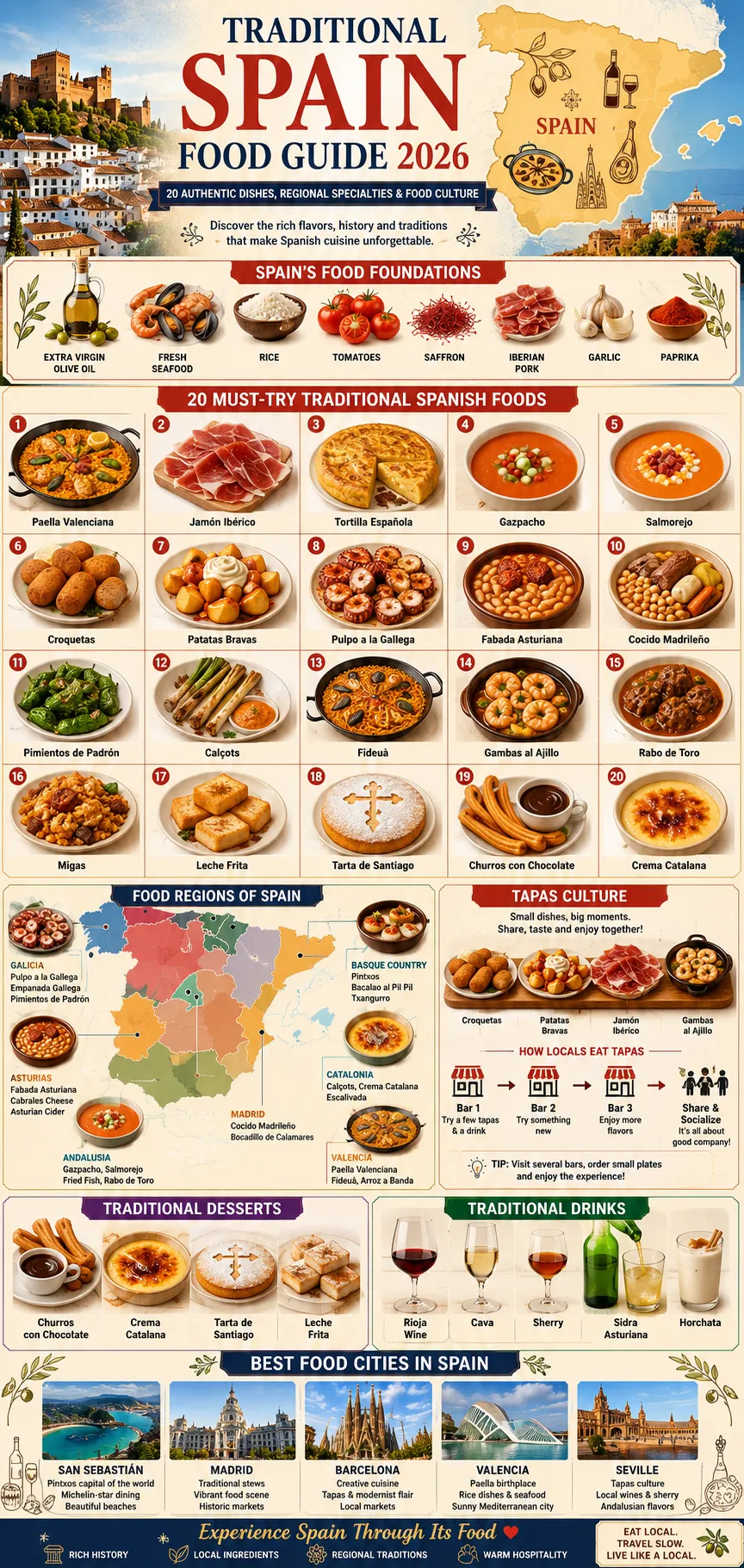
The foundation of Spanish gastronomy includes:
- Extra virgin olive oil
- Fresh seafood
- Seasonal vegetables
- Rice
- Legumes
- Iberian pork
- Garlic
- Tomatoes
- Paprika
- Saffron
One reason Spanish food stands out globally is its connection to the Mediterranean diet, often regarded as one of the healthiest eating patterns in the world.
Spanish dishes tend to focus on freshness, seasonality, and balance. A simple plate of tomatoes drizzled with olive oil can be just as celebrated as an elaborate seafood feast.
Quick Answer
Traditional Spain food includes Paella Valenciana, Jamón Ibérico, Tortilla Española
, Gazpacho, Croquetas, Patatas Bravas, Pulpo a la Gallega, Fabada Asturiana, Cocido Madrileño, and many regional specialties.
The History of Spanish Cuisine
The story of Spanish food stretches back thousands of years.
Roman Influence
The Romans transformed the Iberian Peninsula by introducing:
- Olive cultivation
- Wine production
- Bread-making traditions
Today, olive oil remains one of Spain’s most important culinary ingredients.
Moorish Influence
For centuries, Moorish civilization influenced Spanish culture and agriculture.
Their legacy introduced:
- Rice
- Almonds
- Citrus fruits
- Saffron
- Advanced irrigation systems
Without Moorish influence, iconic dishes like paella would not exist.
The Discovery of the Americas
After Spain’s exploration of the Americas, several ingredients became essential to Spanish cooking:
- Tomatoes
- Potatoes
- Peppers
- Chocolate
These ingredients are now central to many traditional Spanish meals.
Modern Spanish Gastronomy
Today, Spain successfully balances tradition and innovation. While historic recipes remain beloved, Spanish chefs have also helped revolutionize global cuisine through modern culinary techniques.
Spanish Food Culture and Dining Traditions
Food in Spain is more than nourishment.
It is a way of life.
Meals are designed to be enjoyed slowly, often accompanied by conversation, family gatherings, and social interaction.
Typical Spanish Meal Schedule
| Meal | Typical Time |
| Breakfast | 7:00–10:00 AM |
| Mid-Morning Snack | 11:00 AM |
| Lunch | 2:00–4:00 PM |
| Tapas Time | 6:00–8:00 PM |
| Dinner | 9:00–11:00 PM |
Many visitors are surprised to discover that restaurants may not open for dinner until after 8:00 PM.
Key Food Traditions
- Sharing dishes with friends and family
- Long leisurely lunches
- Late dinners
- Local market shopping
- Regional culinary pride
Food is viewed as an experience rather than simply something to eat.
Why Traditional Spain Food Is Worth Exploring in 2026
Food tourism is becoming one of the biggest reasons travelers visit Spain.
Modern travelers increasingly seek:
- Authentic local experiences
- Regional specialties
- Food-focused itineraries
- Sustainable gastronomy
- Cooking classes and culinary tours
Spain offers all of these experiences while remaining more affordable than many other European culinary destinations.
20 Must-Try Traditional Spanish Foods
1. Paella Valenciana
Paella is arguably Spain’s most famous dish.
Authentic Paella Valenciana traditionally contains:
- Rice
- Chicken
- Rabbit
- Green beans
- Saffron
- Olive oil
The prized crispy rice layer at the bottom is called socarrat.
2. Jamón Ibérico
Jamón Ibérico is Spain’s most prestigious cured ham.
The highest-quality version comes from acorn-fed Iberian pigs and is known for its rich, nutty flavor.
3. Tortilla Española
This Spanish omelet combines eggs, potatoes, and sometimes onions.
It can be enjoyed hot or cold and is commonly served as a tapa.
4. Gazpacho
Originating in Andalusia, gazpacho is a refreshing cold soup made from:
- Tomatoes
- Cucumber
- Garlic
- Olive oil
- Vinegar
It is particularly popular during hot summer months.
5. Salmorejo
Salmorejo is a thicker version of gazpacho from Córdoba.
It is usually topped with chopped egg and Jamón Ibérico.
6. Croquetas
These creamy fried bites are made with béchamel sauce and various fillings.
Popular options include:
- Ham
- Chicken
- Cod
- Cheese
7. Patatas Bravas
One of Spain’s most beloved tapas dishes.
Crispy potatoes are served with spicy tomato sauce and aioli.
8. Pulpo a la Gallega
Galician-style octopus is cooked until tender and seasoned with paprika, olive oil, and sea salt.
9. Fabada Asturiana
A hearty bean stew from Asturias featuring:
- White beans
- Chorizo
- Blood sausage
- Pork
10. Cocido Madrileño
Madrid’s signature stew combines chickpeas, vegetables, meats, and sausages.
11. Pimientos de Padrón
These small peppers are lightly fried and sprinkled with sea salt.
Most are mild, but occasionally one is surprisingly spicy.
12. Calçots
A Catalan favorite consisting of grilled spring onions served with romesco sauce.
13. Fideuà
Similar to paella but made with short noodles instead of rice.
14. Gambas al Ajillo
Shrimp cooked in sizzling olive oil with garlic and chili.
15. Rabo de Toro
A rich oxtail stew that originated in Córdoba.
16. Migas
A rustic dish made from fried breadcrumbs, garlic, and cured meats.
17. Leche Frita
A unique dessert featuring sweet milk custard that is breaded and fried.
18. Tarta de Santiago
An almond cake associated with Galicia and the Camino de Santiago pilgrimage.
19. Churros con Chocolate
Spain’s iconic sweet treat consisting of fried dough served with thick hot chocolate.
20. Crema Catalana
Catalonia’s famous custard dessert topped with caramelized sugar.
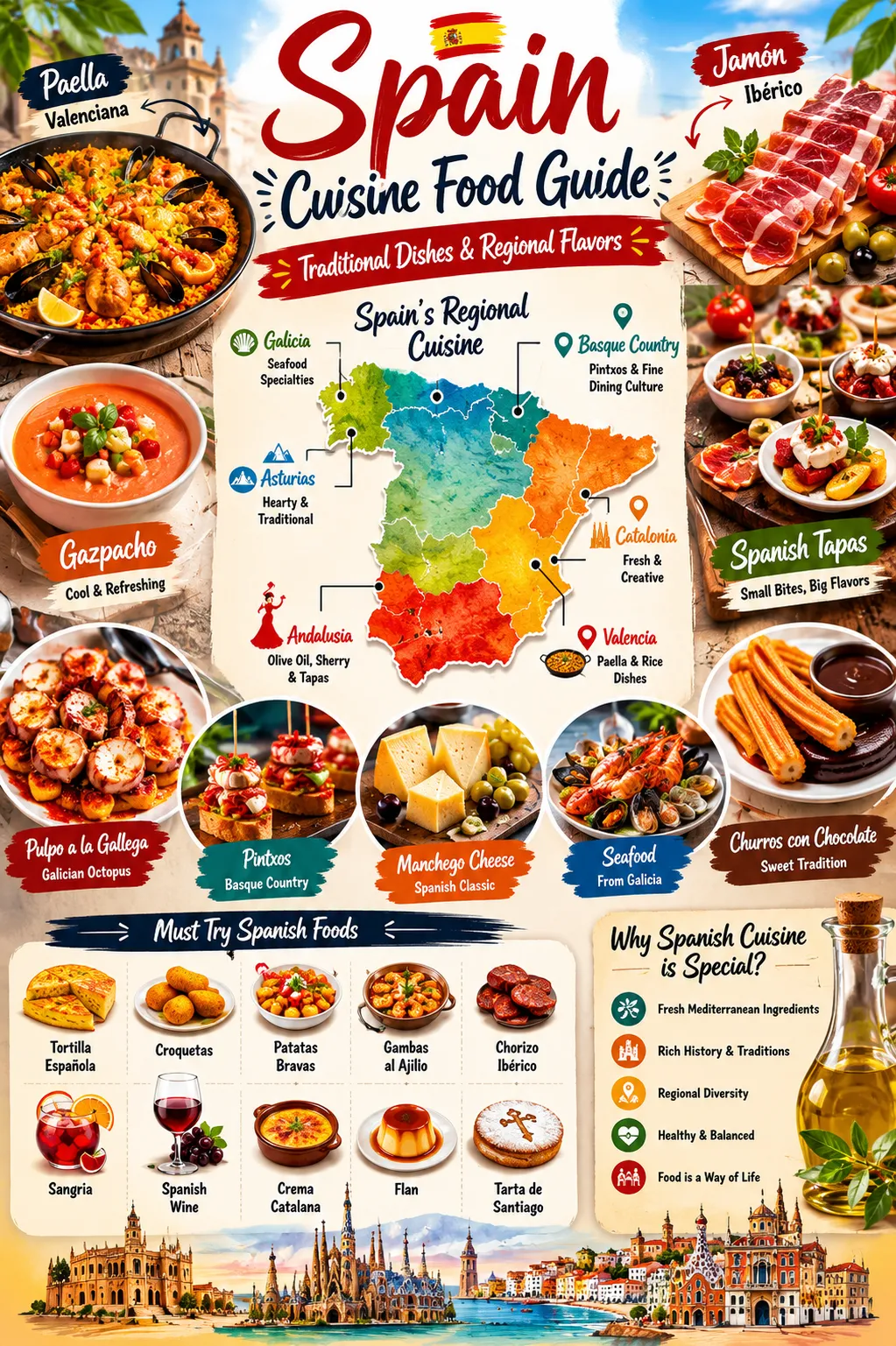
Traditional Spanish Foods by Region
One of Spain’s greatest culinary strengths is its regional diversity.
Andalusia
Famous for:
- Gazpacho
- Salmorejo
- Fried fish
- Rabo de Toro
Valencia
Known for:
- Paella Valenciana
- Fideuà
- Arroz a Banda
Galicia
Seafood paradise featuring:
- Pulpo a la Gallega
- Empanada Gallega
- Pimientos de Padrón
Asturias
Home to:
- Fabada Asturiana
- Cabrales Cheese
- Asturian cider
Madrid
Must-try dishes include:
- Cocido Madrileño
- Bocadillo de Calamares
Catalonia
Known for:
- Calçots
- Crema Catalana
- Escalivada
Basque Country
World-famous for:
- Pintxos
- Bacalao al Pil Pil
- Txangurro
Regional Food Comparison
| Region | Signature Dish | Best Known For |
| Valencia | Paella | Rice dishes |
| Galicia | Pulpo | Seafood |
| Asturias | Fabada | Comfort food |
| Madrid | Cocido | Traditional stews |
| Catalonia | Calçots | Local traditions |
| Basque Country | Pintxos | Culinary excellence |
Hidden Food Gems Locals Love
Many tourists never discover Spain’s lesser-known culinary treasures.
Some hidden gems include:
Cachopo (Asturias)
Breaded beef stuffed with cheese and ham.
Papas Arrugadas (Canary Islands)
Wrinkled potatoes served with mojo sauces.
Sobrasada (Mallorca)
A flavorful cured sausage spread.
Zarangollo (Murcia)
A traditional dish made with eggs, zucchini, and onions.
Caldereta (Extremadura)
A rich lamb stew popular in rural areas.
Exploring these lesser-known dishes often leads to the most memorable food experiences.
The Importance of Tapas in Spain
Tapas are among Spain’s most recognizable culinary traditions.
The concept is simple: small dishes meant for sharing.
Popular tapas include:
- Croquetas
- Patatas Bravas
- Tortilla Española
- Gambas al Ajillo
- Jamón Ibérico
How to Enjoy Tapas Like a Local
- Visit several bars in one evening.
- Order only a few dishes at each stop.
- Share everything with friends.
- Pair food with local drinks.
Tapas culture encourages conversation, socializing, and discovering new flavors.
Traditional Spanish Desserts
Spain offers far more than churros.
Popular traditional desserts include:
- Churros con Chocolate
- Crema Catalana
- Tarta de Santiago
- Torrijas
- Polvorones
- Leche Frita
These sweets often reflect regional ingredients and centuries-old traditions.
Traditional Spanish Drinks
Spain’s beverage culture deserves attention too.
Popular drinks include:
- Rioja wine
- Ribera del Duero wine
- Cava
- Sherry
- Vermouth
- Sidra Asturiana
- Horchata
Many regions have their own unique drinks that complement local cuisine.
Spain vs Other European Food Destinations
Spain competes with Europe’s best culinary destinations.
| Country | Main Strength | Comparison |
| Spain | Regional diversity | Exceptional variety |
| Italy | Pasta and pizza | Spain offers broader seafood traditions |
| France | Fine dining | Spain excels in casual food culture |
| Greece | Mediterranean cuisine | Spain has greater regional variation |
| Portugal | Seafood | Spain offers more diverse regional cuisines |
For travelers seeking variety, Spain is one of Europe’s strongest food destinations.
Budget Guide for Food Lovers
Spain offers excellent value compared to many Western European countries.
Daily Food Budget
| Travel Style | Average Daily Cost |
| Budget | €15–25 |
| Mid-Range | €30–60 |
| Luxury | €80+ |
Ways to Save Money
- Choose Menú del Día lunches
- Visit local markets
- Avoid tourist traps
- Eat outside major attractions
Luxury Food Experiences
Luxury travelers can enjoy:
- Michelin-starred dining
- Private cooking classes
- Wine estate tours
- Gourmet tasting menus
- Exclusive food experiences
The Basque Country and Catalonia are particularly famous for luxury gastronomy.
Where to Stay for Food Travel
Best Cities for Culinary Travelers
- San Sebastián
- Madrid
- Barcelona
- Valencia
- Seville
Each city offers a different perspective on Spanish gastronomy.
Transport Tips for Food Travelers
Spain’s transport network makes culinary exploration easy.
Best options include:
- High-speed AVE trains
- Domestic flights
- Regional buses
- Rental cars for rural regions
Many food destinations can be combined into one itinerary.
Safety, Laws and Dining Etiquette
Spanish dining culture is relaxed, but understanding local etiquette helps.
Useful Tips
- Tipping is appreciated but not mandatory.
- Avoid rushing meals.
- Respect local dining times.
- Learn basic Spanish food vocabulary.
Tips for Families, Couples and Solo Travelers
Families
- Choose local markets.
- Try family-friendly tapas bars.
Couples
- Enjoy wine tastings.
- Book romantic food tours.
Solo Travelers
- Join cooking classes.
- Explore tapas bars.
Food experiences often make it easy to meet locals and fellow travelers.
Common Tourist Mistakes to Avoid
Avoid these common mistakes:
- Eating exclusively in tourist zones
- Ordering paella in low-quality restaurants
- Ignoring regional specialties
- Dining too early
- Missing local markets
Insider Tips Most Tourists Never Learn
- Lunch often offers the best value.
- Regional wines are usually excellent.
- Small towns often have better traditional food than tourist centers.
- Market halls provide authentic experiences.
- Ask locals where they eat.
Future Trends in Spanish Food Tourism
Food tourism in Spain continues to evolve.
Growing trends include:
- Sustainable gastronomy
- Farm-to-table dining
- Culinary retreats
- Food-focused travel itineraries
- Regional heritage preservation
These developments make Spain an even more attractive destination for food lovers.
Frequently Asked Questions
What is the national dish of Spain?
Spain has no official national dish, but Paella Valenciana and Tortilla Española are often considered the strongest candidates.
What food is Spain most famous for?
Paella, Jamón Ibérico, tapas, and Tortilla Española are Spain’s most famous foods.
What is the most traditional food in Spain?
Traditional favorites include Cocido Madrileño, Fabada Asturiana, Gazpacho, and Pulpo a la Gallega.
Is Spanish food healthy?
Yes. Traditional Spanish cuisine is heavily influenced by the Mediterranean diet and emphasizes vegetables, seafood, olive oil, and legumes.
Which region has the best food in Spain?
The Basque Country, Galicia, and Valencia are often considered among Spain’s top culinary regions.
Are tapas free in Spain?
In some areas, especially parts of Andalusia, tapas may be complimentary with drinks. In most cities, they are ordered separately.
What should first-time visitors eat in Spain?
Start with paella, tortilla española, croquetas, jamón ibérico, patatas bravas, and churros con chocolate.
Conclusion
Traditional Spain food is one of the country’s greatest cultural treasures. Beyond famous dishes like paella and tapas lies a remarkable culinary landscape shaped by centuries of history, regional traditions, and exceptional ingredients.
Every region tells a different story through its food, from the seafood-rich coasts of Galicia to the rice fields of Valencia and the mountain villages of Asturias. Exploring Spanish cuisine is one of the best ways to understand the country’s culture, people, and heritage.
Whether you’re planning your first trip or returning to discover more, let Spain’s food guide your journey. For more travel inspiration, destination guides, and insider tips, continue exploring VisitEspanly.com
.
Suggested Internal Links
- Best Cities to Visit in Spain
- Ultimate Madrid Travel Guide
- Valencia Travel Guide
- Best Food Markets in Spain
- Spain Travel Budget Guide
Recommended Authority Sources
- Spain Tourism Board
- UNESCO World Heritage Centre
- European Union Travel Portal
- Renfe
- AENA Airports
- Regional Tourism Boards
Legal Disclaimer
Travel regulations, opening hours, transportation schedules, prices, visa requirements, and local policies may change. Always verify details through official sources before making travel plans.