Introduction
Spain is one of the world’s greatest food destinations. From sizzling garlic shrimp served in crowded tapas bars to saffron-infused paella cooked beside the Mediterranean coast, Spanish
cuisine is full of bold flavors, regional traditions, and unforgettable culinary experiences.
Many travelers return home from Spain wanting to recreate the dishes they tasted in cities like Madrid, Barcelona, Seville, Valencia, and San Sebastián. However, most online guides only scratch the surface of Spanish cooking and miss the authentic local recipes Spaniards actually eat.
This ultimate guide to food in Spain recipes goes beyond tourist food lists. You’ll discover traditional Spanish dishes, easy recipes for beginners, regional specialties, local cooking tips, tapas ideas, and insider food knowledge that helps you experience Spain through its cuisine.
Whether you are planning a food trip to Spain in 2026 or simply want to bring Mediterranean flavors into your kitchen, this guide covers everything you need to know.
What Makes Spanish Food So Special?
Spanish cuisine stands out because it focuses on simplicity, freshness, and high-quality ingredients. Unlike complicated cooking styles that rely on heavy sauces, traditional Spanish food celebrates natural flavor.
Spanish recipes are deeply connected to regional culture. The dishes you eat in southern Andalusia are very different from those found in northern Galicia or the Basque Country.
Some key characteristics of Spanish cooking include:
- Fresh seafood
- Olive oil-based cooking
- Garlic and smoked paprika
- Rice dishes
- Seasonal vegetables
- Slow-cooked stews
- Tapas culture
- Local wines and cured meats
Spain is also heavily connected to the Mediterranean diet, which many health experts consider one of the healthiest eating styles in the world.
Why Travelers Love Spanish Cuisine
Travelers love Spanish food because it feels social, authentic, and deeply cultural. Meals in Spain are not rushed. Food is designed to be shared, enjoyed slowly, and paired with conversation.
From neighborhood taverns to Michelin-star restaurants, Spain offers one of Europe’s best culinary experiences.
Essential Ingredients Used in Spanish Recipes
Before cooking authentic Spanish food at home, it helps to understand the ingredients that form the foundation of Spanish cuisine.
Core Spanish Pantry Ingredients
| Ingredient | Why It Matters |
| Extra virgin olive oil | Used in almost every dish |
| Smoked paprika | Adds depth and smoky flavor |
| Saffron | Essential for paella |
| Garlic | Core flavor base |
| Tomatoes | Common in sauces and tapas |
| Chorizo | Traditional Spanish sausage |
| Manchego cheese | Spain’s famous sheep cheese |
| Bomba rice | Best rice for paella |
| Sherry vinegar | Adds acidity and balance |
| Chickpeas | Used in stews and soups |
Insider Cooking Tip
Spanish recipes often use fewer ingredients than other European cuisines. Quality matters more than quantity. Fresh olive oil, ripe tomatoes, and proper seasoning make a huge difference.
The Most Famous Foods in Spain
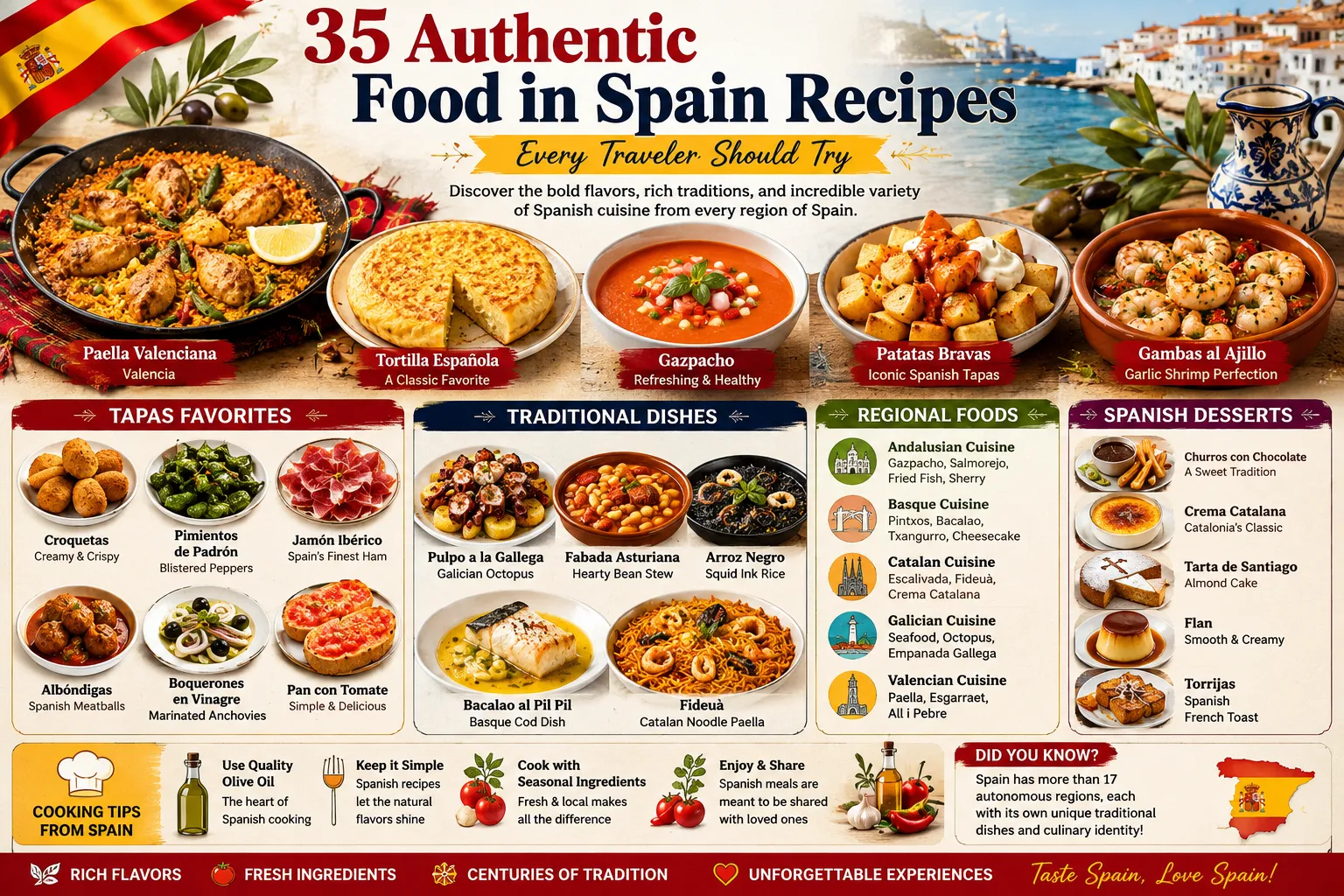
1. Paella Valenciana
Paella is Spain’s most internationally famous dish. Authentic paella originated in Valencia and traditionally includes:
- Rabbit
- Chicken
- Green beans
- Bomba rice
- Olive oil
- Saffron
Many tourists assume paella always contains seafood, but traditional Valencian paella does not.
Local Cooking Tip
Never constantly stir paella after adding broth. This allows the rice to develop the crispy bottom layer called socarrat.
2. Tortilla Española
Tortilla española is a thick potato omelet made with eggs, potatoes, olive oil, and sometimes onions.
It is eaten throughout the day in Spain:
- Breakfast
- Lunch
- Dinner
- Tapas
- Late-night snacks
This simple dish is one of the true symbols of Spanish comfort food.
3. Gazpacho
Gazpacho is a cold tomato soup from Andalusia that perfectly reflects southern Spain’s hot climate.
Ingredients usually include:
- Tomatoes
- Cucumbers
- Peppers
- Garlic
- Olive oil
- Bread
Gazpacho is refreshing, healthy, and ideal during summer.
4. Patatas Bravas
Patatas bravas are crispy fried potatoes served with spicy tomato sauce and garlic aioli.
This dish is one of the easiest Spanish tapas recipes to make at home.
5. Croquetas
Croquetas are crispy fried rolls filled with creamy béchamel and ingredients like:
- Ham
- Mushrooms
- Chicken
- Cod
They are served in tapas bars throughout Spain.
6. Pulpo a la Gallega
This famous Galician octopus dish combines tender octopus with:
- Olive oil
- Paprika
- Sea salt
- Potatoes
The dish is simple but incredibly flavorful.
7. Fabada Asturiana
Fabada is one of Spain’s best-known comfort foods.
This rich stew from Asturias contains:
- White beans
- Chorizo
- Morcilla
- Pork
Perfect during colder months.
Easy Spanish Recipes for Beginners
One reason Spanish cooking is so popular globally is that many dishes are beginner-friendly.
Best Easy Spanish Recipes
| Recipe | Difficulty | Time |
| Pan con tomate | Easy | 10 mins |
| Tortilla española | Easy | 30 mins |
| Gambas al ajillo | Easy | 15 mins |
| Garlic chicken | Easy | 35 mins |
| Chorizo potatoes | Easy | 30 mins |
| Patatas bravas | Medium | 40 mins |
Why Spanish Cooking Is Great for Beginners
- Simple ingredients
- Minimal preparation
- Big flavor
- Healthy cooking methods
- Flexible recipes
If you are just starting, tortilla española and pan con tomate are excellent first dishes.
Best Spanish Tapas Recipes
Tapas are one of the most famous parts of Spanish food culture. Rather than eating one large meal, people often share many small dishes together.
Gambas al Ajillo
Garlic shrimp cooked in olive oil and chili flakes.
Albóndigas
Spanish meatballs served in tomato sauce.
Pan con Tomate
Toasted bread rubbed with tomato, garlic, and olive oil.
Pimientos de Padrón
Small blistered peppers sprinkled with sea salt.
Boquerones
Anchovies marinated in vinegar and garlic.
Manchego Cheese and Jamón
Simple but iconic Spanish appetizers.
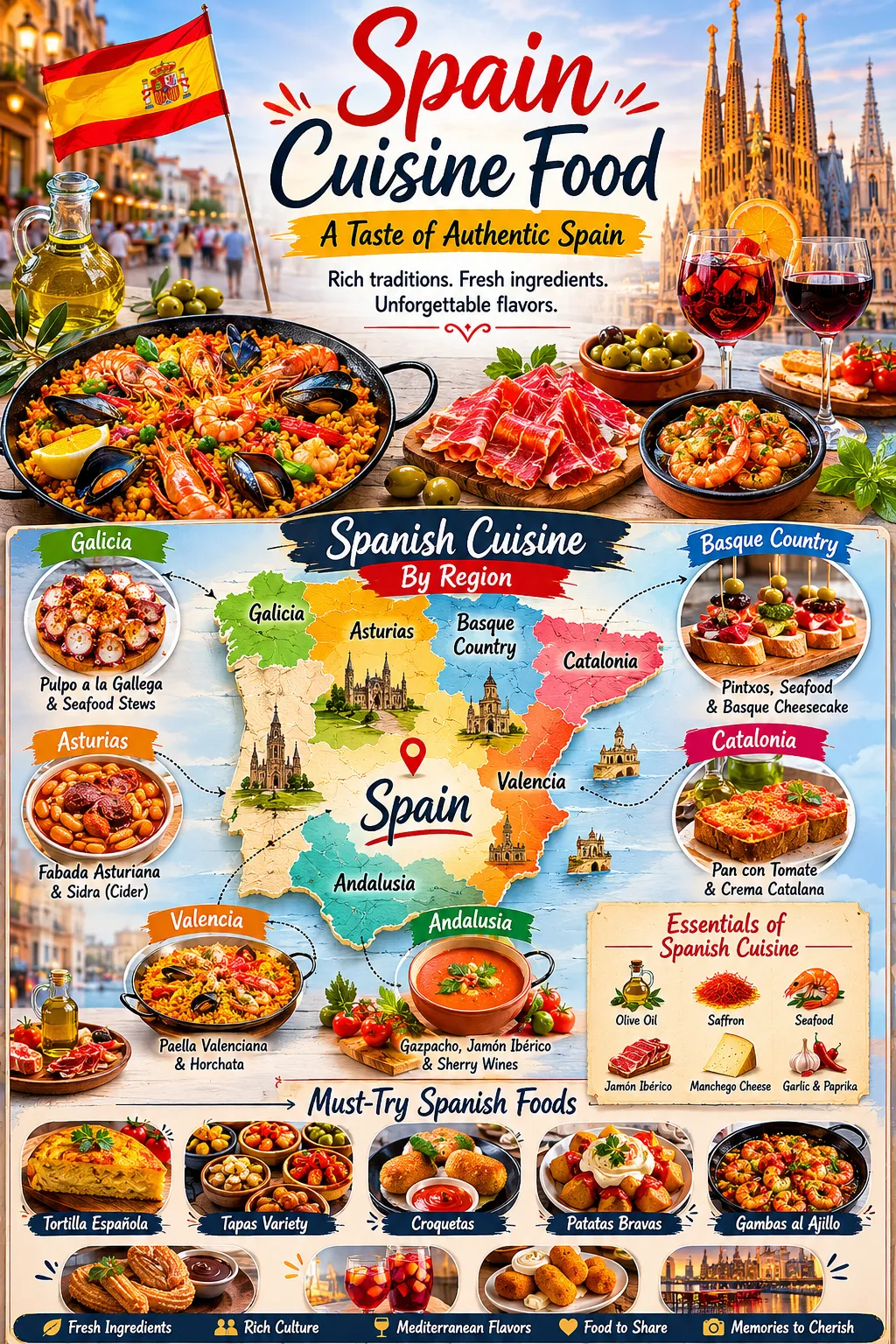
Regional Foods in Spain
One of the biggest reasons Spain attracts food travelers is its incredible regional diversity.
Andalusian Cuisine
Southern Spain specializes in:
- Gazpacho
- Salmorejo
- Fried seafood
- Olive oil dishes
The region’s cuisine shows strong Moorish influence.
Hidden Local Favorite
Espinacas con garbanzos is a traditional spinach and chickpea dish popular in Seville.
Basque Cuisine
The Basque Country is one of Europe’s greatest culinary regions.
Popular dishes include:
- Pintxos
- Bacalao al pil pil
- Basque cheesecake
- Seafood dishes
Insider Tip
San Sebastián has one of the world’s highest concentrations of Michelin-starred restaurants.
Catalan Cuisine
Catalonia blends mountain and coastal ingredients.
Famous dishes include:
- Crema catalana
- Escalivada
- Fideuà
- Botifarra sausage
Galician Cuisine
Galicia is famous for seafood.
Expect:
- Mussels
- Octopus
- Scallops
- Seafood stews
Best Experience
Visit a seafood market along the Atlantic coast for the freshest dishes.
Valencian Cuisine
Valencia is the birthplace of authentic paella.
Traditional Valencian food focuses heavily on:
- Rice dishes
- Saffron
- Vegetables
- Rabbit
- Olive oil
Hidden Food Gems Locals Love
Most tourists only try paella and tapas, but Spain offers far more culinary depth.
Sidrerías in Asturias
Traditional cider houses serving local dishes and natural cider.
Rural Andalusian Taverns
Many small villages serve incredible homemade stews tourists never discover.
Pintxos Bars in Bilbao
Often less crowded and more affordable than San Sebastián.
Canary Islands Cuisine
Try:
- Papas arrugadas
- Mojo sauce
- Fresh Atlantic seafood
Local Markets
Food markets are among the best places to experience authentic Spanish cuisine.
Spain vs Other European Food Destinations
espana vs Italy
| Spain | Italy |
| Tapas culture | Pasta-focused |
| Strong seafood diversity | Pizza dominance |
| Late-night dining | Earlier meal times |
| Social sharing plates | Individual dishes |
Spain vs France
it generally feels:
- More relaxed
- More affordable
- More social
- Less formal
Spain vs Greece
Both share Mediterranean roots, but Spain offers:
- Greater regional diversity
- Richer tapas culture
- Stronger culinary tourism infrastructure
Best Time to Visit Spain for Food Lovers
Spring
Perfect for:
- Seafood
- Festivals
- Fresh produce
- Wine tourism
Summer
Best for:
- Gazpacho
- Beach seafood
- Outdoor dining
Fall
Excellent for:
- Harvest season
- Mushrooms
- Wine regions
Winter
Ideal for:
- Hearty stews
- Roasted meats
- Traditional holiday desserts
Best Overall Season
Fall offers the best combination of weather, seasonal food, and fewer crowds.
Budget Travel Guide for Food Lovers
Spain remains one of Western Europe’s
best-value destinations.
Budget Food Tips
Eat Menu del Día
Many restaurants offer affordable lunch menus with multiple courses.
Avoid Tourist Squares
Restaurants near major attractions usually charge more.
Visit Markets
Fresh food and local snacks cost less in markets.
Share Tapas
Perfect for saving money while trying multiple dishes.
Use Regional Trains
Travel cheaply between culinary regions.
Luxury Food Travel in Spain
Spain is also one of Europe’s top luxury culinary destinations.
Best Luxury Experiences
- Michelin-star dining
- Private wine tours
- Cooking classes
- Gourmet tasting menus
- Luxury countryside hotels
- Olive oil estates
good Luxury Food Cities
- San Sebastián
- Barcelona
- Madrid
- Valencia
- Seville
Best Places to Stay for Food Travelers
Madrid
Best for:
- Traditional taverns
- Food markets
- Modern Spanish cuisine
Barcelona
Ideal for:
- Seafood
- Catalan dishes
- Trendy restaurants
Seville
Perfect for:
- Tapas culture
- Flamenco dining
- Andalusian cuisine
Valencia
Best city for authentic paella.
San Sebastián
Spain’s top luxury food destination.
Food You Must Try During Your Spain Trip
Ultimate Spanish Food Checklist
- Paella Valenciana
- Tortilla Española
- Jamón Ibérico
- Gazpacho
- Croquetas
- Pulpo a la Gallega
- Churros con Chocolate
- Patatas Bravas
- Pimientos de Padrón
- Fabada Asturiana
Transport Tips for Food Travelers
Spain has one of Europe’s best transport systems.
High-Speed Trains
Fast connections between:
- Madrid
- Barcelona
- Seville
- Valencia
Regional Trains
Excellent for exploring smaller culinary regions.
Rental Cars
Ideal for:
- Rural villages
- Wine regions
- Coastal food routes
Domestic Flights
Useful for:
- Canary Islands
- Balearic Islands
Safety, Dining Etiquette, and Local Customs
Important Dining Tips
- Dinner starts late in Spain
- Lunch is the biggest meal
- Sharing plates is common
- Bread may cost extra
- Tipping is modest
Food Safety
Spain maintains high food hygiene standards and is generally very safe for travelers.
Family, Couple, and Solo Traveler Tips
Families
Spain is extremely family-friendly.
Best cities:
- Valencia
- Málaga
- Seville
Couples
Perfect for:
- Romantic tapas nights
- Wine tourism
- Beach dinners
Solo Travelers
Tapas culture makes social dining easy.
Common Tourist Mistakes to Avoid
1. Eating Too Early
Many restaurants do not open dinner service until after 8 PM.
2. Ordering Paella in Tourist Traps
Authentic paella is usually served at lunch.
3. Ignoring Regional Cuisine
Each region has unique specialties worth trying.
4. Only Visiting Tourist Restaurants
Neighborhood taverns often serve better food.
5. Skipping Markets
Markets provide authentic culinary experiences.
Insider Tips Most Tourists Miss
Go Beyond Paella
Spain’s stews and seafood dishes are equally incredible.
Lunch Matters More Than Dinner
Locals often spend hours enjoying lunch socially.
Reserve Restaurants in Advance
Especially in top food cities.
Ask Locals for Recommendations
The best places are often hidden from tourists.
Future Food Travel Trends in Spain
Spain’s food tourism industry continues evolving rapidly in 2026.
Growing Trends
- Sustainable seafood tourism
- Olive oil tourism
- Farm-to-table dining
- Wellness-focused Mediterranean travel
- Culinary workshops
- Rural food tourism
Spain is becoming one of Europe’s top destinations for immersive food experiences.
Frequently Asked Questions About Food in Spain Recipes
What is the most famous food in Spain?
Paella is Spain’s most internationally famous dish.
What do Spanish people eat daily?
Common foods include tortilla española, bread, olive oil, legumes, fish, and stews.
What are traditional Spanish tapas?
Popular tapas include croquetas, olives, patatas bravas, garlic shrimp, and cured meats.
Is Spanish food healthy?
Yes. Spanish cuisine strongly reflects the Mediterranean diet.
What region in Spain has the best food?
Many food travelers consider the Basque Country Spain’s top culinary region.
What is the easiest Spanish recipe for beginners?
Pan con tomate and tortilla española are ideal beginner recipes.
Is Spain expensive for food travelers?
Compared to France or Italy, Spain offers excellent value.
Final Thoughts
Spanish cuisine is much more than paella and tapas. It is a rich cultural experience shaped by centuries of tradition, regional identity, and incredible local ingredients.
Whether you want comforting stews, fresh seafood, quick tapas, or rustic home cooking, these authentic food in Spain recipes offer something unforgettable for every traveler and home cook.
Start with simple dishes, explore Spain’s regional diversity, and embrace the relaxed Mediterranean spirit that makes Spanish food culture so special.
For more Spain travel guides, local tips, and European travel
inspiration, explore more articles on VisitEspanly.com.
Suggested Internal Links
- Best Cities to Visit in Spain in 2026
- Ultimate Spain Tapas Guide
- Traditional Spanish Desserts Explained
- Spain Budget Travel Guide
- Best Beaches in Spain for Food Lovers
Trusted Sources to Reference
- Spain Tourism Board
- UNESCO World Heritage Centre
- Michelin Guide Spain
- Renfe Spain
- European Union Tourism Portal
- Spanish Ministry of Tourism
Legal Disclaimer
Travel rules, transport schedules, visa policies, restaurant hours, and prices may change. Always verify details with official tourism boards and transport providers before traveling.