Introduction
Spain is one of the world’s greatest food destinations. From sizzling seafood paella in Valencia to traditional tapas bars in Seville and Michelin-starred restaurants in the Basque Country,
the country offers unforgettable culinary experiences for every type of traveler.
But many tourists arrive in Spain without understanding the country’s food culture. They often eat in overpriced tourist restaurants, miss authentic local dishes, or fail to explore the incredible regional diversity that makes Spanish cuisine so unique.
This complete guide to Spain foods will help you discover the best traditional Spanish dishes, famous food cities, hidden culinary gems, local dining customs, and insider travel tips for 2026.
Whether you are planning your first Spain trip, a luxury foodie vacation, a backpacking adventure, or a family holiday, this guide will help you eat like a local and experience the real taste of Spain.
Why Spanish Food Is Famous Worldwide
Spanish cuisine is loved globally because it combines fresh ingredients, regional diversity, Mediterranean flavors, and social dining traditions.
Unlike heavily processed fast-food cultures, traditional Spanish food focuses on quality ingredients and simple cooking techniques.
Spain’s culinary identity is also deeply connected to its geography. Coastal regions specialize in seafood, northern regions are famous for meat and stews, while southern Spain dominates olive oil production and cold summer dishes.
What Makes Spanish Cuisine Unique?
Key reasons why travelers love Spanish food:
- Fresh seafood and local produce
- Healthy Mediterranean diet
- Strong wine culture
- Affordable dining compared to much of Europe
- Tapas and social eating traditions
- Regional culinary diversity
- Excellent street cafés and food markets
Food in Spain is not just about eating. It is part of daily life, culture, conversation, and social connection.
Best Traditional Spain Foods You Must Try
Paella
Paella is Spain’s most internationally recognized dish and one of the country’s greatest culinary symbols.
Originally from Valencia, authentic paella traditionally contains:
- Rice
- Saffron
- Rabbit or chicken
- Green beans
- Olive oil
Seafood paella is also extremely popular in coastal areas.
Insider Tip
Locals usually eat paella at lunch, not dinner. Many authentic restaurants only prepare it fresh during midday service.
Best Places to Try Paella
- Valencia
- Alicante
- Castellón
- Barcelona coastal restaurants
Tapas
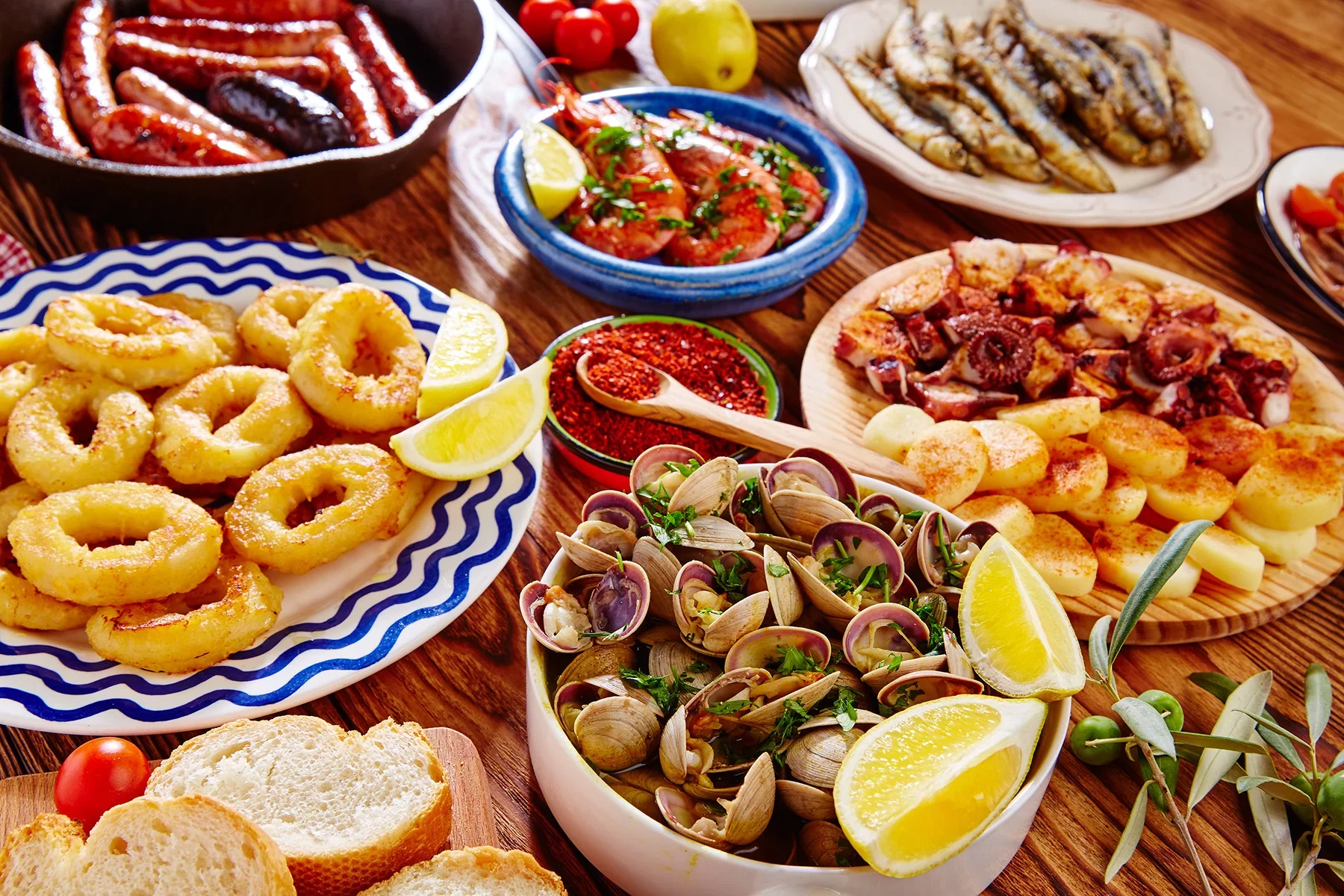
Tapas are small dishes served alongside drinks or shared among groups.
Popular tapas include:
- Patatas bravas
- Croquetas
- Garlic shrimp
- Fried calamari
- Manchego cheese
- Jamón ibérico
Tapas culture is one of Spain’s biggest social traditions.
Best Cities for Tapas
| City | Why It’s Famous |
| Seville | Traditional tapas culture |
| Granada | Free tapas with drinks |
| Madrid | Historic taverns |
| San Sebastián | Gourmet pintxos |
Jamón Ibérico
Jamón ibérico is one of the world’s finest cured meats.
Made from Iberian pigs and aged for years, it is considered a luxury delicacy.
Types of Jamón
| Type | Quality |
| Jamón Serrano | Standard cured ham |
| Jamón Ibérico | Premium quality |
| Bellota Ibérico | Highest luxury grade |
Best Regions to Try It
- Extremadura
- Salamanca
- Andalusia
Tortilla Española
This famous Spanish omelet combines:
- Potatoes
- Eggs
- Olive oil
- Onion (depending on region)
It is simple, affordable, and found everywhere in Spain.
Gazpacho
Gazpacho is a cold tomato soup from Andalusia.
Made with:
- Tomatoes
- Cucumber
- Garlic
- Olive oil
- Peppers
It is especially popular during Spain’s hot summer months.
Best Cities for Gazpacho
- Seville
- Córdoba
- Málaga
- Granada
Churros con Chocolate
One of Spain’s most famous desserts.
Churros are fried dough pastries served with thick hot chocolate.
Best Time to Eat Churros
- Breakfast
- Winter evenings
- Late-night snacks after nightlife
Madrid is particularly famous for its historic churros cafés.
Regional Food Culture in Spain
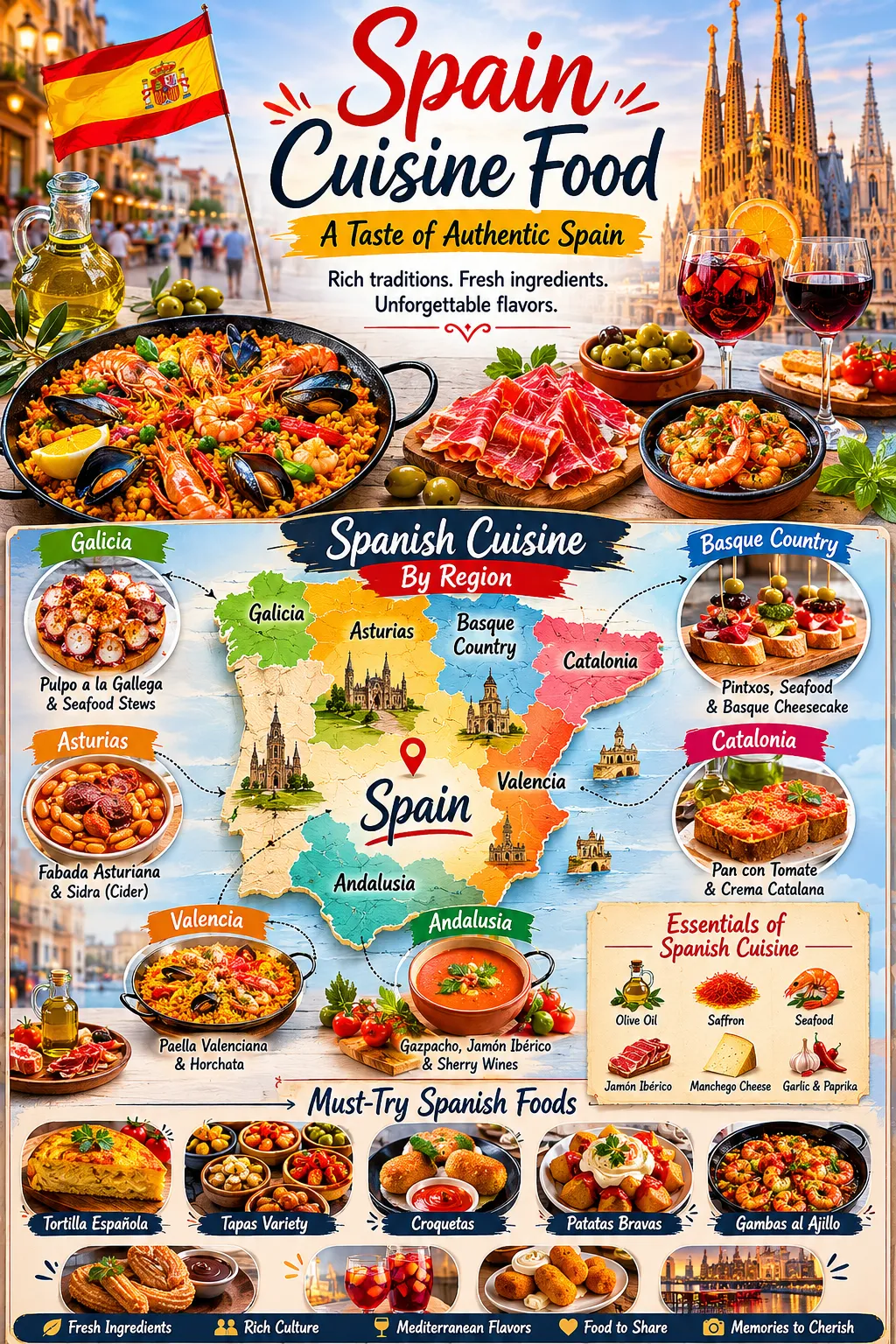
One of the best things about Spanish cuisine is that every region has its own culinary identity.
Andalusia
Andalusian cuisine is famous for:
- Gazpacho
- Fried fish
- Olive oil
- Flamenco dining culture
Best Cities
- Seville
- Málaga
- Cádiz
- Granada
Andalusia is also one of the best regions for affordable tapas experiences.
Basque Country
The Basque Country is one of Europe’s top gastronomic destinations.
Known for:
- Pintxos
- Fine dining
- Michelin-star restaurants
- Seafood
San Sebastián is often ranked among the best food cities in the world.
Valencia
Valencia is the birthplace of authentic paella.
The region specializes in:
- Rice dishes
- Mediterranean seafood
- Citrus fruits
- Fresh vegetables
Catalonia
Catalan cuisine combines mountain flavors with Mediterranean seafood.
Barcelona offers:
- Modern gastronomy
- Traditional Catalan dishes
- Food markets
- International dining scenes
Galicia
Galicia is Spain’s seafood paradise.
Famous foods include:
- Octopus
- Mussels
- Oysters
- Fresh Atlantic fish
Seafood quality in Galicia is considered among the best in Europe
.
Hidden Spanish Foods Most Tourists Miss
Many visitors only eat paella and tapas. However, Spain has hundreds of incredible regional dishes most tourists never discover.
Pulpo a la Gallega
Galician octopus served with:
- Paprika
- Olive oil
- Potatoes
Simple but incredibly flavorful.
Migas
Traditional fried breadcrumbs popular in rural Spain.
Often cooked with:
- Garlic
- Chorizo
- Peppers
Fabada Asturiana
A rich bean stew from Asturias made with:
- White beans
- Sausage
- Pork
Perfect during winter.
Salmorejo
A creamier version of gazpacho from Córdoba.
Usually topped with:
- Boiled egg
- Ham
Pisto
Spain’s answer to ratatouille.
Made with:
- Tomatoes
- Peppers
- Zucchini
- Olive oil
Best Food Cities in Spain
Barcelona
Barcelona combines:
- Seafood
- Catalan cuisine
- Food markets
- Michelin restaurants
- Beach dining
Must-Visit Spots
- La Boqueria Market
- El Born tapas bars
- Barceloneta seafood restaurants
Madrid
Madrid offers:
- Traditional taverns
- Modern gastronomy
- Famous churros cafés
- Rooftop dining
The city has one of Spain’s best nightlife food scenes.
Seville
Seville is one of the best cities for authentic tapas.
Popular dishes include:
- Fried fish
- Iberian ham
- Salmorejo
- Croquetas
San Sebastián
A paradise for luxury food travelers.
Known for:
- Michelin-star restaurants
- Gourmet pintxos
- Wine culture
Valencia
Best known for:
- Paella
- Rice dishes
- Fresh seafood
- Mediterranean flavors
Spain Foods vs Other European Cuisine
| Country | Main Food Strength |
| Spain | Social dining & tapas |
| Italy | Pasta & pizza |
| France | Fine dining |
| Greece | Mediterranean freshness |
| Portugal | Seafood value |
Spain stands out because it combines:
- Excellent food quality
- Strong regional diversity
- Affordable dining
- Social eating culture
- Exceptional seafood
Best Time to Visit Spain for Food Lovers
Spring (March–May)
Perfect for:
- Mild weather
- Food festivals
- Wine tourism
- Outdoor dining
Summer (June–August)
Best for:
- Seafood
- Beach restaurants
- Coastal nightlife
Downside
Popular tourist destinations become crowded.
Autumn (September–November)
Arguably the best season for food travel.
Ideal for:
- Wine harvests
- Mushroom season
- Lower tourist crowds
Winter (December–February)
Best for:
- Stews
- Christmas desserts
- Budget travel
Spain Budget Food Guide
Spain can be surprisingly affordable compared to other Western European countries.
Average Food Costs
| Meal Type | Average Cost |
| Breakfast | €3–€8 |
| Tapas meal | €10–€20 |
| Mid-range dinner | €20–€40 |
| Luxury dining | €120+ |
Budget Travel Food Tips
- Eat menú del día lunches
- Avoid restaurants near landmarks
- Visit local markets
- Share tapas
- Use bakeries for breakfast
Luxury Food Experiences in Spain
Spain is also one of Europe’s best luxury culinary destinations.
Top Luxury Experiences
- Michelin tasting menus
- Wine estate tours
- Chef-led food experiences
- Luxury beach clubs
- Private tapas tours
Best Luxury Food Destinations
- Marbella
- Ibiza
- Barcelona
- Madrid
- San Sebastián
Best Hotels & Areas for Food Travelers
Barcelona
Best neighborhoods:
- Gothic Quarter
- El Born
- Eixample
Madrid
Top foodie districts:
- La Latina
- Salamanca
- Malasaña
Seville
Best areas:
- Santa Cruz
- Triana
Spain Food Markets You Must Visit
La Boqueria — Barcelona
Spain’s most famous food market.
Excellent for:
- Fresh seafood
- Tapas
- Fruit juices
- Iberian ham
Mercado de San Miguel — Madrid
Perfect for gourmet tapas and wine tasting.
Atarazanas Market — Málaga
One of southern Spain’s best seafood markets.
Mercado Central — Valencia
Ideal for authentic Valencian produce and ingredients.
Transport Tips for Food Travelers
High-Speed Trains
Spain’s AVE trains connect:
- Madrid
- Barcelona
- Seville
- Valencia
- Málaga
Fast and comfortable for culinary city-hopping.
Domestic Flights
Useful for:
- Balearic Islands
- Canary Islands
Rental Cars
Best for:
- Rural villages
- Wine regions
- Hidden food destinations
Safety, Dining Etiquette & Cultural Tips
Late Dining Hours
Typical meal times:
- Lunch: 2–4 PM
- Dinner: 9–11 PM
Tipping Culture
Tipping is appreciated but not mandatory.
Bread Charges
Some restaurants automatically charge for bread service.
Reservation Tips
Book ahead for:
- Michelin restaurants
- Popular tapas bars
- Summer dining hotspots
Spain Food Travel Tips for Different Travelers
Solo Travelers
Spain is excellent for solo food travel because tapas culture encourages social dining.
Best activities:
- Food tours
- Cooking classes
- Market visits
Couples
Romantic experiences:
- Sunset rooftop dinners
- Wine tastings
- Beachfront seafood dining
Families
Kid-friendly Spanish foods include:
- Croquetas
- Tortilla española
- Churros
- Grilled chicken
Common Tourist Mistakes to Avoid
Eating Too Early
Many restaurants do not open for dinner until 8 PM or later.
Ordering Paella at Tourist Restaurants
Many tourist-focused paellas are frozen or reheated.
Ignoring Regional Cuisine
Spanish food changes dramatically across regions.
Dining Near Major Attractions
Restaurants near landmarks are often overpriced and lower quality.
Insider Tips Most Tourists Never Learn
Follow the Locals
Busy tapas bars full of Spanish customers are usually the best sign of quality.
Try Menú del Día
Many restaurants offer:
- Starter
- Main course
- Dessert
- Drink
For excellent value during lunch.
Explore Small Towns
Some of Spain’s best food experiences happen outside major tourist cities.
Future Food Travel Trends in Spain (2026 & Beyond)
Spain’s culinary tourism industry continues growing rapidly.
Emerging Trends
- Sustainable restaurants
- Vegan Spanish cuisine
- AI restaurant booking systems
- Farm-to-table experiences
- Culinary retreats
- Luxury gastronomy tourism
Spain is becoming one of Europe’s strongest food tourism destinations for experiential travel.
FAQs About Spain Foods
What food is Spain most famous for?
Spain is most famous for paella, tapas, jamón ibérico, tortilla española, and churros.
Which city in Spain has the best food?
San Sebastián is widely considered Spain’s top food city, although Barcelona, Madrid, Valencia, and Seville are also exceptional.
Is food expensive in Spain?
Compared to many Western European countries, Spain offers excellent value for both budget and luxury travelers.
What time do Spanish people eat dinner?
Dinner in Spain is usually eaten between 9 PM and 11 PM.
What is the difference between tapas and pintxos?
Tapas are shared small dishes, while pintxos are bite-sized snacks commonly served in the Basque Country.
Is Spanish food healthy?
Yes. Traditional Spanish cuisine follows many Mediterranean diet principles using olive oil, seafood, vegetables, and fresh ingredients.
Which Spanish region has the best seafood?
Galicia is considered Spain’s top seafood region.
Conclusion
Spain offers one of the richest and most diverse food cultures in the world. From authentic paella in Valencia and traditional tapas bars in Seville to Michelin-star dining in San Sebastián and fresh seafood in Galicia, every region delivers unique culinary experiences.
The best way to experience Spain foods is to move beyond tourist restaurants, explore regional specialties, eat where locals eat, and embrace Spain’s relaxed social dining culture.
Whether you are planning a luxury foodie vacation, a backpacking adventure, or a family trip, Spanish cuisine will become one of the most memorable parts of your journey.
For more Spain travel guides, hidden gems, local tips, and insider itineraries, explore more articles on VisitEspanly.com
.