Introduction
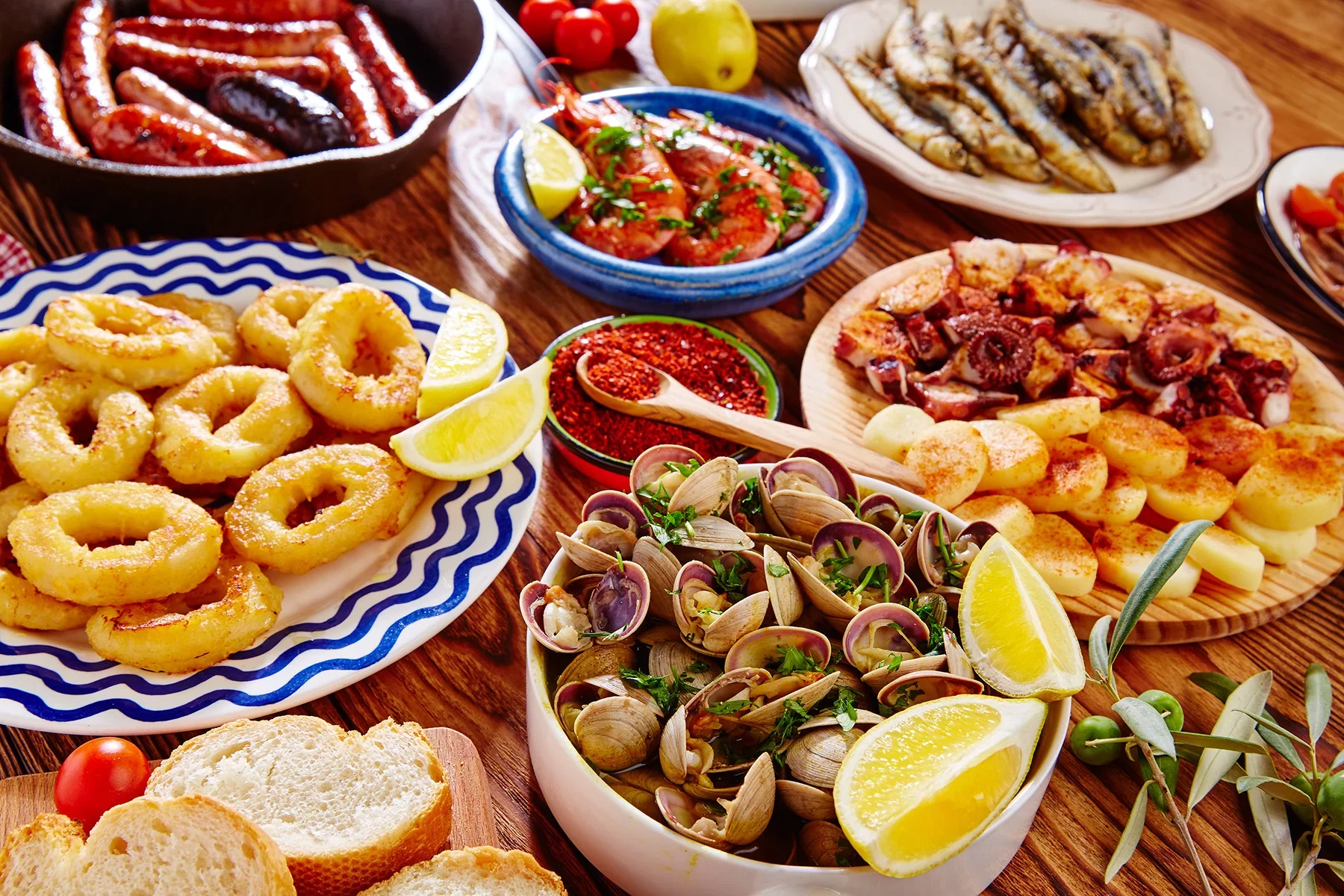
Spanish cuisine is one of the richest and most diverse food cultures in Europe. While many travelers arrive expecting only paella and tapas, they quickly discover that every region in Spain has its own culinary identity, local ingredients, and centuries-old traditions.
From the seafood-heavy dishes of Galicia to the olive oil culture of Andalusia and the pintxos bars of the Basque Country, food in Spain changes dramatically from one city to another. That regional diversity is what makes authentic Spanish cuisine so special.
Typical Spanish food in Spain focuses on simplicity, freshness, and quality ingredients. Olive oil, tomatoes, saffron, seafood, cured meats, legumes, and seasonal vegetables form the heart of many traditional recipes. Instead of overpowering flavors with heavy spices, Spanish cooking allows natural ingredients to shine.
In this complete guide, you’ll discover the most famous traditional Spanish foods, regional dishes locals actually eat, food myths tourists should avoid, and insider tips for eating like a local while traveling through Spain.
Whether you’re planning your first trip or building the ultimate Spain food itinerary for 2026, this pillar guide covers everything you need to know about authentic Spanish cuisine.
What Makes Spanish Food Unique?
Spanish food stands out because it combines regional traditions, Mediterranean ingredients, and social dining culture.
Unlike countries with one dominant national cuisine, Spain’s food culture changes from region to region.
Several key elements define authentic Spanish cuisine.
Mediterranean Influence
Spain is one of the leading countries associated with the Mediterranean diet.
Traditional Spanish meals often include:
- Extra virgin olive oil
- Fresh seafood
- Seasonal vegetables
- Legumes
- Nuts
- Rice
- Cured meats
This style of eating is considered one of the healthiest diets in the world.
Strong Regional Identity
Every autonomous community in Spain has unique specialties.
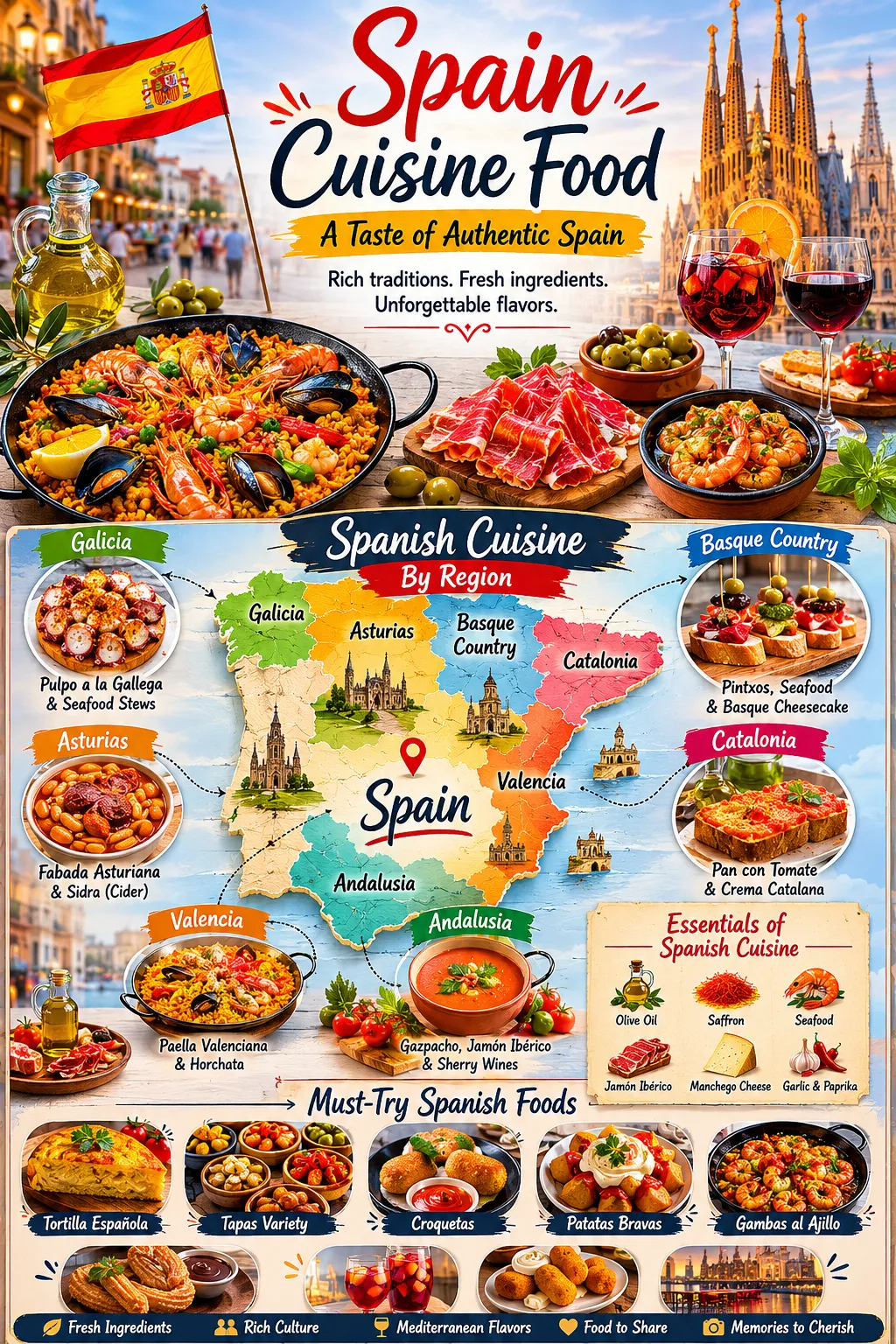
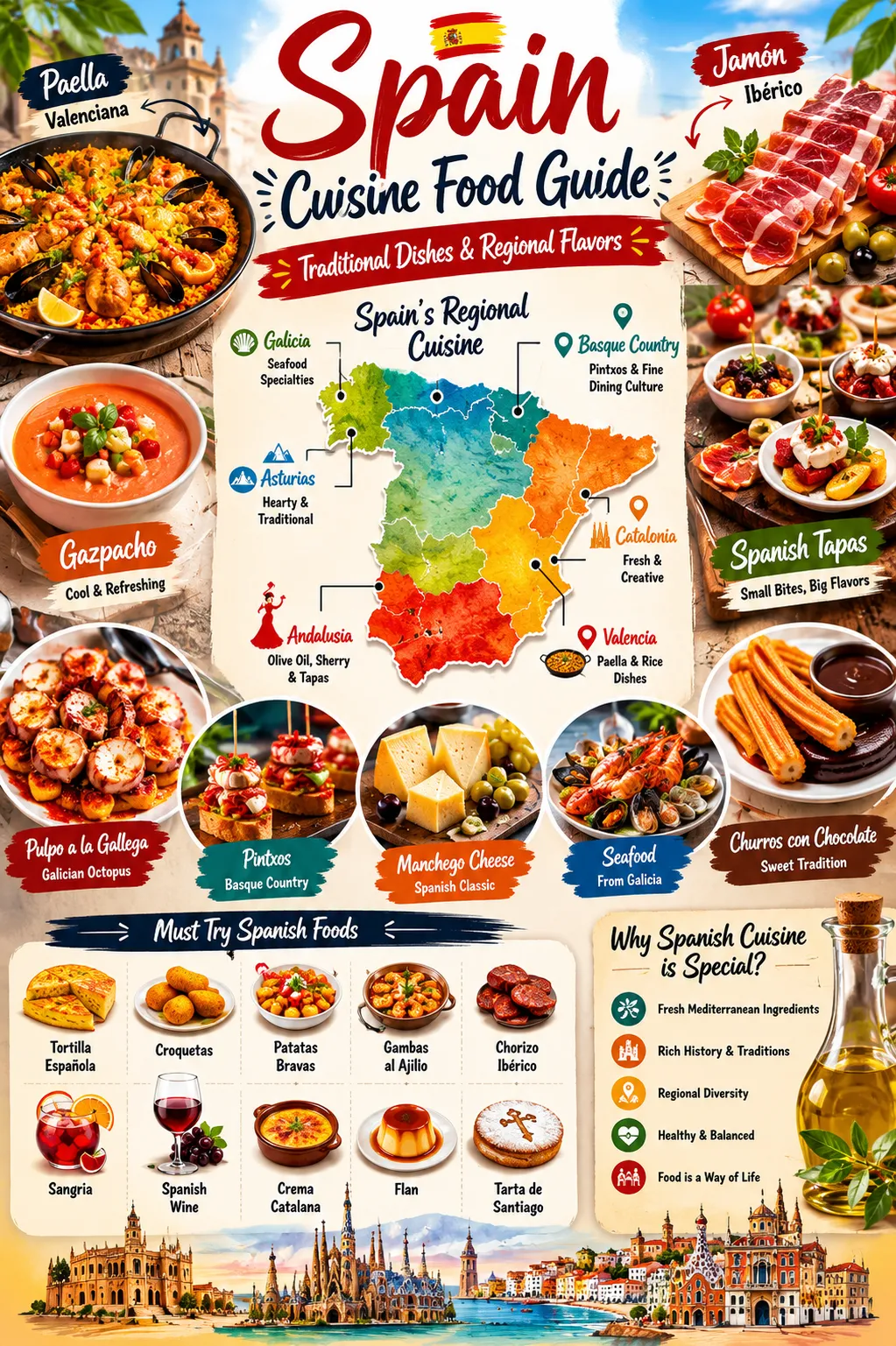
| Region | Famous Foods |
| Andalusia | Gazpacho, fried fish, salmorejo |
| Valencia | Paella, fideuà |
| Galicia | Octopus, seafood platters |
| Basque Country | Pintxos, cod dishes |
| Catalonia | Pan con tomate, crema catalana |
| Madrid | Cocido madrileño |
Tapas Culture
One of the most famous parts of Spanish gastronomy is tapas culture.
Tapas are small dishes shared socially in bars and restaurants. Eating tapas is less about rushing through a meal and more about conversation, slow dining, and spending time with friends.
Ingredient Quality
Spanish cuisine values ingredient quality over complexity.
Many iconic dishes use fewer than 10 ingredients, but freshness matters enormously.
The Most Famous Traditional Spanish Foods
Paella Valenciana
Paella is Spain’s most internationally recognized dish, but authentic paella comes specifically from Valencia.
Traditional Valencian paella usually contains:
- Chicken
- Rabbit
- Green beans
- White beans
- Saffron
- Valencian rice
Contrary to popular belief, authentic paella rarely mixes seafood, chicken, and chorizo together.
Insider Tip
Locals traditionally eat paella during lunch, not dinner.
Jamón Ibérico
Jamón Ibérico is Spain’s legendary cured ham produced from Iberian pigs.
The highest-quality version is Jamón Ibérico de Bellota, made from acorn-fed pigs.
Its flavor is:
- Rich
- Nutty
- Buttery
- Slightly sweet
The best ham-producing regions include:
- Extremadura
- Salamanca
- Andalusia
Tortilla Española
Tortilla española is a thick Spanish
omelet made with:
- Potatoes
- Eggs
- Olive oil
- Onion (depending on local preference)
It’s one of the most common foods locals eat regularly across Spain.
Gazpacho
Gazpacho is a refreshing cold soup from Andalusia.
Ingredients typically include:
- Tomatoes
- Garlic
- Olive oil
- Bread
- Peppers
- Cucumber
It’s especially popular during Spain’s hot summers.
Patatas Bravas
Patatas bravas are fried potatoes served with spicy sauce and sometimes aioli.
This dish is one of Spain’s most popular tapas.
Croquetas
Croquetas are crispy fried rolls filled with creamy béchamel.
Popular fillings include:
- Ham
- Chicken
- Mushrooms
- Cod
Homemade croquetas are often a sign of an authentic traditional restaurant.
Pulpo a la Gallega
This famous Galician octopus dish is served with:
- Paprika
- Olive oil
- Potatoes
- Sea salt
It remains one of northern Spain’s most iconic seafood dishes.
Gambas al Ajillo
Garlic shrimp cooked in sizzling olive oil is a classic tapas favorite throughout Spain.
Restaurants often serve it bubbling hot with bread for dipping.
Churros con Chocolate
Churros dipped in thick Spanish hot chocolate are popular:
- During winter
- At festivals
- Late at night
- For breakfast
Pimientos de Padrón
These small green peppers from Galicia are fried in olive oil and sea salt.
Their famous slogan says:
“Some are spicy, some are not.”
Regional Spanish Foods You Shouldn’t Miss
Andalusia
Southern Spain is famous for olive oil, seafood, and refreshing cold soups.
Must-Try Andalusian Foods
- Salmorejo
- Gazpacho
- Pescaíto frito
- Flamenquín
- Rabo de toro
Best Cities for Food
- Seville
- Málaga
- Cádiz
- Granada
Granada remains famous for offering free tapas with drinks in many traditional bars.
Valencia
Valencia is Spain’s rice capital.
Famous Valencian Foods
- Authentic paella
- Arroz negro
- Fideuà
- Horchata
Most locals consider Valencia the best place in Spain to eat authentic paella.
Galicia
Galicia is one of Europe’s best seafood destinations.
Famous Galician Foods
- Pulpo a la gallega
- Empanada gallega
- Percebes
- Fresh shellfish
The Atlantic coastline gives Galicia exceptional seafood quality.
Basque Country
The Basque Country is internationally famous for gastronomy.
Must-Try Basque Foods
- Pintxos
- Bacalao al pil pil
- Txuleta steak
- Idiazabal cheese
San Sebastián is considered one of Europe’s top culinary cities.
Catalonia
Catalan cuisine combines seafood and mountain flavors.
Famous Catalan Dishes
- Pan con tomate
- Escalivada
- Crema catalana
- Botifarra sausage
Barcelona offers world-famous dining, but Girona and Tarragona often provide more authentic local experiences.
Madrid
Spain’s capital is known for hearty comfort food.
Must-Try Madrid Foods
- Cocido madrileño
- Bocadillo de calamares
- Huevos rotos
- Callos
La Latina remains one of Madrid’s best neighborhoods for traditional tapas bars.
What Do Locals Actually Eat in Spain?
Most tourists assume Spaniards eat paella and tapas every day.
In reality, everyday Spanish meals are usually simpler and more home-style.
Typical Spanish Breakfast
Locals commonly eat:
- Toast with olive oil and tomato
- Coffee
- Pastries
- Fresh orange juice
Typical Spanish Lunch
Lunch is the largest meal of the day.
Popular lunch dishes include:
- Lentil stew
- Rice dishes
- Fish
- Grilled meats
- Seasonal vegetables
Many locals still enjoy a menu del día, which includes:
- Starter
- Main course
- Dessert
- Bread
- Drink
Typical Spanish Dinner
Dinner is lighter and eaten late.
Popular evening foods include:
- Tortilla
- Tapas
- Seafood
- Bocadillos
- Croquetas
Spanish Meal Times Explained
| Meal | Typical Time |
| Breakfast | 7:00–9:00 AM |
| Mid-Morning Snack | 11:00 AM |
| Lunch | 2:00–4:00 PM |
| Tapas Time | 7:00–9:00 PM |
| Dinner | 9:00–11:00 PM |
Many tourists make the mistake of trying to eat dinner too early when restaurants are still empty.
Spanish Tapas Culture Explained
What Are Tapas?
Tapas are small dishes served in bars and restaurants for sharing.
Popular tapas include:
- Olives
- Croquetas
- Patatas bravas
- Ham
- Cheese
- Seafood
Tapas vs Pintxos
| Tapas | Pintxos |
| Found across Spain | Mostly Basque Country |
| Shared plates | Individual servings |
| Ordered from menu | Often displayed at the bar |
| Casual style | More artistic presentation |
How Locals Eat Tapas
Locals typically:
- Order drinks first
- Share dishes
- Visit multiple bars
- Eat slowly
- Socialize for hours
Typical Spanish Desserts
Crema Catalana
This Catalan dessert resembles crème brûlée and features caramelized sugar with citrus and cinnamon flavors.
Tarta de Santiago
A traditional almond cake associated with the Camino de Santiago pilgrimage route.
Torrijas
A Spanish-style French toast commonly eaten during Easter celebrations.
Flan
Creamy caramel flan remains one of Spain’s favorite homemade desserts.
Best Spanish Foods by Meal Type
Breakfast Foods
- Pan con tomate
- Churros
- Tortilla
- Ensaimada
Lunch Foods
- Paella
- Cocido madrileño
- Fabada asturiana
- Seafood rice
Dinner Foods
- Tapas
- Pintxos
- Croquetas
- Grilled seafood
Street Foods
- Bocadillo de calamares
- Empanadas
- Churros
- Montaditos
Foods Tourists Think Are Spanish (But Locals Rarely Eat)
Sangria
Many tourists expect sangria everywhere, but locals more commonly drink:
- Wine
- Beer
- Vermouth
- Tinto de verano
Giant Mixed Paellas
Tourist restaurants often overload paella with random ingredients.
Authentic regional paella is usually simpler and more balanced.
Frozen Tapas
Some tourist bars serve low-quality frozen tapas.
How to Spot Authentic Restaurants
Look for:
- Locals eating there
- Seasonal menus
- Smaller menus
- Traditional dishes
- Busy lunch crowds
Why Spain Is One of Europe’s Best Food Destinations in 2026
Spain continues growing as one of the world’s top culinary tourism destinations because of:
- Affordable Michelin dining
- Exceptional regional diversity
- High-quality ingredients
- Seafood traditions
- Wine tourism
- Food festivals
- Sustainable gastronomy
Food tourism is expected to increase significantly across:
- Basque Country
- Galicia
- Andalusia
- Valencia
Spain vs Other European Food Destinations
| Country | Strength | Weakness |
| Spain | Regional diversity | Late dining hours |
| Italy | Pasta & pizza | Heavy tourism |
| France | Fine dining | Higher prices |
| Greece | Mediterranean diet | Smaller food scene |
| Portugal | Seafood | Less variety |
Spain balances authenticity, affordability, nightlife, and culinary quality better than most European destinations.
Budget Food Guide for Spain
How to Eat Cheaply in Spain
Best affordable options:
- Menu del día
- Tapas bars
- Bakeries
- Bocadillos
- Local markets
Average Food Prices in Spain
| Food Item | Average Price |
| Coffee | €1.50–€2 |
| Tapas | €3–€6 |
| Menu del día | €12–€18 |
| Paella | €15–€30 |
| Pintxos | €2–€5 |
Lunch menus usually offer the best value.
Luxury Food Experiences in Spain
Spain is also excellent for luxury travelers.
Premium Culinary Experiences
- Michelin-star restaurants
- Rioja wine tours
- Olive oil tastings
- Private food tours
- Cooking classes
- Seafood market experiences
Best Luxury Food Cities
- San Sebastián
- Barcelona
- Madrid
- Marbella
Best Food Cities in Spain
Barcelona
Best for:
- Catalan cuisine
- Food markets
- Modern gastronomy
Madrid
Best for:
- Traditional taverns
- Historic restaurants
- Comfort food
Seville
Best for:
- Tapas culture
- Andalusian cuisine
Valencia
Best for:
- Authentic paella
San Sebastián
Best for:
- Pintxos
- Fine dining
Hidden Food Gems Most Tourists Miss
Cádiz
Excellent seafood and fewer crowds than larger coastal cities.
Logroño
One of Spain’s top tapas destinations outside major tourist centers.
Oviedo
Known for cider culture and hearty northern cuisine.
León
Famous for cured meats and generous tapas traditions.
Best Time to Visit Spain for Food Lovers
Spring
Best for:
- Festivals
- Seafood
- Pleasant weather
Summer
Best for:
- Gazpacho
- Beach dining
- Seafood
Autumn
Best for:
- Mushroom dishes
- Wine harvests
- Rural cuisine
Winter
Best for:
- Hearty stews
- Churros
- Roast meats
Transport Tips for Food Travelers
Best Ways to Travel Between Food Regions
High-Speed Trains
Spain’s AVE network connects:
- Madrid
- Barcelona
- Seville
- Málaga
- Valencia
Rental Cars
Ideal for:
- Galicia
- Rioja
- Asturias
- Rural Andalusia
Domestic Flights
Useful for:
- Canary Islands
- Balearic Islands
- Long-distance travel
Safety, Dining Etiquette & Local Customs
Dining Etiquette Tips
- Don’t rush meals
- Lunch is the biggest meal
- Tipping is modest
- Bread may cost extra
- Restaurants open late
Spain maintains high food safety standards throughout the country.
Family, Couple & Solo Traveler Food Tips
Families
Best destinations:
- Málaga
- Valencia
- Madrid
Couples
Most romantic food destinations:
- Seville
- San Sebastián
- Granada
Solo Travelers
Best experiences:
- Tapas tours
- Pintxos bars
- Food markets
Common Tourist Mistakes to Avoid
Eating Near Major Tourist Attractions
Restaurants near famous landmarks are often overpriced and less authentic.
Ordering Paella at Night
Locals traditionally eat paella at lunch.
Ignoring Regional Cuisine
Spain’s culinary identity changes dramatically between regions.
Expecting Free Tapas Everywhere
Free tapas traditions vary depending on the city.
Insider Tips Most Tourists Never Learn
- Follow local meal times
- Small bars often serve the best food
- Daily menus are usually excellent
- Local markets provide authentic experiences
- Sunday lunches are culturally important
Future Food Travel Trends in Spain
Sustainable Gastronomy
Travelers increasingly seek:
- Organic ingredients
- Local sourcing
- Eco-friendly restaurants
Culinary Tourism Growth
Food tourism continues growing faster than traditional sightseeing tourism.
Regional Experiences
Travelers now prefer:
- Village food tours
- Farm stays
- Wine estates
- Cooking workshops
Frequently Asked Questions
What is the most famous food in Spain?
Paella is Spain’s most internationally famous dish, especially authentic Valencian paella.
What do Spanish people eat daily?
Locals commonly eat tortilla, lentil stews, grilled fish, olive oil toast, bocadillos, and seasonal vegetables.
What is authentic Spanish cuisine?
Authentic Spanish cuisine focuses on regional traditions, fresh ingredients, olive oil, seafood, and seasonal cooking.
Is paella eaten everywhere in Spain?
No. Paella originated in Valencia, although variations exist across Spain.
What are traditional Spanish tapas?
Popular tapas include croquetas, patatas bravas, olives, cured ham, fried seafood, and garlic shrimp.
What food should tourists try in Spain?
Travelers should try:
- Paella
- Jamón ibérico
- Tortilla española
- Pintxos
- Gazpacho
- Pulpo a la gallega
What is Spain’s national dish?
Spain has no official national dish, but paella is widely considered its culinary symbol internationally.
Conclusion
Spain is one of the world’s greatest food destinations because every region offers its own flavors, traditions, and culinary identity. From Galicia’s seafood to Valencia’s rice dishes and Andalusia’s tapas culture, authentic Spanish food goes far beyond tourist stereotypes.
The best way to experience Spanish cuisine is to eat where locals eat, follow regional traditions, and embrace Spain’s slower dining culture. Small family-run taverns, local markets, traditional bakeries, and neighborhood tapas bars often provide the most memorable food experiences.
Whether you’re planning a food-focused vacation or simply researching what to eat in Spain, this guide gives you everything you need to understand authentic Spanish cuisine in 2026.
For more Spain travel inspiration, destination guides, hidden gems, and local travel tips, explore more articles on VisitEspanly.com.