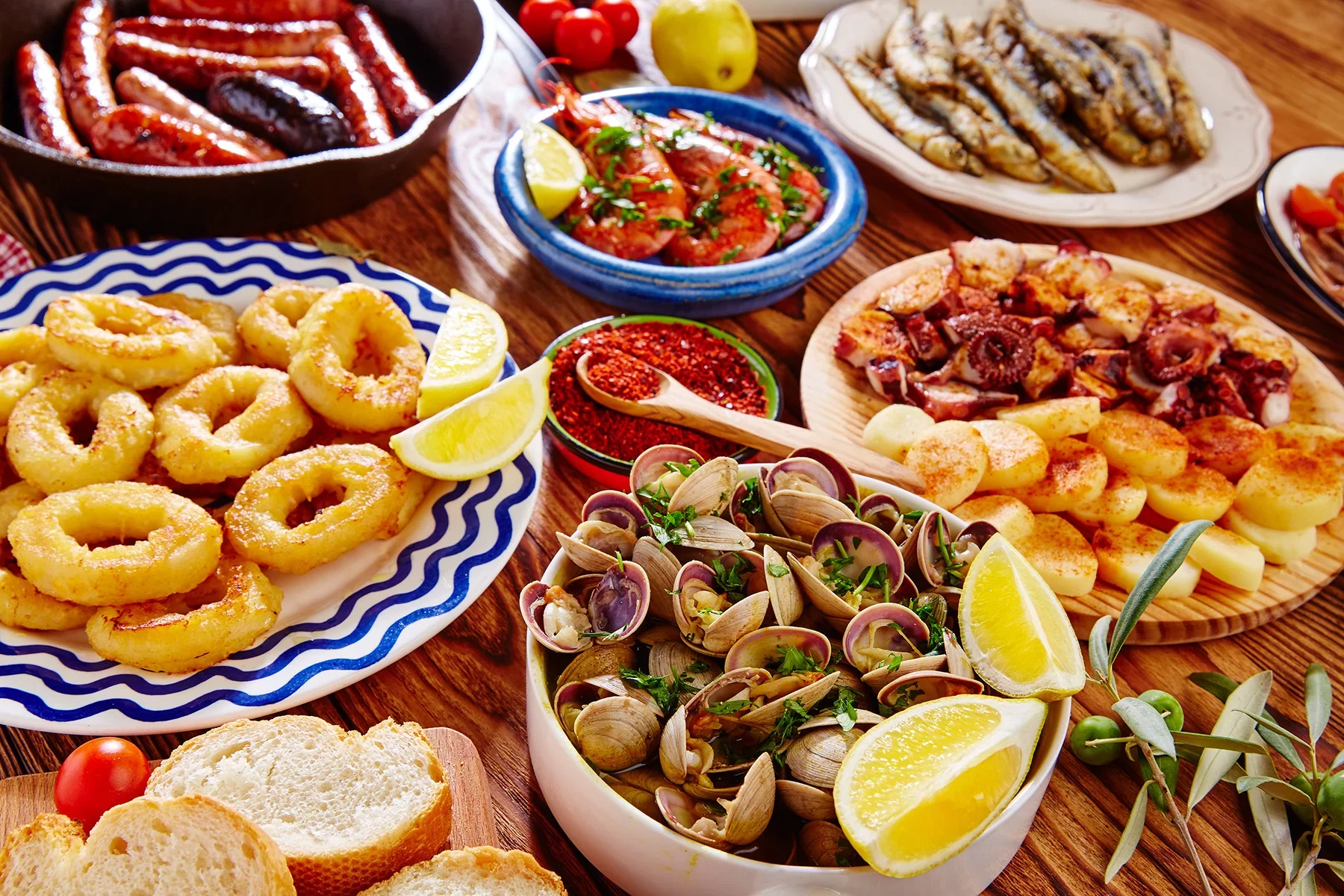
Spain cuisine food is one of the most exciting and diverse culinary traditions in Europe. From the famous paellas of Valencia and the pintxos bars of the Basque Country to the seafood feasts of Galicia and tapas culture of Andalusia, Spanish cuisine offers far more than most travelers expect.
Many visitors arrive in Spain thinking the country’s food scene is only about tapas and sangria. In reality, authentic Spanish cuisine is deeply regional, seasonal, and shaped by centuries of history. Every part of Spain has its own ingredients, flavors, cooking techniques, and culinary traditions.
This complete guide explores everything travelers need to know about traditional Spanish food in 2026. You’ll discover iconic dishes, hidden local specialties, dining customs, regional cuisines, food markets, wine culture, and insider tips that help you experience Spain like a local.
Whether you’re planning your first trip to Spain or simply want to understand Spanish gastronomy better, this pillar guide covers the true essence of Spain cuisine food.
What Makes Spanish Cuisine Unique?
Spanish cuisine is built around simplicity, freshness, and ingredient quality. Unlike cuisines that rely heavily on spices or sauces, Spanish cooking allows natural flavors to shine.
Olive oil, seafood, vegetables, rice, cured meats, garlic, saffron, and paprika are some of the key ingredients used throughout Spain. Meals are often social experiences designed for sharing and conversation rather than quick eating.
Several elements make Spanish cuisine unique:
- Strong regional food identity
- Mediterranean ingredients
- Fresh seasonal produce
- Olive oil-based cooking
- Seafood traditions
- Long dining culture
- Tapas sharing culture
- Historical Moorish influence
- Excellent wines and cured meats
Spain also follows many principles of the Mediterranean diet, which is considered one of the healthiest eating styles in the world.
Why Spain Is One of Europe’s Top Food Destinations in 2026
Spain continues to rank among the best culinary travel destinations in Europe. In 2026, food tourism in Spain is stronger than ever because travelers increasingly seek authentic local experiences instead of generic tourist dining.
Spain offers an incredible balance between quality and affordability. Visitors can enjoy Michelin-starred gastronomy, traditional taverns, seafood markets, wine regions, and family-run tapas bars without the extreme prices found in some other European countries.
Reasons travelers love Spain for food include:
- Affordable dining compared to France or Switzerland
- Incredible regional diversity
- World-famous culinary innovation
- Fresh seafood and Mediterranean produce
- Social dining culture
- Excellent public transportation between food cities
- Rich wine traditions
- Historic food markets
Spain is also home to some of the world’s best chefs and restaurants, helping the country maintain global culinary prestige.
The History of Spanish Cuisine
Spanish cuisine has evolved through thousands of years of cultural exchange.
Roman Influence
The Romans introduced many culinary foundations still important in Spain today, including:
- Olive oil production
- Wine-making
- Bread-making
- Agricultural systems
Moorish Influence
Between the 8th and 15th centuries, Moorish rule transformed Spanish food culture dramatically.
The Moors introduced:
- Rice cultivation
- Saffron
- Citrus fruits
- Almonds
- Sugar cane
- Advanced irrigation systems
Many classic Spanish dishes still show strong Moorish influence today, especially in southern Spain.
New World Ingredients
Spain’s exploration of the Americas changed European cuisine forever. Spanish traders introduced:
- Tomatoes
- Potatoes
- Chocolate
- Peppers
These ingredients later became essential parts of modern Spanish cuisine.
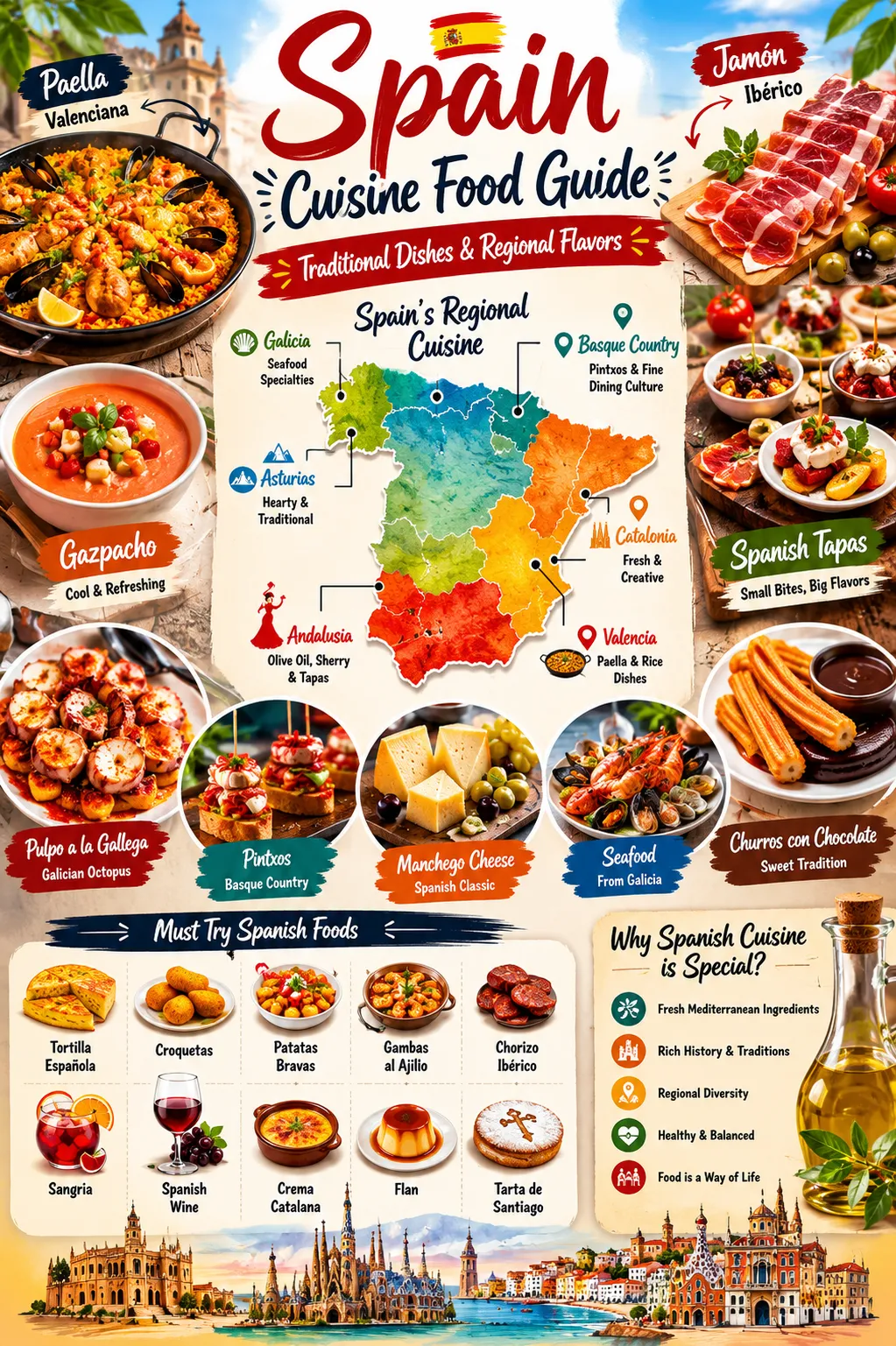
Essential Ingredients in Spanish Cooking
Understanding Spain’s ingredients helps travelers appreciate the cuisine more deeply.
Olive Oil
Spain is the world’s largest olive oil producer. Olive oil is central to Spanish cooking and used in everything from salads to frying.
The best olive oil regions include:
- Andalusia
- Jaén
- Córdoba
Jamón Ibérico
Jamón ibérico is Spain’s most luxurious cured ham. It comes from Iberian pigs and can age for several years before serving.
Seafood
Spain’s extensive coastline creates one of Europe’s richest seafood traditions.
Popular seafood includes:
- Octopus
- Mussels
- Sardines
- Anchovies
- Shrimp
- Squid
- Cod
Saffron
Saffron gives paella its famous aroma and golden color.
Paprika
Spanish smoked paprika adds depth and warmth to countless dishes.
Manchego Cheese
This famous sheep’s milk cheese comes from the La Mancha region.
Traditional Spanish Food by Region
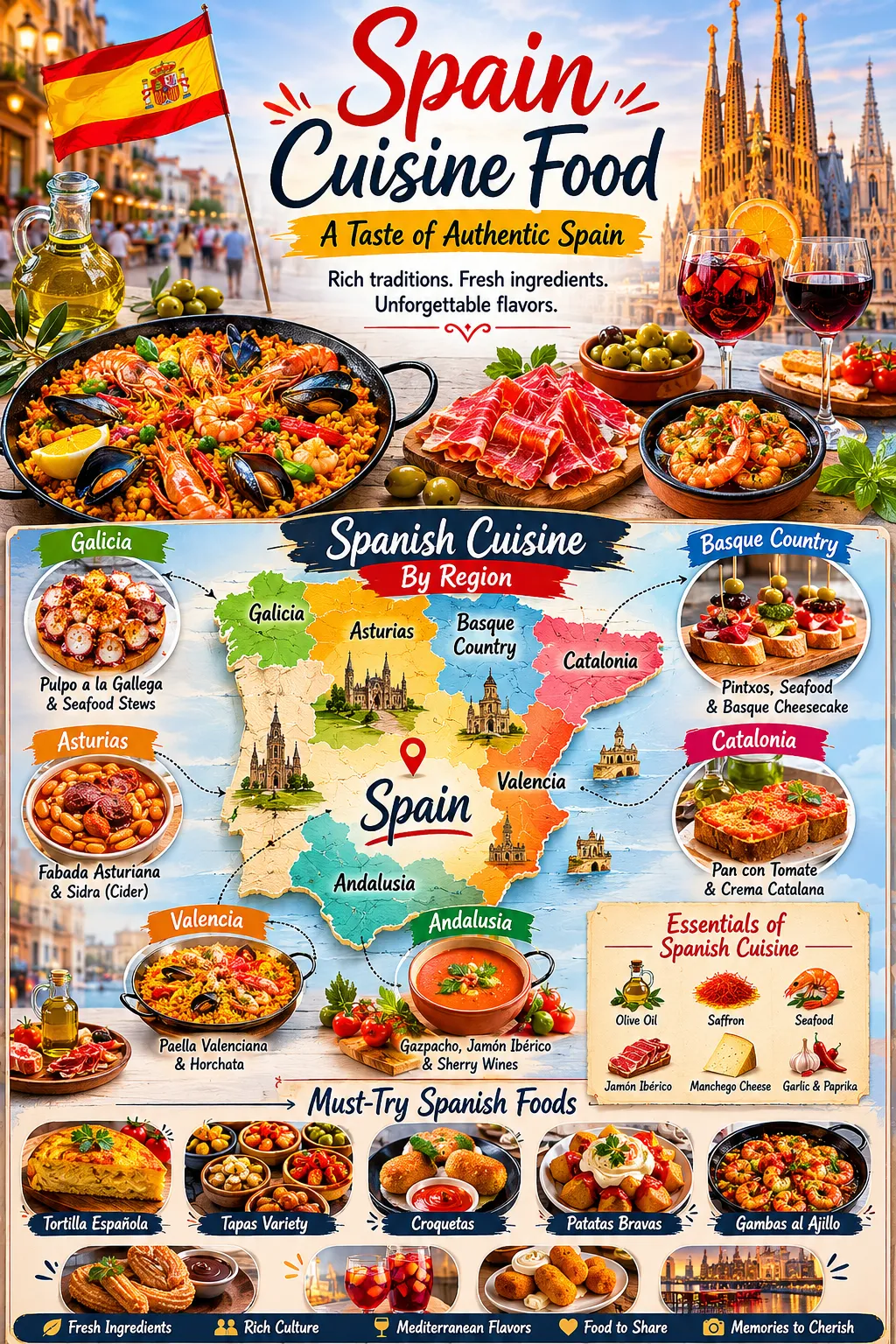
One of the best things about Spain cuisine food is regional diversity. Traveling across Spain feels like exploring multiple culinary worlds.
Andalusian Cuisine
Southern Spain is famous for fresh, simple, and Moorish-influenced dishes.
Popular Andalusian foods include:
- Gazpacho
- Salmorejo
- Fried fish
- Jamón ibérico
- Flamenquín
Best cities for food:
- Seville
- Málaga
- Granada
- Cádiz
Andalusia is also one of the best places to experience authentic tapas culture.
Basque Cuisine
Basque cuisine is widely considered among the finest in Europe.
Famous Basque dishes include:
- Pintxos
- Bacalao al pil-pil
- Txangurro
- Basque cheesecake
San Sebastián has one of the highest concentrations of Michelin-starred restaurants in the world.
Catalan Cuisine
Catalan food combines mountain and coastal influences beautifully.
Traditional Catalan dishes include:
- Pan con tomate
- Escalivada
- Fideuà
- Crema Catalana
Barcelona is one of Europe’s best cities for modern gastronomy.
Valencian Cuisine
Valencia is the birthplace of authentic paella.
Traditional dishes include:
- Paella Valenciana
- Arroz negro
- Fideuà
- Horchata
Authentic Valencian paella traditionally contains rabbit, chicken, green beans, saffron, and rice.
Galician Cuisine
Galicia is famous for Atlantic seafood and rustic cuisine.
Signature dishes include:
- Pulpo a la gallega
- Empanada gallega
- Percebes
- Seafood stews
Galicia is considered one of Spain’s top regions for seafood lovers.
Asturian Cuisine
Northern Spain specializes in hearty comfort food.
Traditional Asturian foods include:
- Fabada asturiana
- Cachopo
- Cabrales cheese
- Sidra (cider)
Asturias is perfect for travelers wanting authentic local food away from major tourist crowds.
Most Famous Foods in Spain
Every traveler should try these iconic Spanish dishes.
Paella
Spain’s most internationally recognized dish.
Best place to try:
Valencia
Tortilla Española
A thick potato omelet served across Spain.
Patatas Bravas
Fried potatoes topped with spicy sauce and aioli.
Croquetas
Creamy fried croquettes filled with ham, cod, chicken, or mushrooms.
Gazpacho
Cold tomato soup perfect for Andalusia’s hot summers.
Pulpo a la Gallega
Tender octopus with paprika and olive oil from Galicia.
Churros con Chocolate
Deep-fried pastries served with thick hot chocolate.
Spanish Tapas Culture Explained
Tapas are small dishes shared socially with drinks.
But tapas are more than food. They represent Spanish lifestyle, conversation, and community.
Popular tapas include:
- Olives
- Manchego cheese
- Croquetas
- Gambas al ajillo
- Anchovies
- Patatas bravas
- Pimientos de padrón
Tapas vs Pintxos
| Tapas | Pintxos |
| Shared small plates | Snacks served on bread |
| Common throughout Spain | Popular in Basque Country |
| Usually eaten casually | Often skewered with sticks |
Tapas culture is one of the best ways to experience authentic Spanish social life.
Hidden Food Gems Most Tourists Miss
Many visitors focus only on famous dishes. However, Spain’s hidden regional foods often provide the best culinary experiences.
Migas
Traditional fried breadcrumbs cooked with garlic and chorizo.
Percebes
Rare goose barnacles harvested from dangerous Atlantic cliffs.
Menú del Día
Affordable multi-course lunch menus popular with locals.
Local Food Markets Worth Visiting
| Market | City |
| La Boqueria | Barcelona |
| Mercado Central | Valencia |
| Mercado de Atarazanas | Málaga |
| Mercado de San Miguel | Madrid |
Best Food Cities in Spain
Madrid
Best for:
- Traditional taverns
- Fine dining
- Local markets
Barcelona
Best for:
- Seafood
- Catalan cuisine
- Modern gastronomy
San Sebastián
Best for:
- Pintxos
- Michelin-starred restaurants
Valencia
Best for:
- Paella
- Rice dishes
Seville
Best for:
- Authentic tapas culture
Spain vs Other European Food Destinations
Spain vs Italy
| Spain | Italy |
| Tapas culture | Pasta culture |
| Seafood-heavy | Pizza-focused |
| Later dining hours | Earlier dinners |
| Shared small plates | Individual portions |
espana vs France
it often feels:
- More affordable
- More relaxed
- More social
- Less formal
Many travelers prefer Spain because dining experiences feel casual and authentic rather than overly formal.
Best Time to Visit Spain for Food Lovers
Spring
Best for:
- Seafood festivals
- Wine tourism
- Mild temperatures
Summer
Best for:
- Beach dining
- Seafood
- Outdoor terraces
Autumn
Best for:
- Wine harvests
- Mushroom season
- Culinary festivals
Winter
Best for:
- Comfort foods
- Christmas sweets
- Lower crowds
Budget Food Travel in Spain
Spain is excellent for affordable food travel.
Average Daily Food Budget
| Travel Style | Daily Budget |
| Budget | €20–40 |
| Mid-range | €50–100 |
| Luxury | €150+ |
Budget Tips
- Eat menú del día lunches
- Visit local bakeries
- Avoid tourist hotspots
- Share tapas
- Explore neighborhood taverns
Luxury Culinary Travel in Spain
Spain is also one of Europe’s top luxury food destinations.
Luxury experiences include:
- Michelin-star dining
- Rioja wine tours
- Private cooking classes
- Gourmet tasting menus
- Luxury olive oil tastings
Best luxury food regions:
- Basque Country
- Catalonia
- Rioja
- Mallorca
Best Areas to Stay for Food Lovers
Madrid
Best neighborhoods:
- La Latina
- Salamanca
- Malasaña
Barcelona
Best neighborhoods:
- El Born
- Eixample
- Gràcia
San Sebastián
Best area:
- Parte Vieja
Valencia
Best area:
- Ruzafa
Spanish Drinks You Must Try
Rioja Wine
Spain’s most famous wine region.
Cava
Sparkling wine from Catalonia.
Vermouth
Traditional pre-lunch aperitif.
Sidra
Traditional cider from Asturias.
Sangria
Popular among tourists worldwide.
Transport Tips for Food Travelers
Spain’s transportation system makes food tourism easy.
Best Transport Options
High-Speed Trains
Perfect for:
- Madrid to Barcelona
- Madrid to Seville
- Valencia routes
Domestic Flights
Useful for:
- Canary Islands
- Balearic Islands
Car Rentals
Best for:
- Rural villages
- Wine regions
- Hidden coastal towns
Safety, Dining Etiquette & Cultural Tips
Spain is generally very safe for travelers.
Dining Etiquette Tips
- Dinner starts late
- Tipping is modest
- Sharing dishes is common
- Lunch is the largest meal
- Bread may cost extra
Common Tourist Mistakes
- Eating too early
- Ordering paella near tourist landmarks
- Ignoring regional specialties
- Skipping local markets
Spain Travel Tips for Solo, Couple & Family Travelers
Solo Travelers
Spain is:
- Safe
- Social
- Easy to navigate
Best cities:
- Madrid
- Valencia
- Málaga
Couples
Best romantic food destinations:
- Seville
- Granada
- San Sebastián
Families
Best family-friendly destinations:
- Valencia
- Málaga
- Mallorca
Insider Tips Most Tourists Never Learn
Eat Lunch Late
Locals usually eat lunch between 2 PM and 4 PM.
Follow Local Crowds
Busy restaurants often mean better food quality.
Avoid Tourist Menus with Photos
Authentic restaurants rarely use flashy tourist menus.
Explore Small Villages
Some of Spain’s best meals happen outside major cities.
Future Food Trends in Spain
Spain’s food scene continues evolving in 2026.
Emerging trends include:
- Sustainable seafood
- Organic wine tourism
- Farm-to-table restaurants
- Vegan Spanish cuisine
- Culinary eco-tourism
- AI-powered reservations
Spain is becoming a global leader in sustainable Mediterranean gastronomy.
Frequently Asked Questions About Spain Cuisine Food
What is Spain’s most famous food?
Paella is Spain’s most internationally recognized dish.
What food is traditional in Spain?
Traditional Spanish food includes tortilla española, gazpacho, jamón ibérico, tapas, croquetas, and seafood dishes.
Is Spanish food healthy?
Yes. Spanish cuisine follows many Mediterranean diet principles focused on olive oil, seafood, vegetables, and legumes.
What is the best food city in Spain?
San Sebastián is widely considered Spain’s top culinary destination.
What time do Spaniards eat dinner?
Dinner in Spain is usually served between 8:30 PM and 11 PM.
Is food expensive in Spain?
Spain is generally more affordable than many Western European countries.
Final Thoughts
Spain cuisine food is one of the richest and most rewarding culinary traditions in the world. Every region offers different flavors, cooking styles, and cultural experiences shaped by centuries of history.
From Basque pintxos bars and Valencian paella restaurants to Andalusian tapas taverns and Galician seafood markets, Spain delivers unforgettable food experiences for every type of traveler.
The true beauty of Spanish cuisine lies in its simplicity: exceptional ingredients, deep traditions, and meals designed to bring people together.
If you’re planning a trip to Spain in 2026, make food a central part of your journey. Explore regional specialties, eat where locals eat, visit traditional markets, and embrace Spain’s famous slow dining culture.
For more Spain travel guides, hidden gems, food experiences, and itinerary ideas, explore more articles on VisitEspanly.com.
Suggested Internal Links
- Best Tapas Bars in Madrid
- Ultimate Barcelona Food Guide
- Best Wine Regions in Spain
- Traditional Spanish Desserts
- Best Coastal Towns in Spain
Trusted External Sources
- Spain.info
- UNESCO World Heritage Centre
- Michelin Guide Spain
- Renfe
- European Union Travel Portal
Legal Disclaimer
Travel rules, prices, opening hours, transport schedules, and tourism regulations may change. Always verify information with official tourism boards, airlines, and local authorities before traveling.