Introduction
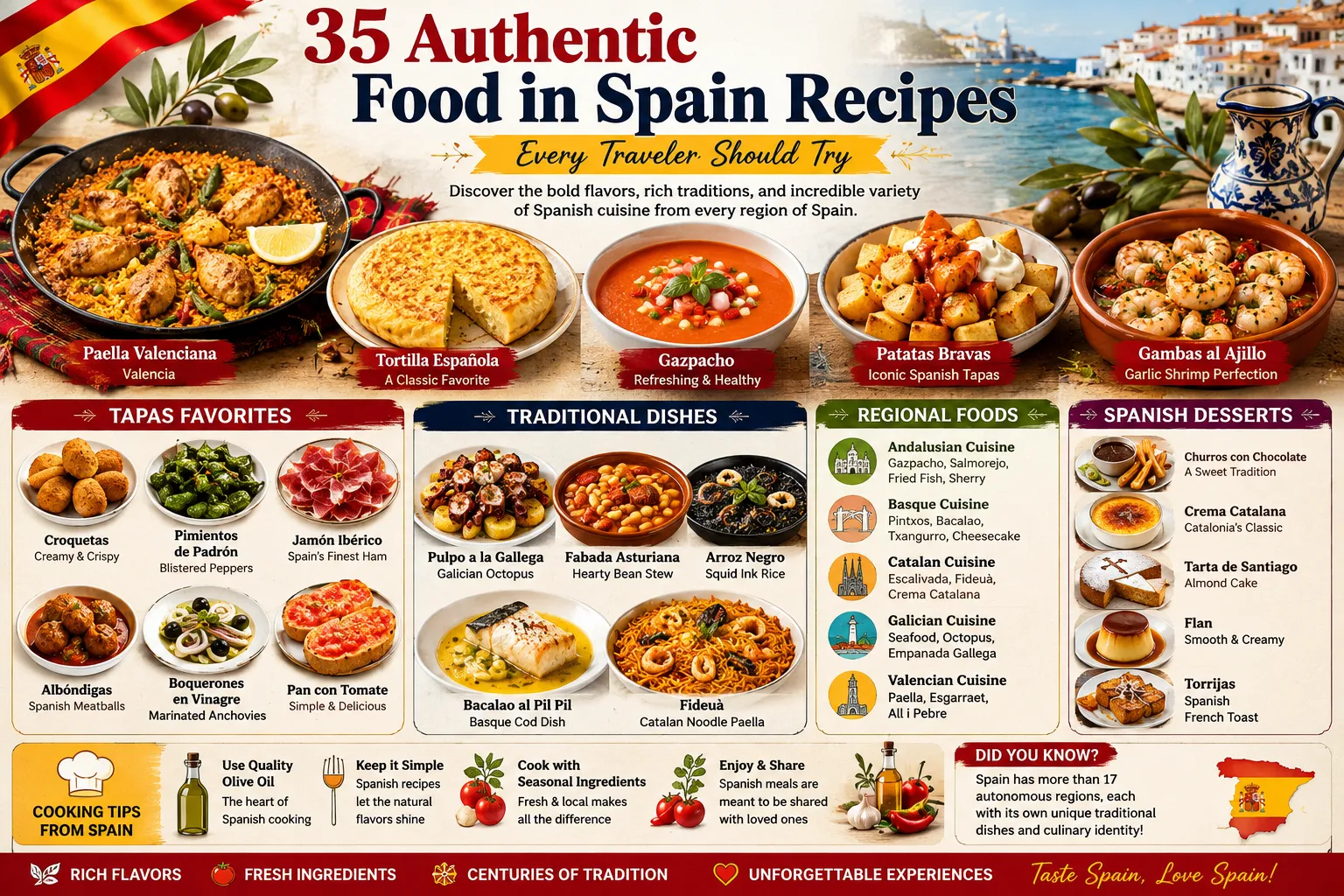
Spain is one of the world’s most exciting food destinations. While many travelers arrive expecting to eat paella, tapas, and churros, they quickly discover that Spanish cuisine is far more diverse than they imagined. Every region has its own culinary traditions, local ingredients, and famous dishes that reflect centuries of history and culture.
From the seafood-rich coastlines of Galicia to the pintxos bars of the Basque Country and the bustling food markets of Madrid and Barcelona, food is an essential part of daily life in Spain. Meals are not rushed. Dining is social, enjoyable, and deeply connected to local traditions.
Whether you’re planning your first trip to Spain, creating a culinary itinerary, or simply curious about authentic Spanish cuisine
, this guide covers everything you need to know. You’ll discover the best foods to try, top regions for food lovers, budget and luxury dining tips, cultural etiquette, and insider recommendations that many tourists miss.
By the end of this guide, you’ll know exactly what to eat, where to find it, and how to experience Spanish food like a local.
What Is Food in Spain?
Spanish food is a combination of Mediterranean flavors, regional traditions, and fresh local ingredients. Unlike countries that have a single dominant national cuisine, Spain is best understood as a collection of unique regional culinary identities.
Key features of Spanish cuisine include:
- Olive oil-based cooking
- Fresh seafood and fish
- Seasonal vegetables
- Rice dishes
- Cured meats
- Artisan cheeses
- Traditional stews
- Local wines
- Social dining culture
Quick Answer
Food in Spain is famous for its regional diversity, fresh ingredients, olive oil, seafood, tapas, paella, cured meats, and rich culinary traditions that vary from one region to another.
Why Spanish Cuisine Is Unique
Spain’s culinary heritage has been shaped by various civilizations including the Romans, Moors, Phoenicians, and Christian kingdoms. These influences introduced new ingredients, cooking techniques, and flavors that continue to define Spanish food today.
The country’s geography also plays a major role. Coastal regions specialize in seafood, while inland areas focus on meats, stews, and agricultural products.
Why Visit Spain for Food in 2026?
Spain remains one of Europe’s leading culinary tourism destinations.
Incredible Regional Diversity
Traveling across Spain feels like visiting multiple food destinations within a single country. Valencia is famous for paella, Galicia excels in seafood, Andalusia offers refreshing cold soups, and the Basque Country is known for world-class gastronomy.
Excellent Value for Money
Compared with destinations such as France, Switzerland, and Scandinavia, Spain offers outstanding dining experiences at significantly lower prices.
Authentic Food Culture
Meals are considered important social experiences. Locals often spend hours enjoying lunch or dinner with family and friends.
World-Class Culinary Scene
Spain is home to some of the world’s most innovative chefs, Michelin-starred restaurants, and internationally respected culinary traditions.
Mini Summary
Spain combines affordability, authenticity, and culinary excellence better than almost any other destination in Europe.
Best Regions in Spain for Food Lovers
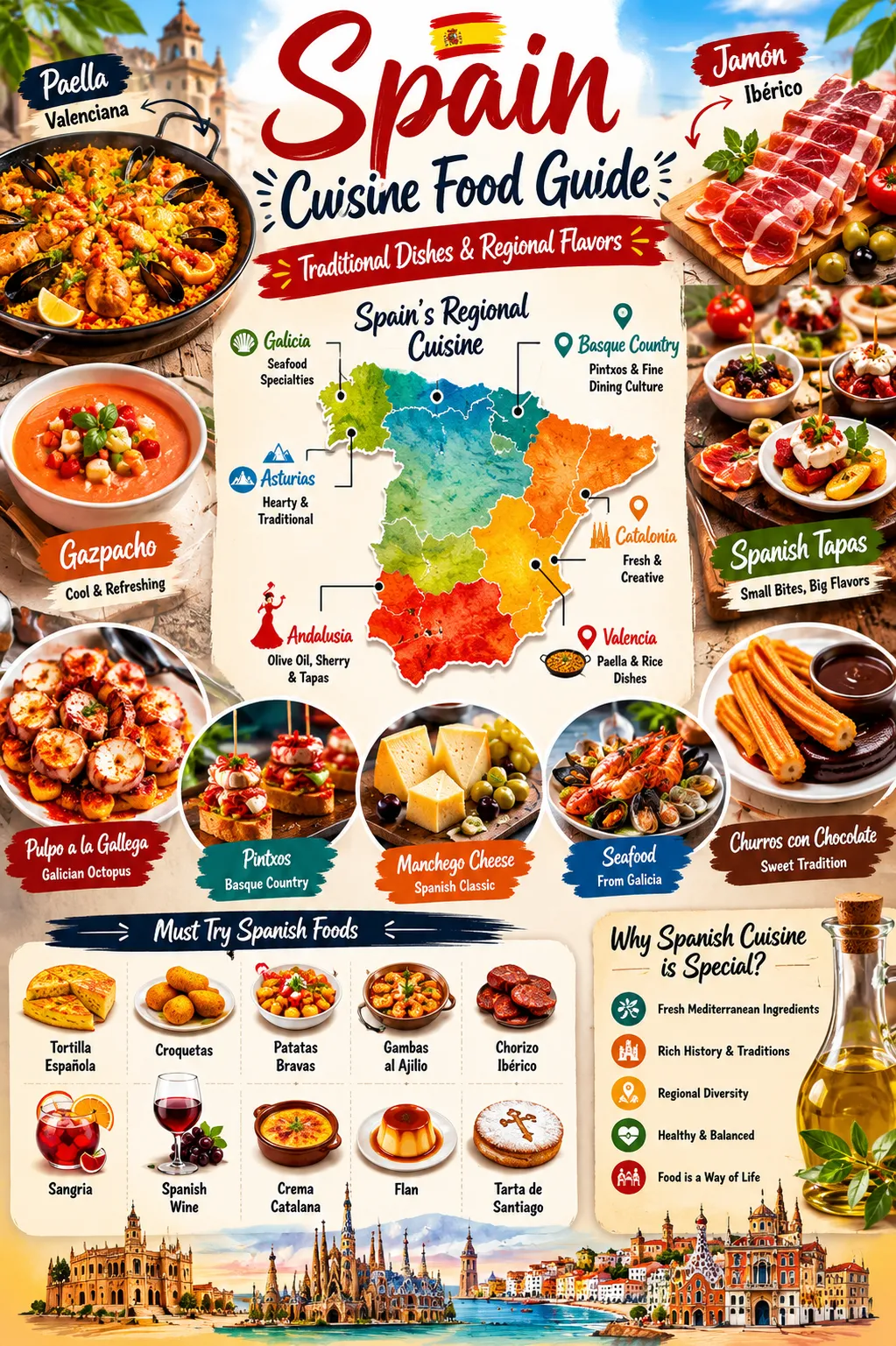
| Region | Famous Foods | Best For |
| Valencia | Paella | Rice dishes |
| Basque Country | Pintxos | Gourmet experiences |
| Galicia | Seafood | Ocean-fresh cuisine |
| Andalusia | Gazpacho, Jamón | Traditional food |
| Madrid | Cocido Madrileño | Classic Spanish dishes |
| Catalonia | Crema Catalana | Diverse cuisine |
Valencia: Home of Authentic Paella
Valencia is the birthplace of Spain’s most famous dish. Authentic Valencian paella
traditionally contains rabbit, chicken, green beans, and local rice rather than the seafood-heavy versions commonly served to tourists.
Food lovers should visit local restaurants outside the city center to experience traditional recipes.
Basque Country: Spain’s Culinary Capital
Many food experts consider San Sebastián one of the best food cities in the world.
Highlights include:
- Pintxos bars
- Michelin-starred restaurants
- Fresh seafood
- Basque cheesecake
- Local wines
The region offers exceptional dining experiences for every budget.
Galicia: Seafood Paradise
Located in northwestern Spain, Galicia is famous for its Atlantic seafood.
Must-try specialties include:
- Pulpo a la Gallega
- Fresh oysters
- Mussels
- Scallops
- Percebes (goose barnacles)
Many of Spain’s finest seafood restaurants are found in this region.
Andalusia: Traditional Southern Flavors
Andalusia offers some of Spain’s most iconic dishes.
Popular foods include:
- Gazpacho
- Salmorejo
- Fried fish
- Jamón Ibérico
- Flamenquín
The region’s warm climate and agricultural heritage contribute to its distinctive cuisine.
Hidden Food Gems Locals Love
Many travelers focus only on Madrid, Barcelona, and Valencia. However, some of Spain’s best culinary experiences are found in lesser-known regions.
Extremadura
Known for:
- Premium Iberian ham
- Traditional cheeses
- Rustic recipes
- Farm-to-table cuisine
Asturias
Famous for:
- Fabada Asturiana
- Cider houses
- Mountain cuisine
- Artisan dairy products
Murcia
Offers:
- Fresh produce
- Affordable dining
- Mediterranean seafood
- Traditional tapas
Insider Tip
Some of Spain’s most authentic meals are found in small towns where recipes have been passed down through generations.
15 Foods You Must Try in Spain
1. Paella
Spain’s most internationally famous dish.
2. Tortilla Española
A simple yet delicious potato omelet.
3. Jamón Ibérico
Premium cured ham considered one of the finest in the world.
4. Gazpacho
Refreshing cold tomato soup.
5. Salmorejo
A thicker Andalusian tomato-based soup.
6. Croquetas
Creamy fried bites filled with ham, chicken, or seafood.
7. Patatas Bravas
Fried potatoes served with spicy sauce.
8. Pulpo a la Gallega
Traditional Galician octopus.
9. Gambas al Ajillo
Garlic shrimp cooked in olive oil.
10. Pimientos de Padrón
Small peppers that are sometimes spicy.
11. Fabada Asturiana
Hearty bean stew from Asturias.
12. Pintxos
Small snacks served on bread.
13. Churros con Chocolate
Popular breakfast and dessert treat.
14. Crema Catalana
Catalonia’s answer to crème brûlée.
15. Tarta de Santiago
Traditional almond cake from Galicia.
Spain vs Other European Food Destinations
espana vs Italy
Spain Advantages
- More seafood diversity
- Strong tapas culture
- Excellent wine regions
Italy Advantages
- Global recognition
- Pasta and pizza traditions
Spain vs France
Spain Advantages
- Better value
- More casual dining
France Advantages
- Fine dining heritage
Spain vs Portugal
Spain Advantages
- Larger regional variety
Portugal Advantages
- Lower overall prices
Best Time to Visit Spain for Food
Spring (March–May)
Perfect for:
- Food festivals
- Fresh produce
- Comfortable weather
Summer (June–August)
Best for:
- Seafood
- Beach destinations
- Outdoor dining
Autumn (September–November)
Ideal for:
- Wine harvests
- Mushroom season
- Regional festivals
Winter (December–February)
Great for:
- Traditional stews
- Holiday specialties
- Fewer crowds