Introduction
Figuring out which school works best in a bustling place like Barcelona might seem tough – particularly when you’re living abroad, moving around with kids, or simply a resident hoping for something better for your child.
Most parents look at several options when choosing a school in Barcelona. Public ones sit alongside private spots, while global-style learning centers pop up too. Yet it often happens that names like Escola Sagrada Familia Barcelona come up during those talks. A lot of conversations simply land there, no matter where they begin.
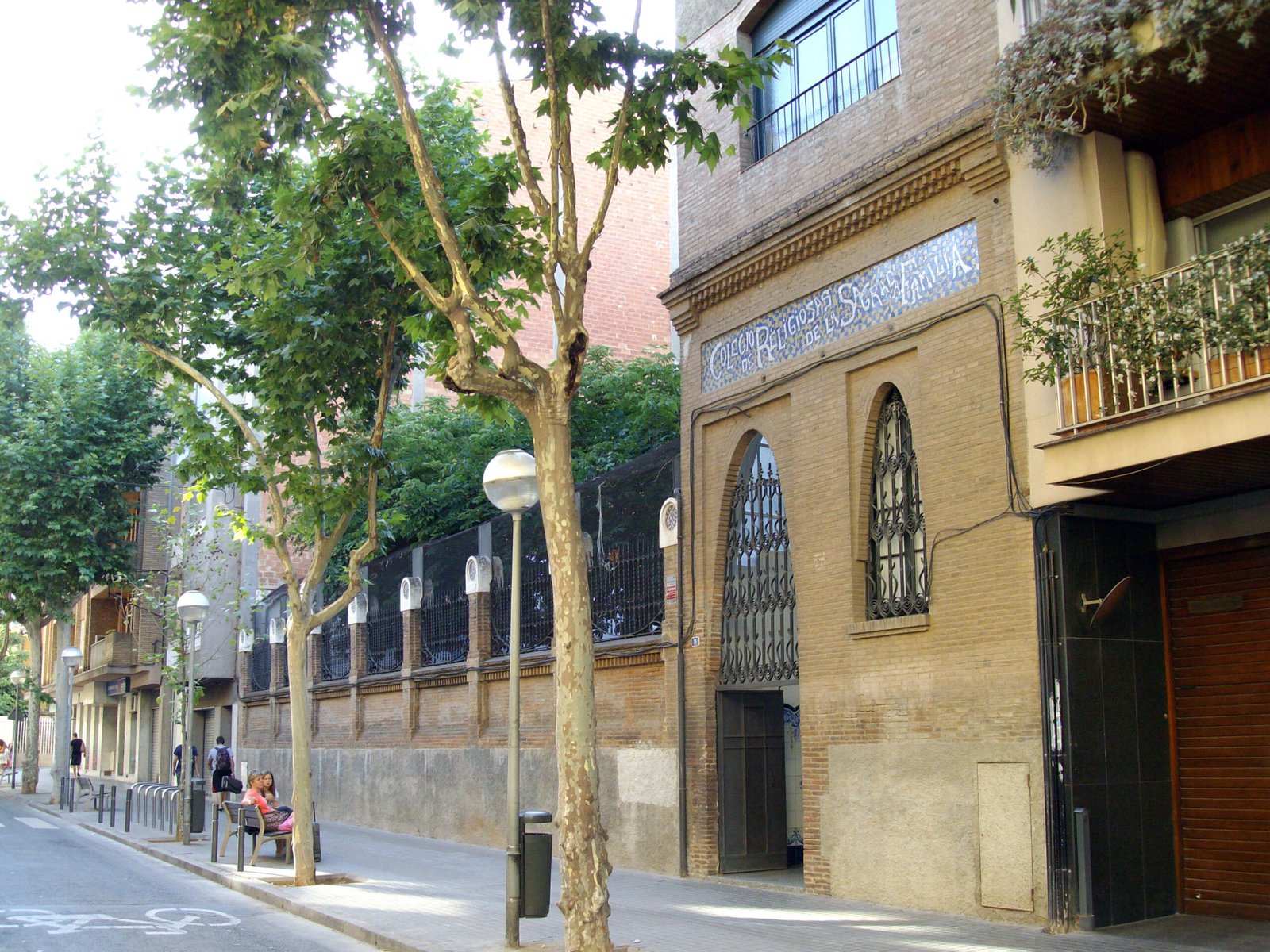
Just steps from the famous Sagrada Família, the school draws families from central neighborhoods thanks to its convenient spot. Though surrounded by city bustle, it holds a quiet presence near one of Barcelona’s most recognized sights. Because transport links are strong here, reaching the campus feels effortless for many households. Its proximity to such a well-known site adds practical appeal without relying on spectacle. While located in a busy area, the setting remains focused on daily ease rather than tourist energy.
Yet here it sits – what truly matters?
Escola Sagrada Familia and Your Child in 2026?
- This complete walkthrough aims to clear up confusion so a smart choice becomes possible. Step by step, details unfold about what lies ahead:
- Admission procedures
- Tuition fees and associated costs
- Academic curriculum and teaching methodology
- Authentic parent feedback
- Advantages and disadvantages
- Alternative schools in Barcelona
- This isn’t merely a summary – parents can rely on it when choosing what comes next.
What is Escola Sagrada Familia?
Overview of the School
Among Barcelona’s schools, Escola Sagrada Familia holds a special status. It operates under an agreement between public authorities and private owners. Funding comes partly from government sources. Teaching follows state guidelines while maintaining its own character. The model blends elements of both public and private education systems.
What does “concerted” mean?
In Spain, a concerted school operates under a hybrid model:
- Run by private hands it operates without public oversight
- Some of its money comes from the state
- This results in:
- Lower tuition compared to international schools
- Better infrastructure and support than most public schools
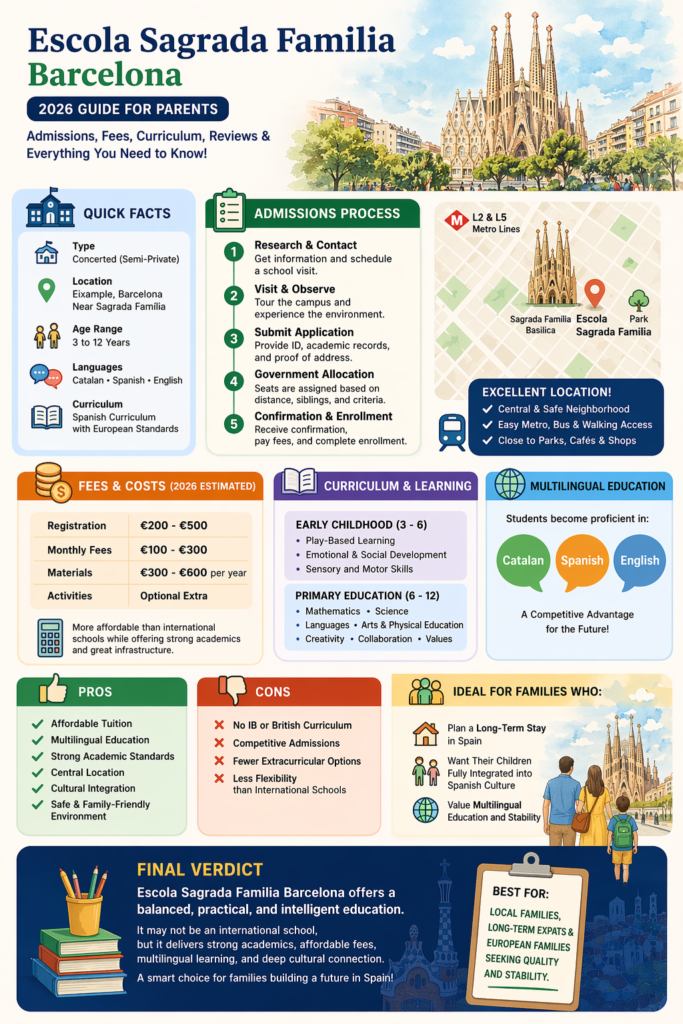
Quick Facts Table
Feature: Type
Details: Concerted (Semi-Private)
Feature: Location
Details: Eixample, Barcelona
Feature: Age Range
Details: 3 to 12 years
Feature: Languages
Details: Catalan, Spanish, English
Feature: Curriculum
Details: Spanish plus European standards
Why It Matters for Expats and Families
For families relocating to Spain or planning a long-term stay, this educational model offers multiple advantages:
- Reduced financial burden compared to international education
- Deeply rooted in spanish traditions
- Multilingual academic exposure
- A stable and structured education system
- Families aiming to raise kids fully part of Spain’s everyday life often find this setup fits best. Not separate, but woven into the local way things happen.
Location and Accessibility
Why Location is a Major Advantage
Right by the Sagrada Família, you’ll find the school sitting in a neighborhood that’s right at the heart of Barcelona. Getting around from here feels effortless thanks to strong transit links woven into daily life.
Key benefits include:
- Excellent metro connectivity
- Safe and family-oriented surroundings
- Pedestrian-friendly streets
- Parks sit just a short walk away. A café waits around the corner nearby. Shops and daily needs stand within easy reach
Transport Options
Commuting to the school is simple and efficient:
Metro lines L2 and L5
Bus routes across Eixample
Walking for nearby residents
Cycling via bike-friendly infrastructure
Local Insight
If you reside in Eixample, Gràcia, or Sant Martí, your child can travel to school conveniently with minimal daily stress.
Educational Philosophy and Teaching Style
How the School Approaches Learning
Unlike outdated educational systems, Escola Sagrada Familia blends structured academic frameworks, modern pedagogical techniques, and emotional and social development.
Core Teaching Principles
The school emphasizes:
Student-centered instruction
Emotional intelligence development
Creativity and collaboration
Discipline and ethical values
European Educational Influence
Across Europe, education is evolving. Countries such as Finland and the Netherlands prioritize practical knowledge, real-world applications, and mental well-being.
This school adopts similar philosophies while maintaining strong academic rigor.
Academic Programs Offered
Early Childhood Education (Ages 3 to 6)
Focus areas include:
- Sensory-based learning
Play-oriented education
Social engagement - Skills developed include:
- Basic communication abilities
Emotional awareness
Motor coordination - This stage forms the foundation of a child’s personality and cognitive growth.
Primary Education (Ages 6 to 12)
Core subjects include:
Mathematics
Science
Languages including Catalan, Spanish, and English
Arts
Physical Education
Key Strength: Multilingual Education
Students develop proficiency in Catalan, Spanish, and English, providing a significant competitive advantage in Europe.
Why Multilingual Education Matters
In Europe, language systems vary. Spain offers multilingual flexibility, enabling children to study across Europe, work internationally, and adapt to diverse cultural environments.
Key Features That Make Escola Sagrada Familia Unique
Starting strong with more than one language shapes sharper thinking. A boost in how clearly a person expresses ideas often follows close behind. Confidence when moving across cultures tends to grow without much effort.
Spending less on school does not mean sacrificing standards when local options deliver strong results.
Right in the middle of things, this spot suits those juggling jobs away from home – think busy parents, people living abroad, folks logging on from different time zones. Location matters most when daily routines pull you in every direction.
When people in a school neighborhood care, teamwork grows among educators and families. A shared sense of purpose helps students thrive day by day.
Admissions Process Step by Step
Step 1: Research and contact the school
Step 2: Schedule a visit and observe the environment
Step 3: Submit application documents including ID, records, and address proof
Step 4: Government allocation system based on distance, siblings, and conditions
Step 5: Confirmation, enrollment, and fee payment
Fees and Costs Estimated 2026
Registration ranges from 200 to 500 euros
Monthly fees range from 100 to 300 euros
Materials cost 300 to 600 euros annually
Activities are optional
The school is not completely free and may include additional contributions, extracurricular costs, and meal plans.
Reviews and Reputation
Parents appreciate strong academics, discipline, affordability, and central location.
Common concerns include limited international exposure, fewer extracurricular activities, and competitive admissions.
Pros and Cons
Advantages include affordable education, multilingual learning, strong academics, central location, and cultural integration.
Disadvantages include no IB or British curriculum, competitive admissions, and less flexibility.
Comparison with Other Schools in Barcelona
Escola Sagrada Familia offers medium cost, multilingual education, and local plus European curriculum.
International schools are high cost with English focus and global curriculum.
Public schools are free with Spanish or Catalan instruction.
Who Should Choose This School
Best for local families, long-term expats, and European families seeking stability.
Not ideal for short-term expats, IB curriculum seekers, or those wanting flexible systems.
Travel and Lifestyle Perspective
Living near Sagrada Família provides cultural exposure, architectural beauty, and vibrant city life.
Nearby attractions include parks, museums, cafés, and playgrounds, creating a rich environment for children.
Do’s and Don’ts for Parents
Do apply early, visit the school, understand rules, and learn basic Spanish or Catalan.
Do not expect fast admission, assume international curriculum, or ignore cultural differences.
Frequently Asked Questions
- Is Escola Sagrada Familia a private school?
It is a concerted school, meaning it is privately managed but partially funded by the government. - What languages are taught?
Catalan, Spanish, and English. - Is it suitable for international students?
Yes, but best for families staying long-term in Spain. - How competitive is admission?
Moderately competitive due to location and demand. - Are fees affordable?
Yes, much cheaper than international schools. - Does it offer IB or British curriculum?
No, it follows the Spanish education system. - Is it good for expat families?
Yes, especially those who want cultural integration.
Conclusion Final Verdict
Escola Sagrada Familia Barcelona represents a balanced, practical, and intelligent educational choice.
While it may not offer the global curriculum of elite international schools, it delivers affordable tuition, strong academic performance, multilingual education, and deep cultural integration.
For families planning a long-term life in Spain, this school provides stability, value, and meaningful development for children.