Introduction (Semantic Overview)
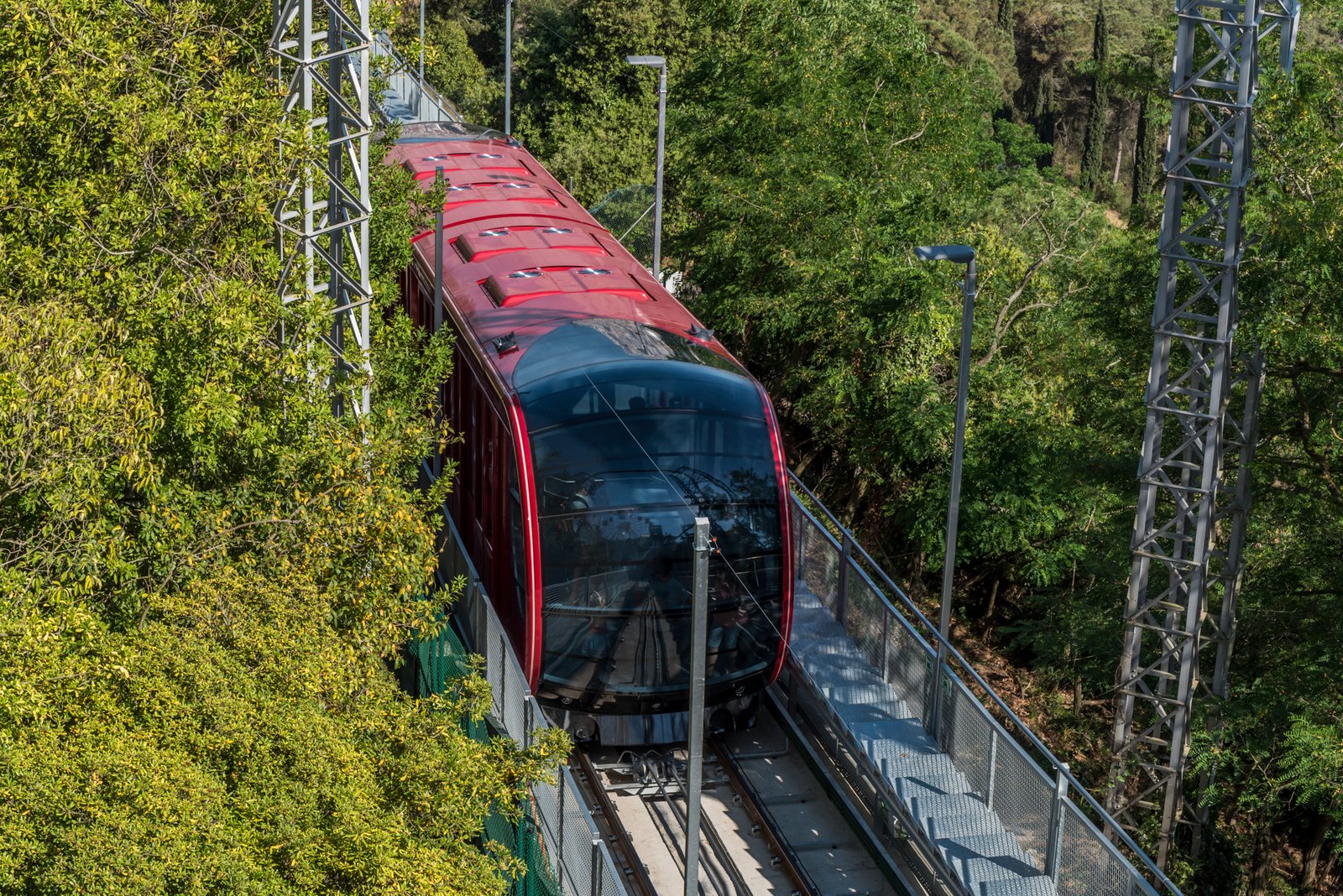
If you are designing a travel itinerary for Barcelona, Spain, one high-value experiential attraction that consistently appears in travel data clusters is the Funicular del Tibidabo Cuca de Llum.
From a semantic travel perspective, this transport system is not only a mobility solution but also a hybrid tourism experience node combining:
• Scenic transportation
• Urban elevation transition
• Heritage-linked mountain access
• Visual panoramic observation system
Located in the upper zone of Barcelona’s mountainous perimeter, the funicular acts as a rapid vertical connector to the summit of Tibidabo, one of the most visited elevated viewpoints in the region.
In this expanded NLP-optimized guide (2026 edition), we will analyze:
• System definition and functional role
• Historical evolution and modernization cycle
• Ticketing structures and pricing logic
• Route architecture and transport connectivity
• User experience modeling (UX travel flow)
• Best timing optimization for visitors
• Cost-benefit evaluation
• Frequently asked questions
What is the Cuca de Llum Funicular? (Functional Definition)
The Funicular del Tibidabo Cuca de Llum is a modern electric incline transport system designed to move passengers from the lower urban access point to the summit of Tibidabo Mountain.
From a transport engineering standpoint, it functions as:
• A cable-driven incline railway
• A short-distance vertical mobility solution
• A high-capacity tourist transit system
At the destination point, visitors access:
• Tibidabo Amusement Park
• Temple of the Sacred Heart of Jesus Tibidabo
• Panoramic skyline views over Barcelona and the Mediterranean coastline
Core System Attributes (Data-Driven Summary)
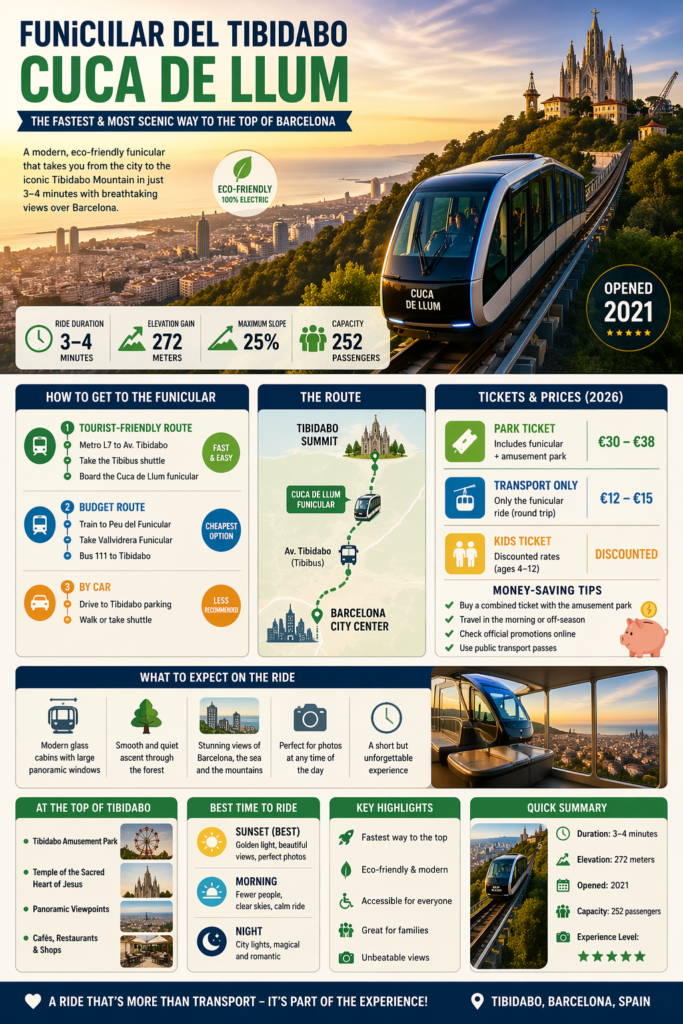
• Operational launch: 2021
• Travel time: approximately 3–4 minutes
• Energy system: fully electric propulsion
• Design model: panoramic glass cabin architecture
• Accessibility: universal wheelchair-compatible infrastructure
• Function: high-speed vertical tourist mobility corridor
NLP & Semantic Travel Interpretation
From a semantic analysis perspective, this attraction can be categorized under:
• urban mountain transport experience
• scenic elevation mobility system
• short-duration experiential transit
• eco-tourism infrastructure in Barcelona
The term Cuca de Llum is metaphorically aligned with “light worm” in Catalan, symbolizing motion, illumination, and ascent.
Historical Evolution (Temporal Data Layer)
The Tibidabo transport system demonstrates a multi-phase infrastructure evolution model:
Chronological Timeline
• 1901: Original funicular launch
• 1958: Mechanical modernization upgrade
• 2019: Decommissioning of legacy system
• 2021: Launch of Cuca de Llum modern system
Why the Cuca de Llum is Unique (Comparative Analysis)
Feature Differentiation Model
• Speed: High vs traditional systems
• Design: Futuristic glass architecture vs mechanical systems
• Experience: Immersive visual journey vs functional ascent
• Energy: Electric eco-system vs mixed systems
Route Architecture & Technical Parameters
System Metrics
• Total track length: approximately 1.1 km
• Elevation gain: approximately 272 meters
• Maximum incline: 25% gradient
• Duration: 3–4 minutes
Ticketing System & Pricing Structure
Ticket Categories
• Combined Park Access: €30–€38 includes amusement park and funicular
• Transport-only Ticket: €12–€15
• Child Pricing: reduced rate
Money Optimization Tips
• Purchase bundled tickets
• Travel off-peak
• Avoid high season
• Use transport passes
Route Access Models
Standard Tourist Route
• Metro Line L7 to Av. Tibidabo
• Shuttle transfer (Tibibus)
• Funicular boarding
Budget Route
• Train to Peu del Funicular
• Vallvidrera funicular
• Bus 111 connection
Private Vehicle Route
• Direct mountain access
• Parking required
User Experience Flow (UX Simulation)
The ride follows a structured experiential sequence:
• Entry into panoramic cabin
• Gradual ascent movement
• Expanding city visibility
• Full skyline exposure
• Summit arrival
During the ascent:
• Cityscape expands visually
• Mediterranean horizon appears
• Urban density fades
Optimal Timing Strategy
Sunset Window
• High visual contrast
• Golden lighting
• Best photography
Morning Window
• Low crowd density
• Clear visibility
• Stable conditions
Night Window
• City lights exposure
• Atmospheric depth
• Night skyline effect
Is the Cuca de Llum Worth It? (Decision Analysis)
Positive Conditions
• Scenic transport interest
• Family travel
• First-time visitors
• Photography focus
Low Value Conditions
• Tight budgets
• Hiking preference
• Non-touristic travel
Conclusion
For most visitors, it provides high experiential value.
Comparative European Transport Analysis
• Switzerland: traditional alpine systems
• Austria: slower scenic lifts
• Spain (Barcelona): modern hybrid tourism mobility
Destination Experience at Tibidabo Summit
At the top:
• Tibidabo Amusement Park
• Religious landmark areas
• Panoramic viewpoints
Visual Points
• Cathedral steps
• Ride structures
• Coastal viewpoints
Amenities & Services Ecosystem
At the summit:
• Cafés
• Restaurants
• Shops
• Restrooms
Family Compatibility Analysis
Suitable for:
• Families
• Children
• Elderly visitors
Accessibility Framework
• Wheelchair access
• Wide cabin entry
• Level boarding
Summary Intelligence Layer
• Duration: 3–4 minutes
• Type: electric funicular
• Experience rating: high
• Best time: sunset
• Accessibility: full
FAQs
Around 3–4 minutes.
Most times, that rings true.
True, single-entry passes are available.
For sure, kids fit right in here. Totally welcoming for parents too. A place where everyone feels at ease together.
Sunset or morning.
Yes.
Most people would say yes. That includes you, probably.
Final Conclusion
The Funicular del Tibidabo Cuca de Llum is a modern tourism mobility system combining:
• Fast vertical transport
• Scenic panoramic experience
• Sustainable design
• High tourism value
It is a key experiential attraction in Barcelona’s transport tourism ecosystem.