H1: Parque de Atracciones Tibidabo – Full Semantic Travel Analysis Guide (2026 Edition)
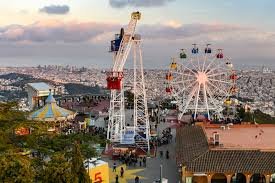
Situated on the highest natural elevation overlooking Barcelona, the Tibidabo Amusement Park is not merely an amusement destination but a multi-layered experiential tourism ecosystem combining heritage, panoramic geography, recreational engineering, and traditional identity.
This attraction is positioned on Mount Tibidabo , forming part of the Collserola hill range, and represents one of the oldest continuously operating amusement environments in Europe.
Unlike contemporary high-intensity theme parks, Tibidabo functions as a hybrid leisure infrastructure model, merging:
- Historical amusement architecture
- Low-to-medium intensity recreational systems
- Scenic observation platforms
- Family-oriented experiential design
- Cultural and spiritual proximity landmarks
This guide provides a comprehensive semantic breakdown of Parque de Atracciones Tibidabo, including transport logistics, pricing structures, ride taxonomy, user experience modeling, travel optimization strategies, comparative analysis, and decision-making frameworks for visitors in 2026.
H2: What is Parque de Atracciones Tibidabo? (Complete Functional Overview)
The Parque de Atracciones Tibidabo is a heritage amusement complex located on Mount Tibidabo in Barcelona, Spain. It is engineered as a multi-zone entertainment environment that integrates traditional amusement rides with panoramic observation infrastructure.
At more than 500 meters above sea level, the park provides a high-resolution visual field of the entire Barcelona metropolitan coastline, Mediterranean Sea horizon, and surrounding urban topology.
Core Functional Characteristics
The park operates under a multi-dimensional tourism model:
- Recreational amusement system (rides and attractions)
- Visual tourism platform (citywide panoramic observation)
- Historical preservation zone (legacy rides and structures)
- Family entertainment ecosystem (child-safe attractions)
- Cultural landmark integration (religious and architectural proximity)
Semantic Value Proposition
Tibidabo’s uniqueness is derived from its low-density thrill architecture combined with high-emotional scenic output, making it fundamentally different from conventional amusement parks.
H2: Historical Evolution of Parque de Atracciones Tibidabo (1901–2026)
The origin of Tibidabo dates back to 1901, positioning it among the earliest operational amusement parks in Europe.
H3: Chronological Development Framework
- 1901 → Initial public opening phase
- 1920s → Introduction of mechanical amusement systems
- 1928 → Installation of iconic aviation simulation ride (“Avió”)
- Mid-20th century → Expansion of family-oriented attractions
- 2000s modernization phase → Infrastructure upgrades while preserving heritage elements
- Present era (2026) → Hybrid model combining vintage amusement with modern safety systems
Heritage Significance
Tibidabo functions as a living amusement museum , preserving early mechanical ride engineering while integrating modern safety compliance standards.
This dual-layer structure increases its cultural tourism value index significantly.
H2: Location Intelligence and Transport Accessibility Framework
Tibidabo is geographically positioned at the summit of Mount Tibidabo, within the Collserola Natural Park region.
H3: Optimized Transport Pathways
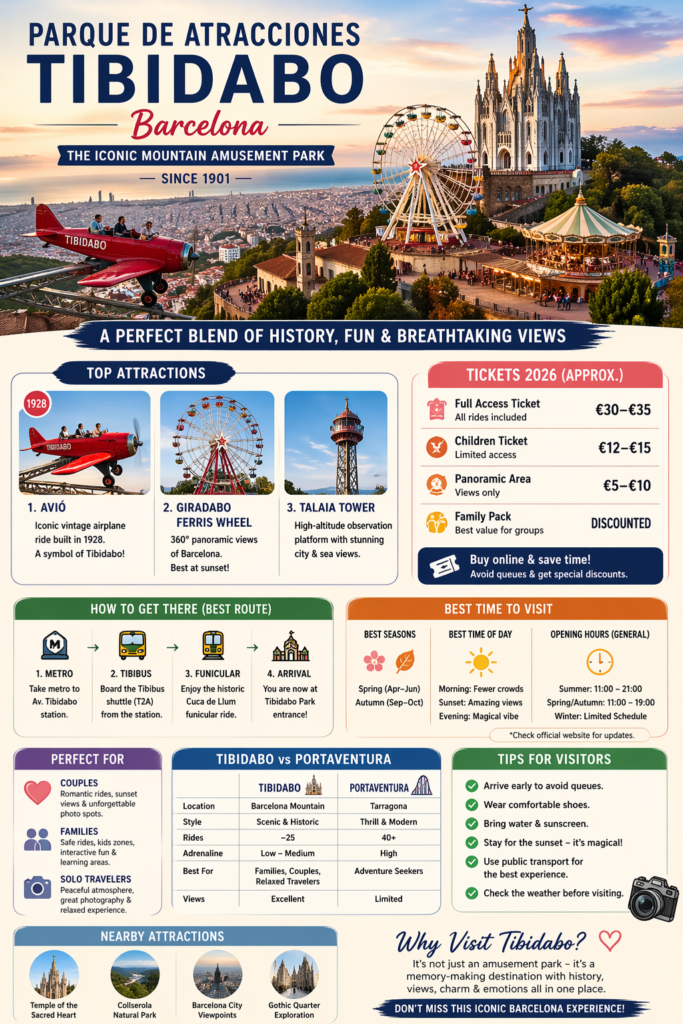
Route 1: Metro + Funicular System (Recommended Cognitive Route)
- Metro arrival at Av. Tibidabo station
- Transfer to T2A shuttle bus (Tibibus system)
- Boarding of the Cuca de Llum funicular system
- Arrival at park entrance zone
This route is considered the highest experiential value transport sequence due to scenic ascent integration.
Route 2: Direct Bus Transit
- Direct Tibibus service from central Barcelona
- Reduced transfer complexity
- Moderate time efficiency
Route 3: Private Vehicle Access
- High convenience index
- Parking limitation during peak tourism periods
- Increased cost variability
Transport Optimization Insight
For maximum experiential value, the funicular-based ascent is strongly recommended due to its immersive landscape transition effect.
H2: Attraction Taxonomy – Rides and Experience Modules
The park contains approximately 25+ structured attractions categorized into three functional clusters:
H3: Signature Legacy Attractions
1. Avió (Historic Aviation Simulation Ride)
The Avió ride is a preserved mechanical aviation simulator introduced in 1928.
Key attributes:
- Historical aviation replication system
- Red aircraft structural design
- Symbolic representation of early aeronautical experimentation
This attraction functions as a heritage interaction module rather than a thrill-based system.
2. Giradabo Observation Ferris Wheel
A panoramic rotational observation system designed for:
- 360-degree city visualization
- Sunset optimization viewing
- Low-motion experiential relaxation
3. Talaia Vertical Observation Tower
A high-elevation open-air platform system providing:
- Maximum altitude exposure
- Wind-intensity environmental interaction
- High-resolution urban visual mapping
H3: Family-Oriented Experience Systems
These attractions are designed using child-safe recreational algorithms:
- Carousel rotational system
- TibiCity interactive learning zone
- Miniature roller coaster modules
- Cognitive engagement play environments
Target demographic: 3–12 age group segmentation.
H3: Moderate Thrill Systems
Tibidabo does not operate as a high-intensity adrenaline park; however, it includes structured thrill units:
- Merlí Drop Vertical Descent System
- Muntanya Russa roller coaster circuit
- Hotel Krüeger immersive horror simulation environment
These systems provide controlled adrenaline stimulation without extreme intensity thresholds.
H2: Ticket Pricing Architecture (2026 Economic Model)
| Ticket Category | Estimated Price | Functional Access |
| Full Access Pass | €30–€35 | Complete ride access |
| Child Entry Pass | €12–€15 | Partial access structure |
| Panoramic Entry | €5–€10 | View-only access layer |
| Family Bundle | Discounted | Group optimization package |
Cost Optimization Insight
Digital pre-booking reduces queue friction and may provide dynamic pricing benefits.
H2: Is Parque de Atracciones Tibidabo Worth Visiting? (Decision Framework Analysis)
This section evaluates visitor suitability using intent-based segmentation.
H3: HIGH VALUE VISITORS (Recommended Profile)
Scenic tourism seekers
Family travelers
Romantic experience couples
Cultural tourism enthusiasts
Photography-focused travelers
H3: LOW VALUE FIT (Not Ideal For)
Extreme thrill seekers
High-adrenaline roller coaster demand users
Full-scale mega theme park expectations
Action-intensive amusement preference profiles
Final Decision Output
Tibidabo is optimized for experiential depth rather than intensity escalation.
H2: Optimal Seasonal and Temporal Visiting Strategy
H3: Seasonal Windows
- Spring (April–June): High environmental comfort index
- Autumn (September–October): Balanced crowd distribution
H3: Daily Time Optimization
- Morning: Low congestion
- Sunset: Maximum visual output
- Evening: Romantic ambiance peak
H2: Operational Timetable Overview
| Seasonal Period | Operating Hours |
| Summer | 11:00–21:00 |
| Spring/Autumn | 11:00–19:00 |
| Winter | Reduced operational cycle |
H2: Visitor Optimization Guidelines (Expert Travel Recommendations)
To maximize experience efficiency:
- Arrive early to reduce queue density
- Utilize layered transport system (metro + funicular)
- Carry hydration and UV protection
- Prioritize sunset viewing phase
- Validate weather conditions prior to arrival
H2: Visitor Type Segmentation Model
: Couples Segment
- Romantic observation points
- Sunset Ferris wheel exposure
- Low-noise environment
: Family Segment
- Safe ride architecture
- Educational entertainment zones
- Controlled movement environment
H3: Solo Traveler Segment
- High autonomy navigation
- Photography optimization
- Calm experiential flow
H2: Comparative Analysis – Tibidabo vs PortAventura World
| Parameter | Tibidabo | PortAventura |
| Location | Barcelona mountain | Tarragona region |
| Experience Type | Scenic + historic | High adrenaline |
| Ride Volume | ~25 | 40+ |
| Intensity Level | Low–medium | High |
| Target Audience | Families & couples | Thrill seekers |
| Visual Output | Exceptional | Moderate |
Conclusion
- Tibidabo = experiential tourism system
- PortAventura = adrenaline entertainment system
H2: Nearby Tourism Integration Nodes
Recommended combination destinations:
- Sagrat Cor Temple summit
- Collserola Natural Park ecosystem
- Barcelona urban viewpoints
- Gothic Quarter cultural district
H2: Suggested One-Day Travel Flow Model
Morning Phase:
- Arrival and panoramic exploration
- Environmental orientation
Afternoon Phase:
- Ride engagement sequence
- Food and rest cycles
Evening Phase:
- Sunset viewing optimization
- Photography capture phase
H2: Common Tourist Operational Errors
Late arrival scheduling
Weather condition neglect
Transport misalignment
Misaligned expectation of thrill intensity
Ignoring sunset timing window
H2: Frequently Asked Questions (FAQs)
1. How long do you need at Parque de Atracciones Tibidabo?
Approximately 3–5 hours is sufficient for a full experience cycle.
2. Is Tibidabo good for adults?
Yes, it is optimized for adult scenic and relaxed experiential engagement.
3. Is Tibidabo expensive?
Pricing is moderate compared to European amusement park standards.
4. Can you visit Tibidabo without rides?
Yes, panoramic-only access is available at reduced cost.
5. What is the best transport option?
The funicular + shuttle combination provides the highest experiential value.
6. Is Tibidabo crowded?
Crowd density is generally lower than major European theme parks.
7. Is Tibidabo safe for children?
Yes, the park is structured with family-safe engineering standards.
H2: Final Analytical Conclusion – Should You Visit Parque de Atracciones Tibidabo?
The Tibidabo Amusement Park operates as a hybrid experiential tourism system combining historical amusement engineering with panoramic environmental exposure.
Its core value is not ride intensity but emotional resonance, visual depth, and cultural integration.
For visitors to Barcelona in 2026, Tibidabo represents a high-value experiential destination suitable for:
- Memory creation
- Scenic tourism
- Family engagement
- Romantic travel experiences