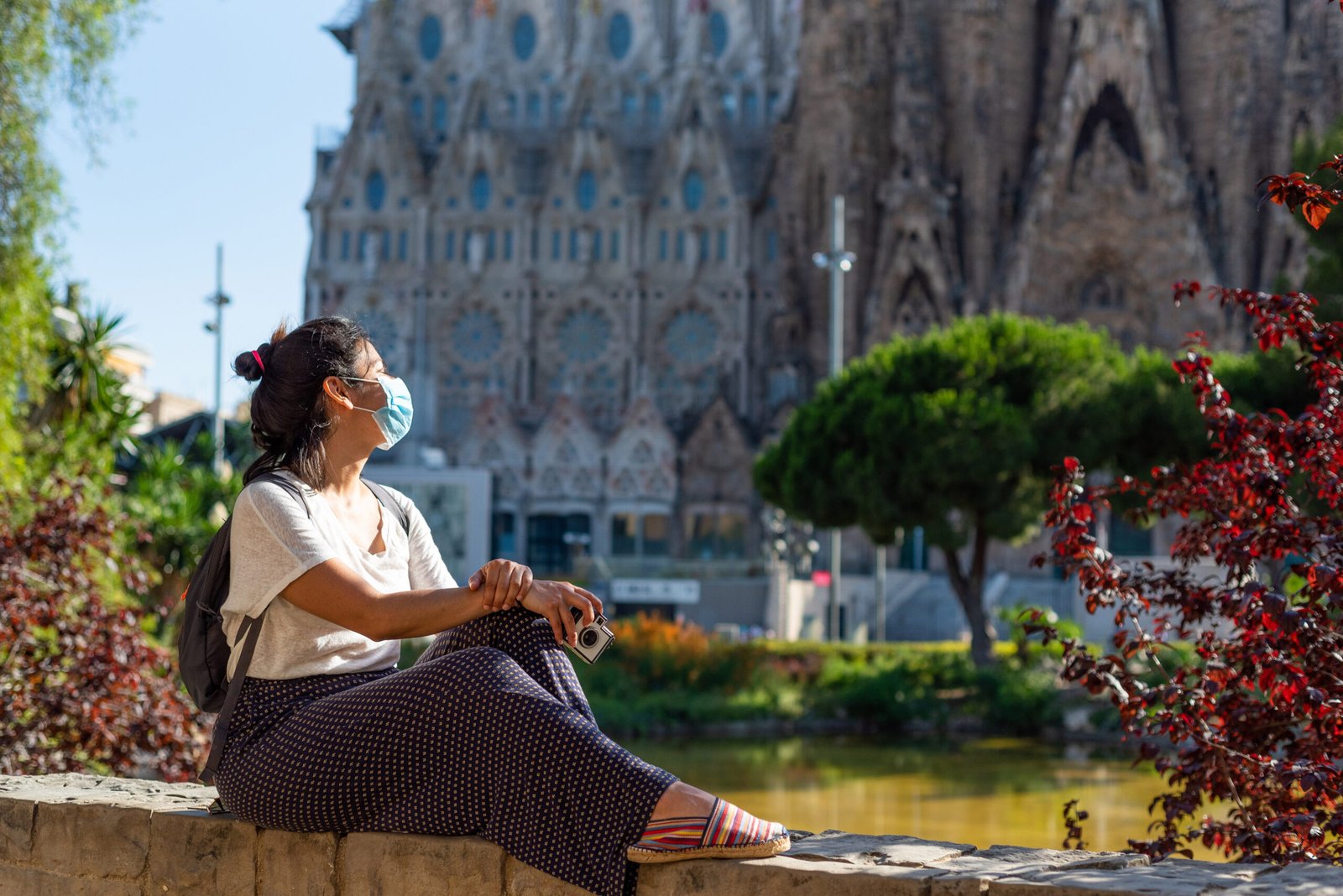
Dress Code for Sagrada Familia (2026 Guide
Introduction
Few places in Europe leave such a strong impression as the Sagrada Familia. More than just stone and glass, this famous church blends artistry, faith, and heritage into something alive.
Most people miss something obvious when they plan trips.
Clothes must follow clear rules.
- Year after year, people show up ready to enter – only to be turned away when what they’re wearing falls short of expectations, regardless of having bought a ticket ahead of time.
- This full 2026 walkthrough aims to keep you clear of that scenario altogether.
- Picture flipping through pages where seasons shape your wardrobe choices. Each chapter shows which clothes fit winter, spring, summer, or fall – alongside clear mistakes to skip. Breaking unwritten dress codes can lead to awkward moments, even stares. Outfit examples appear for adults and kids, built around real-life needs. Travelers’ tips pop up, gathered from years of moving across borders. Hidden details about local customs show up too, things most books leave out.
- You’ll walk in knowing exactly what to expect. Confidence settles in when surprises fade. Calm follows clarity, showing up just before the door opens.
Why the Dress Code for Sagrada Familia Matters
More Than Just a Tourist Attraction
The Sagrada Familia is not like a typical tourist attraction.
A sacred Roman Catholic basilica stands here, functioning as a living site of prayer where customs remain unchanged through time. Because it serves worshippers daily, guests must act with care and wear suitable clothing without exception.
Unlike spots like the Eiffel Tower or the Colosseum – where what you wear hardly matters at all – this place stands apart. Dressing here follows stricter lines, shaped by older habits. There, a casual look slips through without notice; here, it draws eyes. Rules bend less, expectations hold tighter. The contrast shows up plainly once you arrive.
Inside, it feels less like visiting and more like arriving somewhere set apart. The air changes as soon as your foot crosses the threshold.
Cultural Context (Often Overlooked but Essential)
From one country to another in Europe – say, Spain or Italy or even parts of France – the way people dress at holy places tends to match. Quiet rules show up again and again where faith matters.
Most people coming through need to keep shoulders covered. Loose clothing tends to be frowned upon. Modesty matters here, so outfits stay on the quieter side. Sleeves help. Long tops work better than short ones. Appearance leans conservative by necessity.
Even famous sites like St. Peter’s Basilica fall under these guidelines, just as Florence Cathedral does. The same holds true for Notre-Dame Cathedral – no exceptions there.
Grasping where these customs come from can keep you out of awkward spots while quietly honoring how people live here. Not knowing might lead to missteps; paying attention signals that you care about fitting in without causing offense.
Is There a Dress Code at Sagrada Familia?
Short Answer (Featured Snippet Ready)
Yes, the Sagrada Familia has a strict dress code. Visitors must wear modest clothing that covers shoulders and thighs. Entry can be denied if these rules are not followed.
Official Policy Overview
The basilica requires visitors to wear respectful and modest clothing. Beachwear and revealing outfits are not permitted, and all visitors are visually checked by security staff before entering.
If your outfit does not meet the requirements, you may be denied entry immediately without exception.
Sagrada Familia Dress Code: Complete Rules (2026)
Allowed Clothing
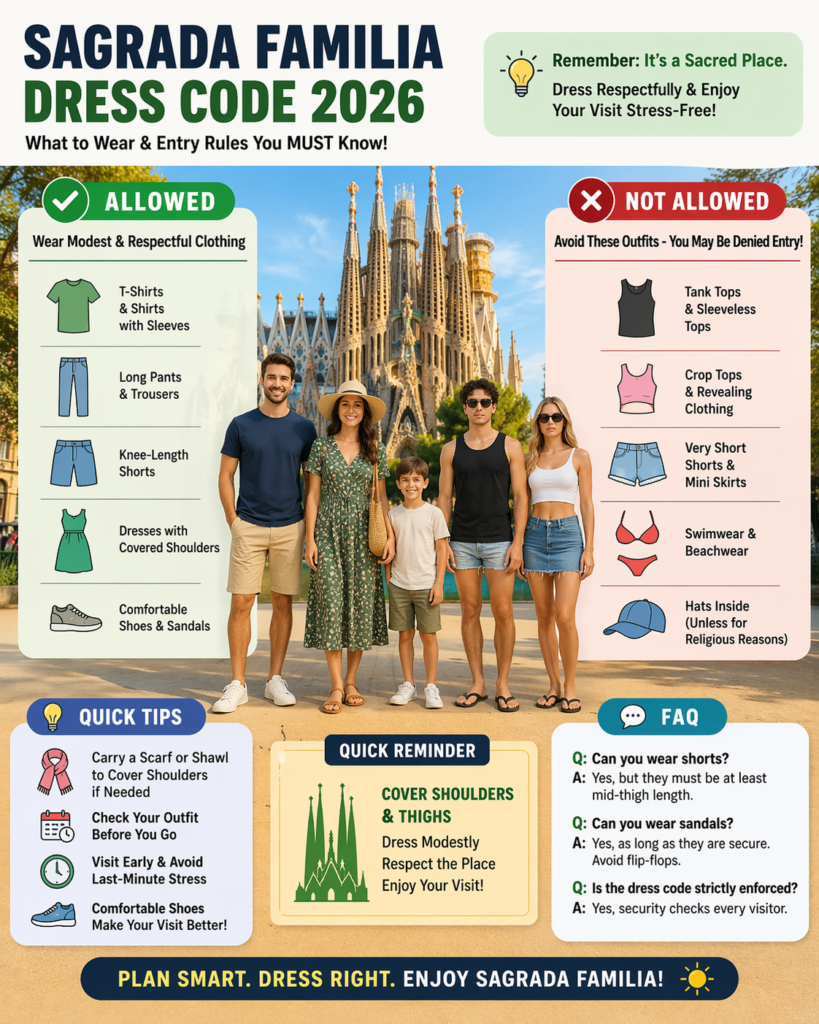
Visitors can safely wear T-shirts with sleeves, shirts, blouses, dresses with covered shoulders, long trousers, knee-length shorts, and skirts that extend below mid-thigh. Comfortable shoes such as sneakers or secure sandals are also acceptable.
If your clothing appears modest and respectful, you will generally have no issues entering.
Not Allowed Clothing
Clothing that is not permitted includes sleeveless tops, tank tops, crop tops that expose the stomach, very short shorts, mini skirts, swimwear, and transparent garments. Hats are not allowed inside unless worn for religious reasons, and clothing with offensive messages is also prohibited.
- These are the most common reasons visitors are refused entry.
- Quick Comparison Table: Allowed vs Not Allowed
- Category: Tops
- Allowed: T-shirts, blouses
- Tank Tops Crop Tops Not Allowed
- Category: Bottoms
- Knee-Length Shorts Trousers Permitted
- Mini skirts and short shorts are not allowed
- Category: Dresses
- Permitted midi and maxi dresses
- Strapless or revealing dresses not allowed
- Category: Footwear
- Allowed: Sneakers, sandals
- Barefoot or Flip-Flops Not Permitted
- Category: Accessories
- Scarves Light Jackets Allowed
- Hats Not Allowed Inside
What Happens If You Break the Dress Code?
Real Consequences
If you do not follow the dress code, you may be denied entry, and your ticket will not be refunded. You will also lose any time spent waiting in line, and no exceptions are made for tourists.
The enforcement is consistent and strict.
Real-Life Scenario
Imagine you purchased a ticket, waited in line for 30 minutes, and arrived wearing a sleeveless top.
Security stops you at the entrance, and you are refused entry. There is no refund and no second chance.
What to Wear to Sagrada Familia (Detailed Outfit Guide)
For Women
Recommended Outfits
Women can wear midi or maxi dresses with sleeves, blouses paired with long skirts, or T-shirts combined with lightweight trousers.
Smart Tip
Carrying a scarf or shawl is highly recommended. It can instantly cover your shoulders and help you meet the dress code requirements without changing your entire outfit.
For Men
Recommended Outfits
Men can wear T-shirts or polo shirts, long trousers, knee-length shorts, and comfortable walking shoes.
Avoid
Sleeveless gym shirts and very short shorts should be avoided.
For Kids
Children have slightly more relaxed rules, but they should still wear modest clothing. Swimwear and inappropriate outfits are not allowed
Seasonal Dress Guide (Barcelona Weather)
Summer (June – August)
Summers in Barcelona can be very hot, often exceeding 30 degrees Celsius. Lightweight and breathable clothing is recommended, but shoulders must still be covered.
Winter (December – February)
Winters are mild but cooler. Visitors should wear jackets, sweaters, and closed shoes.
Spring & Autumn
These seasons are ideal for visiting. Light jackets, layered outfits, and comfortable shoes work best.
Footwear Rules (Often Ignored)
Allowed
Sneakers, walking shoes, and secure sandals are all acceptable.
Not Recommended
Flip-flops, beach sandals, and barefoot entry are not appropriate due to safety and respect considerations.
Top Tourist Mistakes to Avoid
Wearing Beachwear
In a coastal city like Barcelona, this is a common mistake.
Ignoring Shoulder Coverage
This is the most frequent reason for denial.
Assuming Rules Are Flexible
The rules are strictly enforced.
Dressing Only for Photos
Fashion choices may not meet entry requirements.
Not Bringing Backup Clothing
A scarf can save your visit.
Pro Tips from Travel Experts
Dress slightly more modestly than required to be safe. Carry a scarf or light jacket at all times. Avoid borderline outfits that may be questionable. Double-check your clothing before entering, and try to visit early in the day to avoid crowds.
Pros & Cons of the Dress Code
Pros
The dress code helps preserve religious values, maintain a peaceful environment, protect cultural traditions, and encourage respectful behavior among visitors.
Cons
It can surprise tourists who are unaware of the rules, feel restrictive during hot weather, and offers no flexibility. There is also a financial risk if you are denied entry.
Comparison: Sagrada Familia vs Other European Churches
The Sagrada Familia has a high level of strictness, focusing on covering shoulders and wearing modest clothing.
Vatican churches have very strict rules requiring both knees and shoulders to be covered.
Florence Cathedral also enforces strict modesty rules, while Notre-Dame Cathedral tends to be slightly more relaxed but still requires respectful attire.
How to Prepare Before Your Visit
Step-by-Step Checklist
Check your outfit carefully before leaving. Ensure your shoulders are covered and your clothing is of appropriate length. Pack a scarf or shawl just in case, and wear comfortable shoes suitable for walking.
Complete Packing List for Sagrada Familia Visit
Essentials
Modest clothing, a scarf or shawl, comfortable shoes, a water bottle, and sunglasses.
Optional
A light jacket, a small backpack, and a travel guide.
Best Time to Visit (Bonus Tip)
Visiting early in the morning is recommended to avoid crowds and heat. Weekdays are generally less busy than weekends, making the experience more enjoyable.
FAQ Section (SEO Optimized)
- Can you wear shorts to Sagrada Familia?
Yes, but they must be at least mid-thigh length or longer. - Can you wear sandals?
Yes, as long as they are secure. Avoid flip-flops. - Is the dress code strictly enforced?
Yes, security checks every visitor. - Can you wear sleeveless tops?
No, shoulders must be covered. - What happens if I don’t follow the rules?
You may be denied entry without a refund. - Is there a dress code for children?
Yes, but slightly relaxed. Still modest clothing is expected. - Can I bring a scarf to cover up?
Yes, and it is highly recommended.
Conclusion: Final Expert Advice
A visit to the Sagrada Familia is not just about sightseeing. It is about experiencing art, culture, and spirituality in one place.
The dress code is simple, but ignoring it can disrupt your entire visit.
Remember to cover your shoulders, avoid revealing clothing, and dress respectfully.
With proper preparation, you can enjoy this iconic landmark without any stress or issues.