Introduction
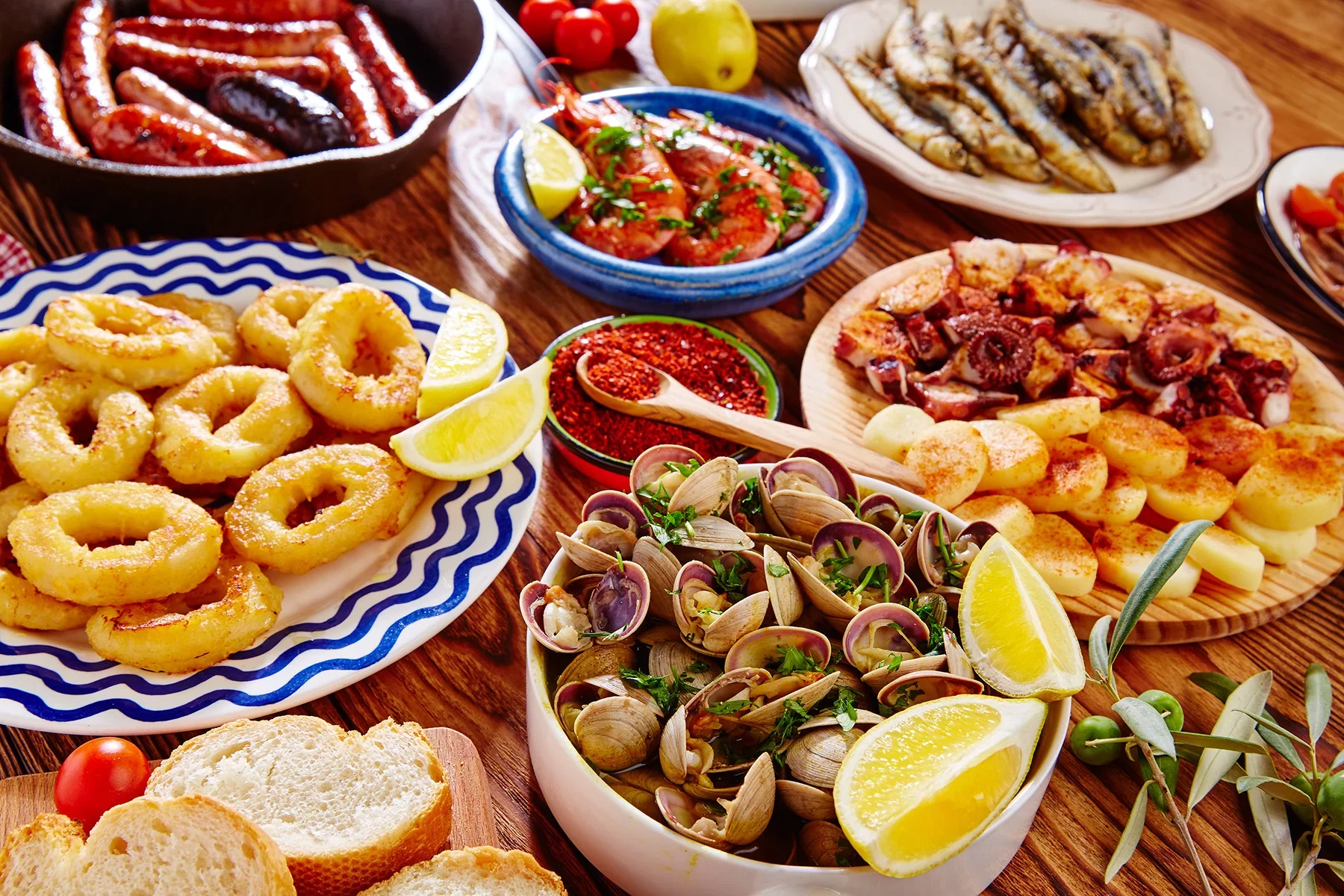
Spain is one of the best food destinations in the world. Travelers arrive expecting paella and tapas, but quickly discover that Spanish
cuisine is far more diverse, regional, and culturally rich than most guidebooks explain.
From seafood markets in Galicia to pintxos bars in the Basque Country and olive oil traditions in Andalusia, every region of Spain has its own flavors, ingredients, and food identity. Eating in Spain is not just about restaurants. It’s about culture, timing, family traditions, and local pride.
One of the biggest mistakes tourists make is eating only in crowded tourist areas or assuming Spanish food is the same across the country. In reality, the food culture in Valencia is completely different from what you’ll find in Madrid, Barcelona, Seville, or San Sebastián.
This guide covers the most famous food in Spain, traditional Spanish dishes, regional specialties, local dining customs, food etiquette, hidden gems, and insider tips that help travelers eat like locals in 2026.
If you’re planning a Spain trip, this article will help you discover exactly what to eat, where to try it, and how to avoid tourist traps.
Why Spanish Cuisine Is Famous Worldwide
Spanish cuisine is internationally respected because it combines simplicity, freshness, and strong regional traditions.
Unlike cuisines that rely heavily on sauces or complicated techniques, Spanish cooking often focuses on high-quality ingredients prepared in simple ways. Olive oil, seafood, cured meats, vegetables, rice, and bread form the foundation of many dishes.
Spain is also one of Europe’s strongest culinary destinations because food culture is deeply integrated into everyday life. Meals are social, slow, and communal.
Spanish cuisine is famous for:
- Mediterranean ingredients
- Olive oil-based cooking
- Seafood dishes
- Rice dishes
- Tapas culture
- Regional diversity
- Wine traditions
- Fresh local produce
- UNESCO-recognized culinary heritage
The country is home to world-famous restaurants and Michelin-starred chefs, but authentic Spanish food experiences are often found in tiny local taverns, markets, and family-owned restaurants.
What Food Is Spain Most Famous For?
The most famous food in Spain includes:
- Paella
- Jamón Ibérico
- Tortilla Española
- Patatas Bravas
- Gazpacho
- Croquetas
- Churros con Chocolate
- Pulpo a la Gallega
- Pintxos
Among these dishes, paella is considered Spain’s most internationally recognized food.
However, many Spaniards believe tortilla española and jamón ibérico better represent everyday Spanish eating culture.
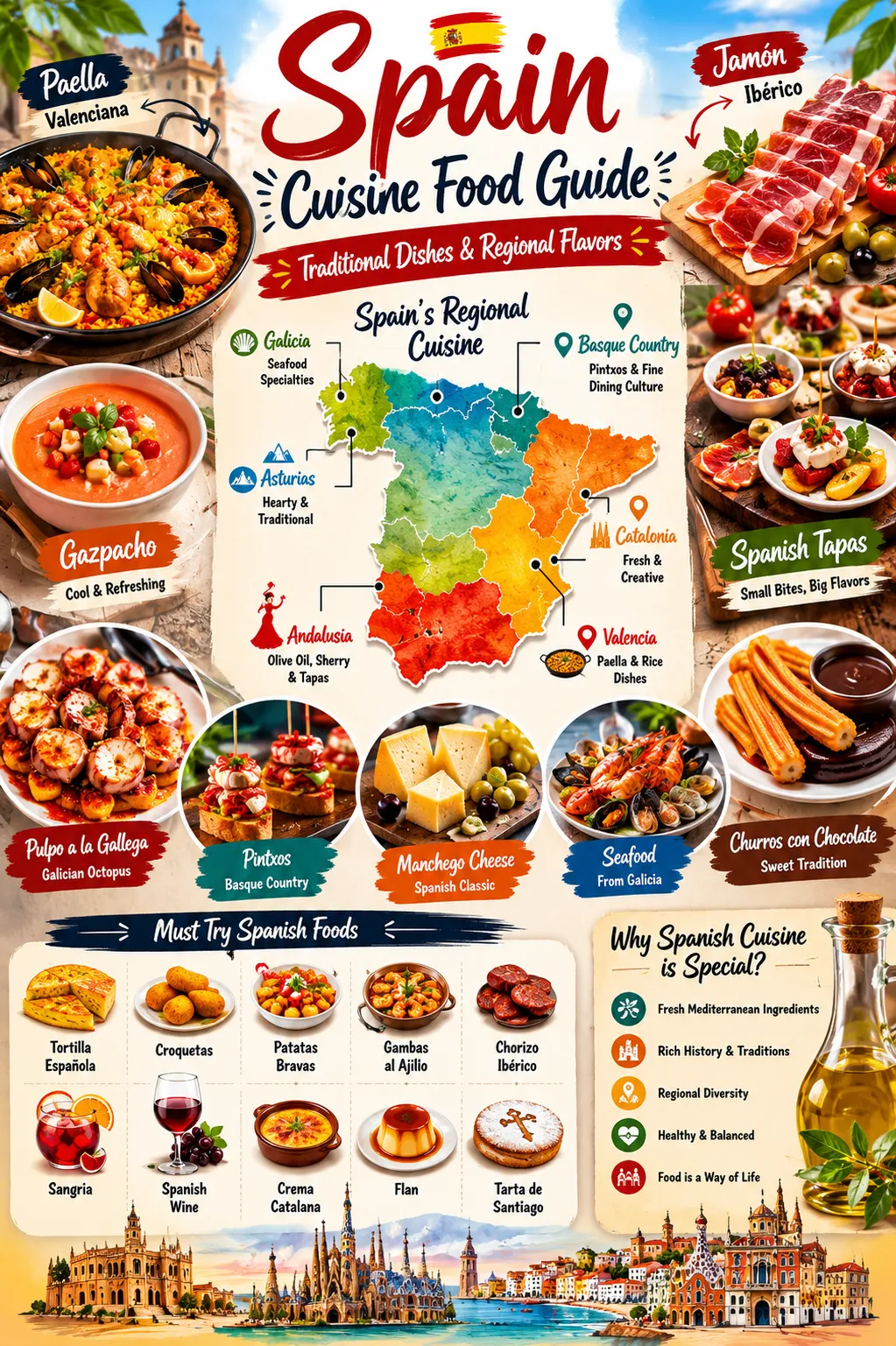
The Ultimate List of Famous Foods in Spain
1. Paella Valenciana
Paella originated in Valencia and remains Spain’s most iconic rice dish.
Authentic Valencian paella traditionally includes:
- Rabbit
- Chicken
- Green beans
- Garrofó beans
- Saffron rice
- Olive oil
Contrary to tourist menus, authentic paella rarely contains chorizo.
Best place to try it:
Valencia
Local tip:
Locals usually eat paella at lunch, not dinner.
2. Jamón Ibérico
Jamón Ibérico is Spain’s legendary cured ham made from Iberian pigs.
The highest quality version is called Jamón Ibérico de Bellota, produced from acorn-fed pigs and aged for several years.
The texture is buttery, rich, and deeply savory.
Best regions:
- Andalusia
- Extremadura
- Salamanca
3. Tortilla Española
Tortilla Española is a thick Spanish omelet made with eggs, potatoes, olive oil, and sometimes onions.
It’s one of the most common daily foods in Spain and appears everywhere from bakeries to tapas bars.
Locals eat it:
- For breakfast
- As tapas
- In sandwiches
- During lunch
- As a late-night snack
One of Spain’s biggest food debates:
Should tortilla contain onions?
4. Patatas Bravas
Patatas bravas are crispy fried potatoes served with spicy brava sauce and sometimes garlic aioli.
They are one of the country’s most beloved tapas dishes.
Best cities:
- Madrid
- Barcelona
Insider tip:
Every tapas bar has its own sauce recipe.
5. Gazpacho
Gazpacho is a refreshing cold soup from Andalusia made from tomatoes, cucumbers, peppers, garlic, olive oil, and bread.
It’s especially popular during summer when temperatures rise above 35°C in southern Spain.
Best region:
Andalusia
6. Salmorejo
Salmorejo is often confused with gazpacho, but it is thicker and creamier.
Made with tomatoes, bread, garlic, and olive oil, it’s usually topped with jamón and boiled egg.
Best city:
Córdoba
7. Croquetas
Croquetas are crispy fried rolls with creamy béchamel filling.
Popular fillings include:
- Ham
- Chicken
- Cod
- Mushrooms
- Cheese
They are one of the most common tapas dishes in Spain.
8. Pulpo a la Gallega
This famous Galician octopus dish features sliced octopus topped with paprika, olive oil, sea salt, and potatoes.
Best region:
Galicia
Authenticity tip:
The octopus should be tender, not rubbery.
9. Pimientos de Padrón
These small green peppers are lightly fried and sprinkled with sea salt.
Most are mild, but occasionally one is extremely spicy.
That surprise is part of the experience.
10. Fabada Asturiana
Fabada is a rich bean stew from Asturias made with:
- White beans
- Chorizo
- Morcilla
- Pork
It’s one of Spain’s ultimate comfort foods.
11. Pintxos
Pintxos are Basque-style bar snacks usually served on bread with skewers.
Best place:
San Sebastián
Difference between tapas and pintxos:
Pintxos are usually individually assembled and displayed at bars.
12. Gambas al Ajillo
Shrimp cooked in sizzling garlic olive oil.
Simple, flavorful, and extremely popular.
13. Bocadillo de Calamares
Madrid’s famous squid sandwich.
Crispy calamari served in fresh bread near Plaza Mayor and traditional taverns.
14. Fideuà
A Valencian seafood dish similar to paella but made with noodles instead of rice.
15. Cochinillo Asado
Roasted suckling pig from Segovia known for crispy skin and tender meat.
16. Albóndigas
Spanish meatballs often served in tomato sauce or almond sauce.
17. Boquerones en Vinagre
Fresh anchovies marinated in vinegar, olive oil, and garlic.
18. Chorizo al Vino
Spanish chorizo sausage slowly cooked in red wine.
19. Migas
A rustic dish made from fried breadcrumbs, garlic, olive oil, and meat.
20. Escalivada
Catalan roasted vegetables served with olive oil.
21. Pan con Tomate
Bread rubbed with tomato, garlic, and olive oil.
A daily staple in Catalonia.
22. Bacalao al Pil Pil
Basque cod dish with garlic-infused olive oil sauce.
23. Cocido Madrileño
A traditional chickpea stew from Madrid.
Especially popular during winter.
24. Arroz Negro
Black rice dish colored with squid ink.
25. Lechazo Asado
Slow-roasted lamb from Castilla y León.
26. Tarta de Santiago
Traditional almond cake from Galicia.
27. Crema Catalana
Spain’s version of crème brûlée with caramelized sugar.
28. Churros con Chocolate
Fried dough sticks served with thick hot chocolate.
Best eaten:
- Breakfast
- Late-night snack
29. Leche Frita
A creamy fried dessert topped with cinnamon and sugar.
30. Arroz con Leche
Spanish rice pudding popular across northern Spain.
31. Empanada Gallega
Savory pastry filled with seafood, meat, or vegetables.
32. Calçots
Catalan grilled onions served with romesco sauce.
Popular during winter festivals.
33. Cachopo
Asturian breaded beef stuffed with ham and cheese.
34. Morcilla
Traditional Spanish blood sausage.
35. Callos a la Madrileña
Madrid-style tripe stew.
36. Rabo de Toro
Slow-cooked oxtail stew from Córdoba.
37. Sepia a la Plancha
Grilled cuttlefish with olive oil and garlic.
38. Ensaladilla Rusa
Spanish potato salad with tuna, vegetables, and mayonnaise.
39. Huevos Rotos
Broken eggs served over fried potatoes and ham.
40. Turrón
Traditional nougat dessert eaten during Christmas.
41. Sobrasada
Soft cured sausage from Mallorca.
42. Queso Manchego
Spain’s famous sheep milk cheese from La Mancha.
43. Percebes
Goose barnacles harvested from dangerous Atlantic coastlines in Galicia.
One of Spain’s strangest seafood delicacies.
44. Cava
Sparkling wine produced mainly in Catalonia.
45. Tinto de Verano
A refreshing wine-based drink locals often prefer over sangria.
Best Regional Foods in Spain
Spain’s food culture changes dramatically from one region to another.
This regional diversity is what makes Spanish cuisine so unique.
Food in Andalusia
Andalusian cuisine focuses heavily on olive oil, vegetables, seafood, and cold soups.
Must-try foods:
- Gazpacho
- Salmorejo
- Fried fish
- Jamón Ibérico
- Rabo de Toro
Best food cities:
- Seville
- Córdoba
- Málaga
- Granada
Food in Valencia
Valencia is Spain’s rice capital.
The region is famous for:
- Paella Valenciana
- Fideuà
- Arroz Negro
Valencians are extremely protective of authentic paella traditions.
Food in Catalonia
Catalan cuisine blends Mediterranean and French influences.
Famous dishes include:
- Pan con tomate
- Escalivada
- Crema catalana
- Calçots
Barcelona also has a strong modern gastronomy scene.
Food in Madrid
combines culinary traditions from across Spain.
Famous dishes include:
- Cocido Madrileño
- Bocadillo de Calamares
- Callos
- Tortilla Española
The city is also known for classic taverns and vermouth culture.
Food in Galicia
Galicia is famous for seafood and Atlantic flavors.
Highlights include:
- Pulpo a la Gallega
- Mussels
- Scallops
- Percebes
- Empanadas
Many Spaniards consider Galicia the country’s best seafood region.
Food in the Basque Country
The Basque Country is internationally respected for culinary excellence.
Famous foods include:
- Pintxos
- Txuleta steak
- Seafood dishes
- Bacalao
Best food city:
San Sebastián
Traditional Spanish Tapas You Should Never Miss
Tapas are one of the most famous parts of Spanish food culture.
Popular tapas include:
- Patatas bravas
- Croquetas
- Tortilla Española
- Gambas al ajillo
- Albóndigas
- Boquerones
- Pimientos de padrón
However, tapas culture changes dramatically depending on the city.
| Region | Tapas Style |
| Granada | Free tapas with drinks |
| Madrid | Shared plates |
| Basque Country | Pintxos bars |
| Barcelona | Modern gourmet tapas |
| Seville | Traditional taverns |
Mini summary:
There is no single tapas experience in Spain. Every region has its own traditions.
Famous Spanish Desserts
Spanish desserts are often lighter and less sugary than American desserts.
Best desserts to try:
- Churros con chocolate
- Crema catalana
- Tarta de Santiago
- Arroz con leche
- Leche frita
- Flan
- Turrón
- Polvorones
Spanish Drinks That Pair Perfectly With Food
Spain has a strong wine and aperitif culture.
Popular drinks include:
- Rioja wine
- Vermouth
- Cava
- Tinto de verano
- Sidra asturiana
- Sherry
Local tip:
Many Spaniards drink vermouth before lunch on weekends.
Foods Tourists Often Mistake as Authentic Spanish Food
Many visitors misunderstand Spanish food culture.
Myth 1: Sangria Is Spain’s Main Drink
Reality:
Locals usually drink beer, wine, vermouth, or tinto de verano.
Myth 2: Paella Is Eaten Everywhere
Reality:
Authentic paella is deeply connected to Valencia.
Myth 3: Tapas Are the Same Across Spain
Reality:
Tapas traditions differ greatly between regions.
Myth 4: Spaniards Eat Dinner Early
Reality:
Dinner often starts after 9 PM.
Best Cities in Spain for Food Lovers
San Sebastián
Best for:
- Pintxos
- Michelin dining
- Seafood
Valencia
Best for:
- Authentic paella
- Rice dishes
Seville
Best for:
- Traditional tapas
- Andalusian cuisine
Madrid
Best for:
- Historic taverns
- Diverse regional foods
Barcelona
Best for:
- Modern gastronomy
- Catalan cuisine
Spain vs Other European Food Destinations
| Country | Strength | Weakness |
| Spain | Regional diversity | Late dining hours |
| Italy | Pasta & pizza | More tourist pricing |
| France | Fine dining | Expensive restaurants |
| Portugal | Seafood value | Smaller culinary range |
| Greece | Mediterranean cuisine | Less regional variation |
Spain offers one of Europe’s best balances between affordability, authenticity, and food diversity.
Best Time to Visit Spain for Food Experiences
Spring
Best for:
- Festivals
- Seafood
- Mild weather
Summer
Best for:
- Gazpacho
- Beach dining
- Outdoor terraces
Autumn
Best for:
- Wine harvests
- Mushroom season
Winter
Best for:
- Stews
- Roast meats
- Christmas desserts
Budget Food Guide for Spain
Spain is more affordable than many Western European destinations.
Tips for eating well on a budget:
- Order menú del día
- Eat lunch instead of dinner
- Visit local markets
- Share tapas
- Avoid tourist squares
| Meal Type | Average Cost |
| Tapas | €3–€6 |
| Casual lunch | €10–€18 |
| Mid-range dinner | €20–€40 |
| Michelin dining | €100+ |
Luxury Food Experiences in Spain
Spain is also one of Europe’s top luxury culinary destinations.
Best luxury experiences:
- Michelin-starred restaurants
- Wine tours in Rioja
- Basque tasting menus
- Private olive oil tastings
- Gourmet seafood tours
Where to Stay for Food Travelers
Madrid
Best neighborhoods:
- La Latina
- Malasaña
Barcelona
Best neighborhoods:
- El Born
- Eixample
Seville
Best neighborhood:
- Santa Cruz
Valencia
Best neighborhood:
- Ruzafa
San Sebastián
Best area:
- Parte Vieja
Transport Tips for Food Travelers
High-Speed Trains
Spain’s AVE trains connect:
- Madrid
- Barcelona
- Valencia
- Seville
- Málaga
Domestic Flights
Useful for:
- Canary Islands
- Balearic Islands
Rental Cars
Best for:
- Rural food regions
- Wine routes
- Small villages
Safety, Etiquette & Dining Culture
Spain is generally very safe for travelers.
Important dining etiquette:
- Bread may not be free
- Tipping is modest
- Lunch is the main meal
- Meals are slow and social
- Reservations are important in popular cities
Common safety concerns:
- Pickpocketing
- Tourist scams
- Overpriced restaurants near attractions
Tips for Solo Travelers, Couples & Families
Solo Travelers
Best cities:
- Madrid
- Valencia
- Barcelona
Couples
Best romantic food destinations:
- Seville
- San Sebastián
- Granada
Families
Best family-friendly destinations:
- Málaga
- Valencia
- Alicante
Common Tourist Mistakes to Avoid
Many travelers unknowingly ruin their food experience in Spain.
Avoid these mistakes:
- Eating too early
- Only eating near tourist attractions
- Ordering paella at bad tourist restaurants
- Ignoring regional specialties
- Skipping local markets
- Assuming sangria is Spain’s everyday drink
- Visiting empty restaurants
Insider Tips Most Tourists Never Learn
These local insights can completely improve your Spain food experience.
- Busy bars usually mean good food
- Menú del día offers incredible value
- Lunch matters more than dinner
- Regional dishes are more authentic than tourist classics
- Vermouth culture is huge in Spain
- Smaller taverns often serve better food than trendy restaurants
Future Food Travel Trends in Spain (2026 and Beyond)
Spain’s culinary tourism industry continues evolving rapidly.
Emerging trends include:
- Sustainable seafood tourism
- Farm-to-table dining
- Regional food tours
- Michelin-level casual dining
- Digital nomad food tourism
- Olive oil tourism
- Wine-focused travel experiences
Frequently Asked Questions About Famous Food in Spain
What is Spain’s national dish?
Spain has no official national dish, but paella is considered the country’s most famous food.
What food should tourists try in Spain?
Travelers should try:
- Paella
- Jamón Ibérico
- Tortilla Española
- Croquetas
- Churros con Chocolate
- Patatas Bravas
What do locals eat daily in Spain?
Locals commonly eat:
- Bread
- Olive oil
- Tortilla
- Seafood
- Salads
- Legumes
- Ham
What is the most famous tapas dish?
Patatas bravas and tortilla española are among the most iconic tapas dishes.
Is Spanish food spicy?
Traditional Spanish food is generally not very spicy.
What time do Spaniards eat dinner?
Most locals eat dinner between 9 PM and 11 PM.
Is Spain good for vegetarian travelers?
Yes. Large cities now offer many vegetarian and vegan restaurants.
Final Thoughts
Spanish cuisine is much more than paella and tapas.
Every region offers different flavors, traditions, ingredients, and culinary experiences shaped by geography, history, and local culture.
Whether you’re tasting pintxos in San Sebastián, seafood in Galicia, gazpacho in Andalusia
, or authentic paella in Valencia, food becomes one of the most memorable parts of traveling through Spain.
The best way to experience Spain is through its local taverns, food markets, regional dishes, and traditional dining culture.
If you want a deeper and more authentic Spain travel experience in 2026, eat beyond the tourist menus and explore the country one dish at a time.
For more Spain travel inspiration, hidden gems, and local travel guides, explore more articles on VisitEspanly.com.
\