Introduction
Spain is one of the world’s greatest culinary destinations. From seafood-rich northern coastlines to the olive-oil traditions of Andalusia, traditional Spanish food reflects centuries of culture, regional identity, and Mediterranean influence.
For travelers visiting Spain, food quickly becomes one of the most unforgettable parts of the journey. Every city, village, and region offers dishes that tell stories about local history, climate, farming, and family traditions.
If you are searching for the best traditional Spanish food from Spain, this complete guide explores the authentic dishes locals truly eat — not just tourist tapas near famous attractions. You’ll discover iconic classics like paella and tortilla española, hidden regional specialties, dining customs, insider travel tips, and the cultural meaning behind Spain’s most beloved foods.
Unlike many shallow listicles online, this pillar guide is designed to help travelers fully understand Spanish cuisine while also helping you plan a richer food experience during your trip.
What Is Traditional Spanish Food?
Traditional Spanish food is deeply regional. Every part of Spain has its own culinary identity shaped by geography, agriculture, climate, and history.
Spanish cuisine was influenced by:
- Roman farming traditions
- Moorish spices and rice cultivation
- Mediterranean seafood culture
- Mountain preservation techniques
- Catholic feast-day cooking
- Rural village recipes passed down for generations
Instead of relying heavily on spices, Spanish cooking focuses on fresh ingredients and simple preparation techniques that highlight natural flavors.
The foundation of Spanish cuisine includes:
- Olive oil
- Garlic
- Tomatoes
- Rice
- Seafood
- Paprika
- Cured meats
- Beans and legumes
- Seasonal vegetables
Some of the most famous traditional Spanish foods include:
- Paella Valenciana
- Tortilla Española
- Jamón Ibérico
- Gazpacho
- Croquetas
- Patatas Bravas
However, authentic Spanish cuisine goes far beyond tourist tapas.
Why Spain Is One of Europe’s Best Food Destinations in 2026
Spain continues to attract millions of food travelers every year because of its diversity, affordability, and culinary authenticity.
Travel trends in 2026 show that visitors increasingly prioritize:
- Local food experiences
- Authentic neighborhood restaurants
- Cooking classes
- Food tours
- Wine tourism
- Sustainable dining
- Regional cuisine exploration
Spain excels in all of these areas.
Unlike some European destinations where dining can feel formal or expensive, Spain offers world-class food experiences for every budget.
One of the biggest reasons travelers love Spain is the social dining culture. Meals are meant to be shared slowly with family and friends.
Food in Spain is not rushed.
Traditional Spanish Food by Region
Spain’s cuisine changes dramatically from one region to another.
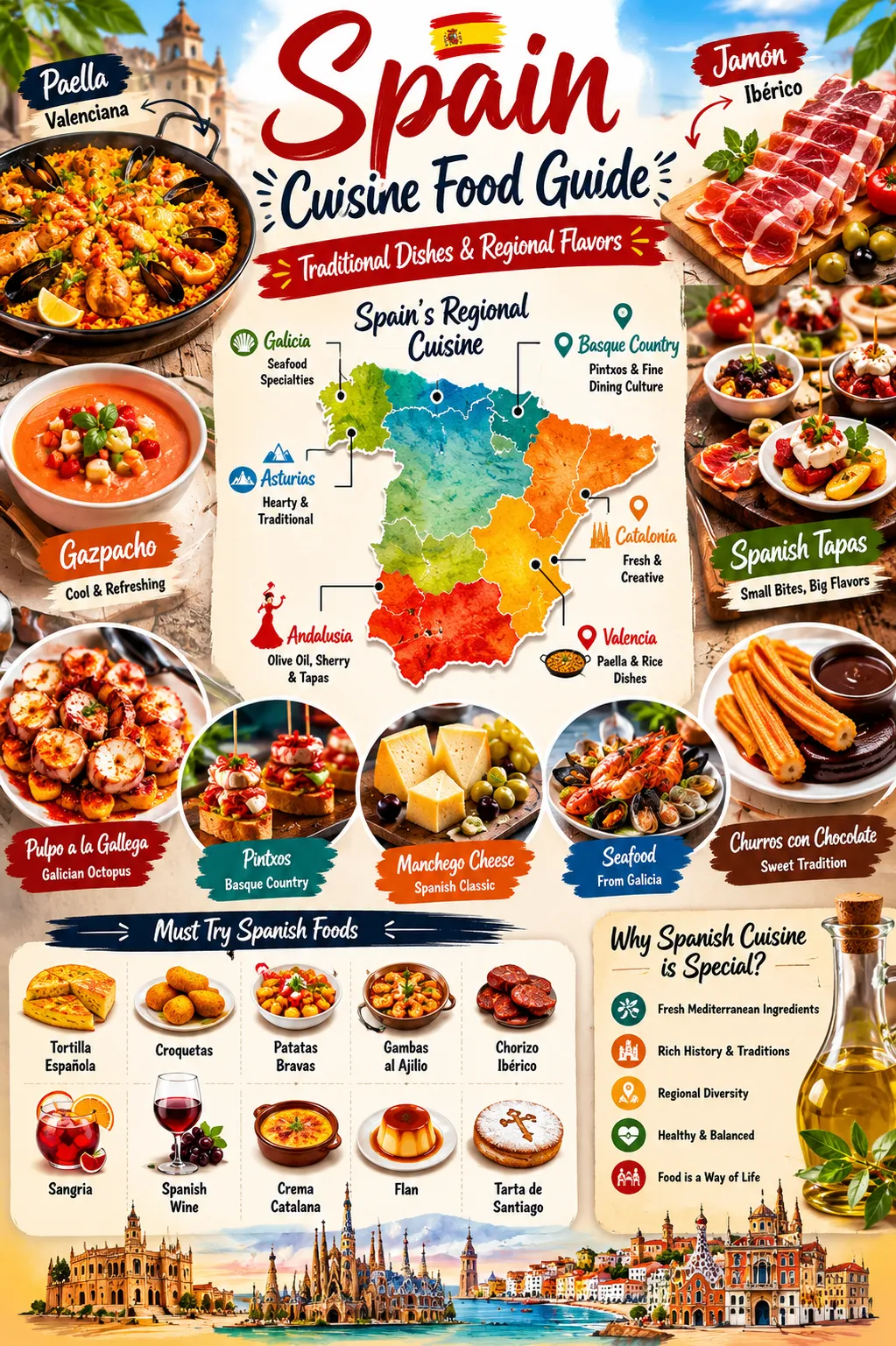
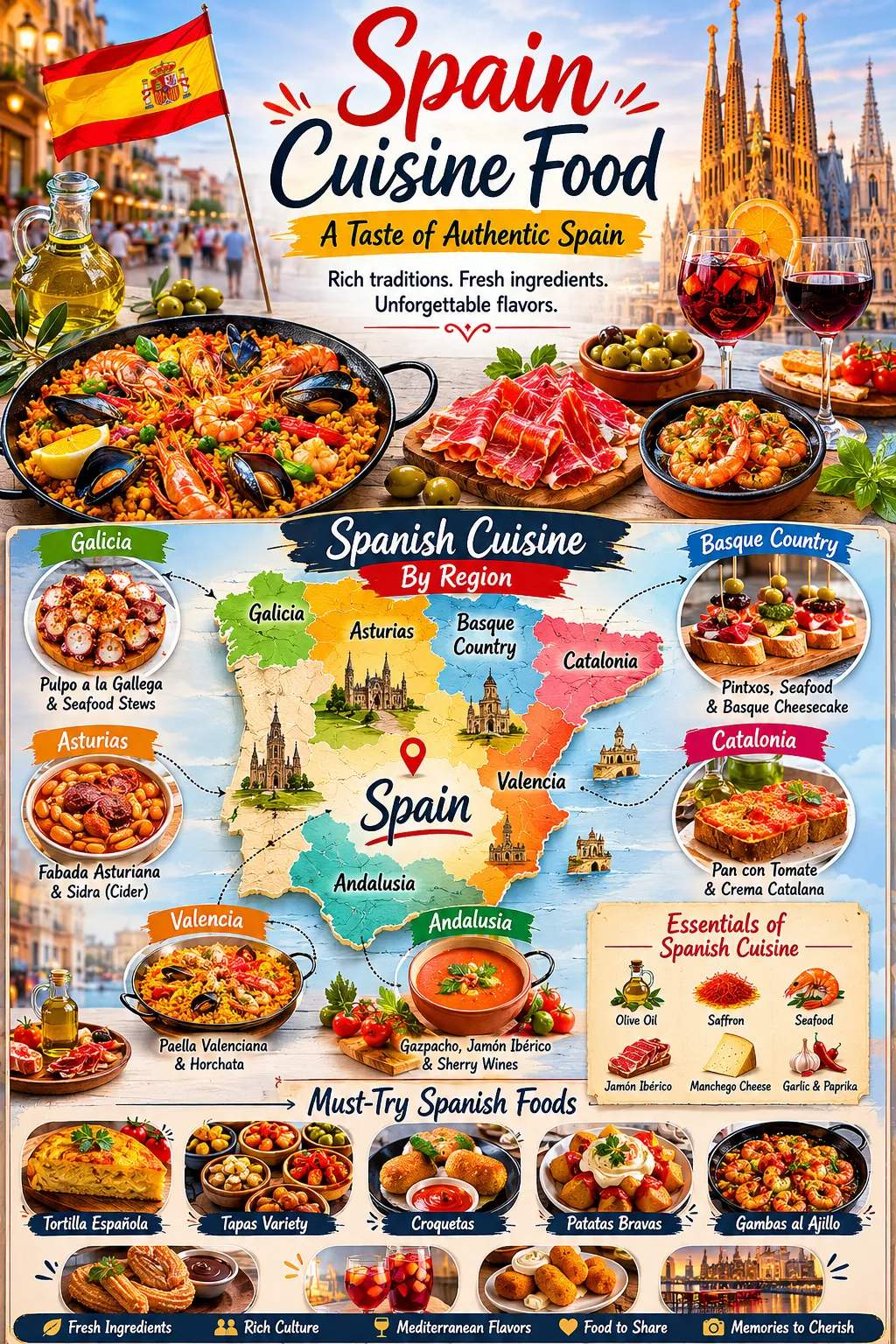
| Region | Famous Foods |
| Andalusia | Gazpacho, fried fish |
| Valencia | Paella Valenciana |
| Galicia | Pulpo a la Gallega |
| Asturias | Fabada Asturiana |
| Basque Country | Pintxos |
| Madrid | Cocido Madrileño |
| Catalonia | Crema Catalana |
Andalusia
Southern Spain is famous for olive oil, seafood, and refreshing summer dishes.
Traditional Andalusian foods include:
- Gazpacho
- Salmorejo
- Pescaíto frito
- Flamenquín
- Jamón ibérico
Best food cities:
- Seville
- Málaga
- Granada
- Córdoba
Valencia
Valencia is the birthplace of authentic paella.
Famous dishes include:
- Paella Valenciana
- Fideuà
- Arroz negro
Rice dishes dominate the regional cuisine because of Valencia’s agricultural history.
Galicia
Located in northern Spain, Galicia
is known for some of Europe’s best seafood.
Must-try dishes:
- Pulpo a la gallega
- Empanada gallega
- Percebes
- Seafood stews
Basque Country
The Basque region is one of the top food destinations in the world.
Known for:
- Pintxos
- Michelin restaurants
- Seafood
- Grilled meats
Best cities:
- San Sebastián
- Bilbao
Asturias
Asturias specializes in mountain comfort food.
Traditional dishes:
- Fabada asturiana
- Cachopo
- Cabrales cheese
35 Traditional Spanish Foods You Must Try
1. Paella Valenciana
Paella is Spain’s most internationally recognized dish and originated in Valencia.
Authentic Valencian paella traditionally contains:
- Rabbit
- Chicken
- Green beans
- Butter beans
- Saffron rice
Traditional paella is cooked over an open flame in a shallow pan. The crispy bottom rice layer is called socarrat.
2. Tortilla Española
Also called tortilla de patatas, this Spanish potato omelet is considered Spain’s unofficial national dish.
Ingredients include:
- Eggs
- Potatoes
- Olive oil
- Sometimes onions
It is served:
- Hot
- Cold
- In sandwiches
- As tapas
- For breakfast or dinner
3. Jamón Ibérico
Jamón Ibérico is one of the finest cured meats in the world.
The highest quality comes from acorn-fed Iberian pigs called:
- Jamón Ibérico de Bellota
Best regions:
- Extremadura
- Salamanca
- Andalusia
4. Gazpacho Andaluz
Gazpacho is a cold tomato soup from Andalusia.
Ingredients:
- Tomatoes
- Cucumbers
- Garlic
- Olive oil
- Peppers
- Bread
Perfect during hot Spanish summers.
5. Salmorejo Cordobés
Salmorejo is thicker and creamier than gazpacho.
Usually topped with:
- Chopped jamón
- Hard-boiled eggs
6. Croquetas
Croquetas are crispy fried rolls filled with creamy béchamel sauce.
Popular fillings:
- Ham
- Cod
- Chicken
- Mushrooms
Homemade croquetas are highly respected in Spanish cooking culture.
7. Patatas Bravas
Patatas bravas are fried potatoes served with spicy tomato sauce and aioli.
This dish is one of Spain’s most iconic tapas.
8. Pulpo a la Gallega
This Galician octopus dish is served with:
- Paprika
- Olive oil
- Sea salt
- Potatoes
Its simplicity highlights seafood freshness.
9. Fabada Asturiana
A hearty bean stew from Asturias made with:
- White beans
- Chorizo
- Pork belly
- Blood sausage
Ideal for winter.
10. Cocido Madrileño
Madrid’s traditional chickpea stew includes:
- Chickpeas
- Vegetables
- Pork
- Beef
- Sausages
Traditionally served in multiple courses.
11. Gambas al Ajillo
Garlic shrimp cooked in olive oil and chili peppers.
A favorite tapas dish throughout Spain.
12. Pimientos de Padrón
Small fried green peppers sprinkled with sea salt.
Most are mild, but occasionally one is spicy.
13. Pintxos
Basque-style snacks usually served on bread with skewers.
Common toppings:
- Seafood
- Ham
- Cheese
- Peppers
14. Fideuà
A Valencian seafood dish similar to paella but made with noodles instead of rice.
15. Albóndigas
Traditional Spanish meatballs served in rich tomato sauce.
16. Bocadillo de Calamares
Madrid’s famous fried calamari sandwich.
Simple but iconic.
17. Bacalao al Pil Pil
A Basque cod dish known for its silky garlic sauce.
18. Pisto Manchego
Spanish vegetable stew similar to ratatouille.
19. Migas
Rustic fried breadcrumbs with garlic and chorizo.
Originally shepherd food.
20. Empanada Gallega
Savory pie filled with:
- Tuna
- Seafood
- Onions
- Peppers
Traditional Spanish Tapas Culture
Tapas are one of Spain’s most important food traditions.
Tapas culture is based on:
- Sharing food
- Social dining
- Visiting multiple bars
- Eating slowly
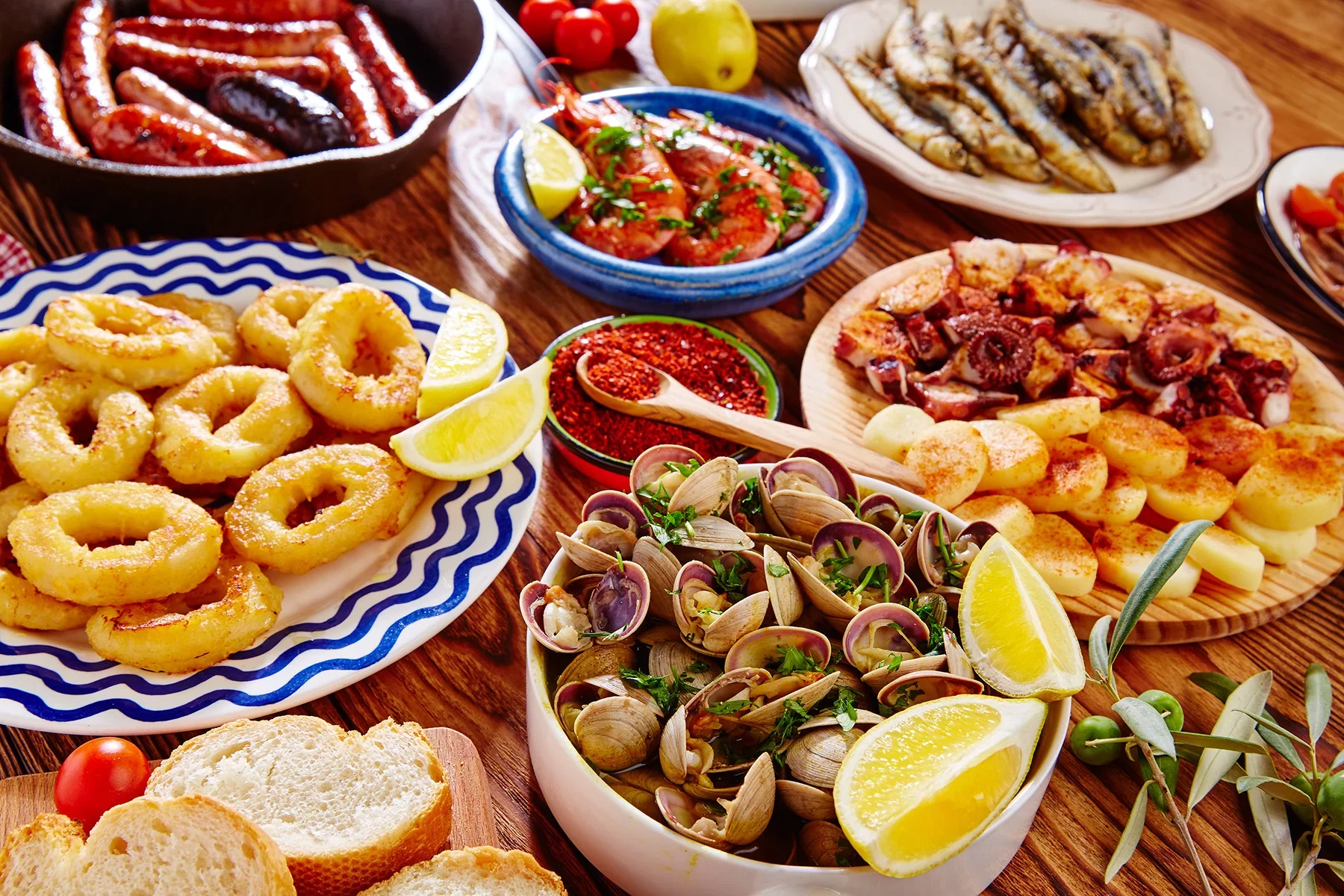
Popular tapas include:
- Croquetas
- Patatas bravas
- Tortilla española
- Gambas al ajillo
- Boquerones
- Jamón ibérico
Insider Tip
Granada is famous for offering free tapas with drinks.
Traditional Spanish Desserts
Spain also has exceptional desserts.
Churros con Chocolate
Fried dough served with thick hot chocolate.
Often eaten for breakfast or late-night snacks.
Tarta de Santiago
Traditional almond cake from Galicia.
Torrijas
Spanish-style French toast traditionally eaten during Easter.
Crema Catalana
Spain’s version of crème brûlée.
Best Cities in Spain for Food Lovers
San Sebastián
One of the world’s top culinary destinations.
Famous for:
- Pintxos
- Michelin stars
- Seafood
Valencia
Best city for authentic paella.
Madrid
Excellent for traditional taverns and tapas bars.
Barcelona
Known for Catalan cuisine and seafood.
Málaga
Fast-growing food destination in Andalusia.
Spain vs Other European Food Destinations
| Country | Food Strengths | Weaknesses |
| Spain | Tapas, seafood, regional cuisine | Late dining hours |
| Italy | Pasta and pizza | Less seafood diversity |
| France | Fine dining | Higher prices |
| Greece | Mediterranean freshness | Smaller cuisine range |
| Portugal | Seafood and pastries | Less regional diversity |
Spain stands out because it combines:
- Affordability
- Culinary variety
- Social dining culture
- Regional authenticity
- Exceptional wine
Best Time to Experience Spanish Food
| Season | Best Food Experiences |
| Spring | Seafood festivals |
| Summer | Gazpacho and beach dining |
| Autumn | Wine harvests and mushrooms |
| Winter | Stews and comfort foods |
Best months:
- April
- May
- September
- October
Budget Food Guide for Spain
Spain is surprisingly affordable for food travelers.
| Food Type | Average Price |
| Tapas | €2–6 |
| Lunch menu | €10–15 |
| Street snacks | €3–8 |
| Seafood dinner | €20–40 |
Money-saving tips:
- Eat menú del día lunches
- Avoid restaurants near major attractions
- Visit local markets
- Share tapas
Luxury Food Experiences in Spain
Spain also offers incredible luxury dining experiences.
Top luxury experiences:
- Michelin-star restaurants
- Wine tasting in La Rioja
- Private olive oil tours
- Gourmet seafood dining
- Luxury food tours
Common Tourist Mistakes to Avoid
Many travelers accidentally miss authentic Spanish food experiences.
Avoid:
- Eating only near tourist attractions
- Ordering paella at tourist restaurants
- Dining too early
- Ignoring regional specialties
- Skipping local markets
Insider Tips Most Tourists Never Learn
Ask for Menú del Día
These fixed-price lunch menus offer incredible value.
Avoid Restaurants With Picture Menus
They are usually tourist-oriented.
Eat Where Locals Eat
Busy neighborhood taverns are often the best places.
Embrace Late Dining
Locals typically eat dinner after 8:30 PM.
Future Food Travel Trends in Spain
Spain’s culinary tourism industry continues to grow rapidly.
Key trends for 2026 include:
- Sustainable gastronomy
- Farm-to-table dining
- Wine tourism
- Olive oil tourism
- Culinary road trips
- Regional food experiences
Frequently Asked Questions
What is the most traditional Spanish food?
Paella, tortilla española, and jamón ibérico are among Spain’s most traditional foods.
What food is Spain most famous for?
Spain is globally famous for paella, tapas, and Iberian ham.
What are traditional Spanish tapas?
Traditional tapas include croquetas, patatas bravas, gambas al ajillo, and tortilla española.
What is Spain’s national dish?
Many Spaniards consider tortilla española the unofficial national dish.
Is Spanish food spicy?
Spanish cuisine is usually flavorful rather than spicy.
Which Spanish city has the best food?
San Sebastián is often considered Spain’s top culinary city.
What should tourists eat first in Spain?
Start with:
- Paella
- Tortilla española
- Jamón ibérico
- Gazpacho
- Croquetas
Conclusion
Traditional Spanish food from Spain is one of the richest and most diverse cuisines in Europe.
Every region offers unique flavors, ingredients, and cooking traditions shaped by centuries of history and local culture.
Whether you are enjoying authentic paella in Valencia,
pintxos in San Sebastián, or gazpacho in Andalusia, Spanish cuisine delivers unforgettable experiences rooted in simplicity, freshness, and regional pride.
The best way to experience Spain is through its food.
Explore local taverns, eat regionally, try seasonal specialties, and slow down enough to enjoy Spain’s incredible dining culture like a local.
For more Spain travel guides, hidden gems, food itineraries, and insider travel tips, explore more articles on VisitEspanly.com.
Suggested Internal Links
- Best Tapas Bars in Madrid
- Ultimate Andalusia Travel Guide
- Traditional Spanish Desserts
- Spain Train Travel Guide
- Best Beaches in Spain
Trusted External Sources
- Spain Tourism Board
- UNESCO World Heritage Centre
- Renfe Spain
- Michelin Guide Spain
- European Union Tourism Portal
Legal Disclaimer
Travel rules, prices, restaurant hours, visa requirements, and transportation schedules may change over time. Always verify information with official tourism boards and service providers before traveling.