Introduction
Selecting the right educational institution for a child is one of the most significant and meaningful decisions a family will ever make. Parents naturally want to ensure their children grow in an environment that promotes intellectual development, emotional stability, strong moral values, and a safe social atmosphere.
This decision becomes even more important for families relocating to Spain or moving within the vibrant city of Barcelona. The city offers a wide range of educational options including public schools, private institutions, and concertado schools that combine public funding with private management.
Among the schools frequently recommended by local families is Colegio Sagrada Familia Horta, widely known as SAFA Horta.
Location
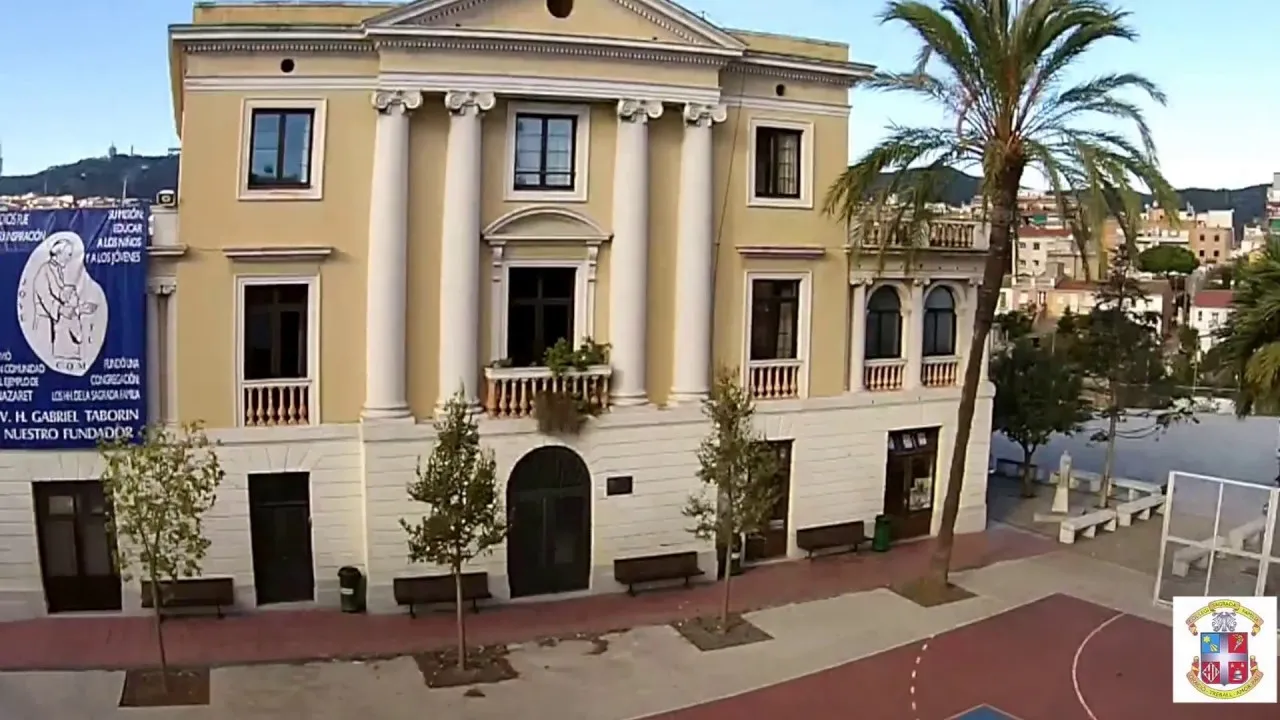
Situated in the Horta-Guinardó district of Barcelona, this respected educational center has served generations of families and has built a reputation for combining traditional educational principles with contemporary teaching strategies.
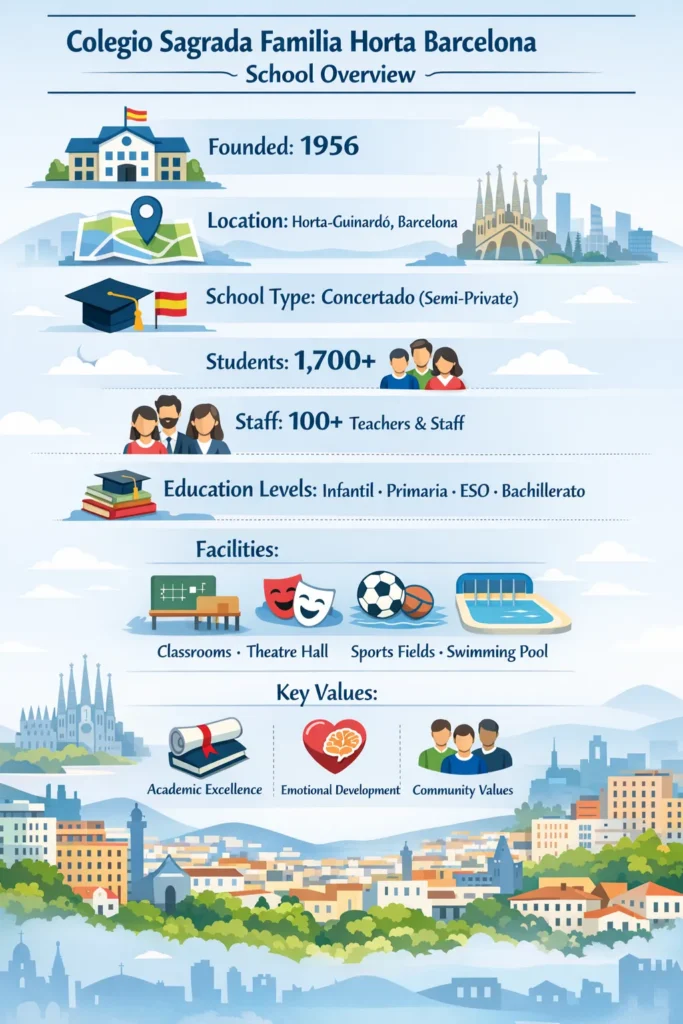
Over the years, the institution has grown from a small neighborhood school into a large academic community that now educates more than 1,700 students and employs over 100 teachers and support staff.
One of the most attractive aspects of Colegio Sagrada Familia Horta Barcelona is its ability to offer a complete academic pathway. Children can begin their educational journey in early childhood education and continue through primary school, compulsory secondary education, and finally Bachillerato, the program that prepares students for university entrance.
This comprehensive guide provides parents, education researchers, and expat families with a detailed understanding of the school. Topics covered include:
Topics
- The history and origins of the school
- Its educational philosophy and values
- Academic programs from early childhood to pre-university
- Campus facilities and extracurricular opportunities
- Admission procedures and enrollment tips
- Parent reviews and the school’s community reputation
- A comparison with other schools in Barcelona
Whether you are planning a move to Barcelona or simply exploring educational opportunities in Spain, this guide will help you understand why Colegio Sagrada Familia Horta Barcelona continues to be an attractive option for many families.
Overview of Colegio Sagrada Familia Horta Barcelona
Colegio Sagrada Familia Horta Barcelona belongs to the category of concertado schools, a unique element of the Spanish education system.
Concertado schools operate under a hybrid model. They are privately managed institutions but receive partial financial support from the government. This arrangement allows them to maintain relatively affordable tuition fees while still offering high educational standards.
As we know
Because they follow the official Spanish curriculum, concertado schools provide students with the same academic foundation as public schools. However, they often supplement this with additional educational initiatives, extracurricular programs, and specialized learning projects.
The school is located in the Horta neighborhood, a historic and residential area within Barcelona known for its calm atmosphere, local traditions, and strong sense of community.
Unlike some of the busier central districts of the city, Horta retains a more village-like character. Tree-lined streets, local parks, and family-friendly services make the neighborhood particularly attractive for households with children.
Many parents intentionally choose to live in Horta because of its educational infrastructure and community-oriented lifestyle.
Key Facts About Colegio Sagrada Familia Horta
| Feature | Details |
| Location | Horta district, Barcelona |
| School Type | Concertado (semi-private) |
| Students | 1700+ |
| Teachers & Staff | 100+ |
| Educational Levels | Infantil, Primaria, ESO, Bachillerato |
| Founded | 1956 |
| Educational Focus | Values, academic excellence, emotional development |
Because the school offers a continuous educational journey from early childhood to university preparation, many families enroll their children at a young age and remain part of the community for more than a decade.
This long-term continuity helps create strong relationships between teachers, parents, and students. It also contributes to the close-knit atmosphere that the school is known for.
History of Colegio Sagrada Familia Horta Barcelona
The background and evolution of a school often reveal important insights into its mission and identity. The story of Colegio Sagrada Familia Horta Barcelona is closely connected with both the growth of the Horta neighborhood and the tradition of faith-based education in Spain.
The Arrival of the Hermanos de la Sagrada Familia
The institution was founded by the religious congregation Hermanos de la Sagrada Familia.
This Catholic teaching order has historically dedicated itself to providing education that combines academic learning with moral formation and social responsibility.
Members of the congregation arrived in Barcelona in the early 1950s. At that time, the city was expanding rapidly due to population growth and urban development. As new neighborhoods formed, there was an increasing need for schools capable of serving the growing community.
Foundation of the School in 1956
- In 1956 the congregation established the school in the Can Carabassa area of Horta.
- At its beginning the institution was very modest. It opened with only 48 students and limited resources. Classrooms were basic and the campus was far smaller than what exists today.
- However, the school quickly became popular among local families. Parents appreciated its structured education, values-oriented philosophy, and dedication to student development.
- As the neighborhood expanded, enrollment steadily increased.
Expansion and Modernization
During the 1960s, 1970s, and 1980s, the school underwent several phases of growth and improvement.
New infrastructure projects included:
- Construction of additional classroom buildings
- Development of sports fields and recreational spaces
- Establishment of cultural and theatre facilities
- Introduction of modern educational materials and teaching resources
Over time, the institution transformed into one of the most prominent educational centers in the district.
Although the campus and technology have evolved significantly, the school continues to maintain its original mission of offering education rooted in values and community engagement.
Educational Philosophy and Core Values
One of the most distinctive characteristics of Colegio Sagrada Familia Horta Barcelona is its holistic approach to education.
Rather than focusing solely on academic achievement, the school emphasizes the development of the whole student — intellectually, emotionally, socially, and ethically.
Core Principles Promoted by the School
The educational model encourages a number of essential values, including:
- Respect for others
- Personal responsibility
- Cooperation and solidarity
- Integrity and honesty
- Community participation
- Personal growth
These principles are not simply theoretical ideas. They are actively integrated into everyday school life.
Students encounter these values through classroom discussions, collaborative projects, community service initiatives, and school events.
The aim is to prepare students not only for exams but also for responsible participation in society.
Focus on Emotional Education
Modern educators increasingly recognize that emotional intelligence plays a crucial role in lifelong success.
At Colegio Sagrada Familia Horta Barcelona, students participate in programs designed to strengthen emotional awareness and interpersonal skills.
These programs help students develop:
- Self-confidence
- Communication abilities
- Empathy and understanding
- Conflict resolution strategies
- Teamwork skills
By encouraging emotional development alongside academic learning, the school aims to produce balanced individuals who can adapt successfully to both academic and social challenges.
Academic Programs Offered at SAFA Horta
One of the strongest advantages of Colegio Sagrada Familia Horta Barcelona is its complete educational structure.
Students can begin their academic journey at age three and continue through all major stages of the Spanish education system until university preparation.
Early Childhood Education (Infantil)
The Infantil stage is designed for children aged three to five years old.
This early phase focuses on exploration, creativity, and social development.
Young learners are encouraged to discover the world around them through play-based activities that stimulate curiosity and imagination.
Main Learning Areas
Key areas of development during this stage include:
- Creativity and artistic expression
- Early literacy development
- Social interaction and cooperation
- Motor coordination and physical movement
- Language acquisition
Teachers use storytelling, music, art, and interactive games to make learning enjoyable and engaging.
This approach helps children build confidence while developing the cognitive skills necessary for future academic success.
Primary Education (Primaria)
Primary education provides the academic foundation that supports all future learning.
During this stage, students develop essential abilities such as reading comprehension, writing proficiency, mathematical reasoning, and analytical thinking.
Core Subjects
Students typically study subjects including:
- Mathematics
- Catalan language
- Spanish language
- Natural sciences
- Social sciences
- Music and artistic education
- Physical education
Teachers maintain regular communication with parents to ensure each child receives appropriate guidance and support.
This collaborative approach helps identify learning needs early and allows educators to adapt teaching strategies when necessary.
Secondary Education (ESO)
Educación Secundaria Obligatoria (ESO) is the compulsory secondary education stage in Spain.
Students attend ESO between approximately ages 12 and 16.
This phase prepares students for either further academic studies or vocational training.
Academic Areas in ESO
Students study a broad range of disciplines, including:
- Mathematics and scientific subjects
- History and humanities
- Language and literature
- Technology and digital competence
At this stage students begin developing more advanced reasoning skills, critical thinking abilities, and independent study habits.
These competencies are essential for success in higher education and professional life.
Bachillerato and Pre-University Preparation
After completing ESO, students may continue to Bachillerato, a two-year academic program that prepares them for university entrance examinations.
Students choose a specialization based on their interests and career goals.
Common Academic Tracks
Typical pathways include:
- Science and Technology
- Humanities and Social Sciences
- Arts and creative disciplines
Some schools in Spain also offer Bachillerato Dual, which allows students to combine Spanish studies with international academic programs.
Such opportunities are particularly valuable for students planning to pursue university studies abroad.
Campus Facilities and Infrastructure
A high-quality educational environment requires facilities that support academic learning, physical activity, creativity, and social interaction.
Colegio Sagrada Familia Horta Barcelona provides a wide range of modern facilities designed to support student development.
Main Campus Facilities
Students have access to:
- Spacious classrooms equipped with modern learning tools
- A theatre and performance hall
- Outdoor sports fields
- Indoor gymnasium
- Swimming pool
- Library and reading spaces
- Computer laboratories
- School dining hall and cafeteria
The presence of a swimming pool is particularly notable, as many schools in urban areas of Barcelona do not have this facility.
This allows swimming to be integrated into physical education classes and sports programs.
Extracurricular Activities
Education extends beyond textbooks and exams. Extracurricular programs play a vital role in helping students discover new interests and develop personal talents.
At Colegio Sagrada Familia Horta Barcelona, extracurricular activities are an essential part of student life.
Popular Activities
Students may participate in:
- Football and basketball teams
- Music and theatre programs
- Art workshops and creative clubs
- Cultural associations
- Language clubs
- Educational excursions and trips
These activities help students develop valuable life skills such as leadership, teamwork, confidence, and creativity.
Many students also take part in school festivals, performances, competitions, and community events.
Teaching Methodology and Innovation
Educational practices continue to evolve in response to technological advances and changing societal needs.
At SAFA Horta, teachers incorporate modern methodologies that make learning more dynamic and interactive.
Contemporary Teaching Strategies
These approaches include:
- Collaborative learning
- Project-based instruction
- Digital learning platforms
- Active student participation
- Critical thinking exercises
Rather than relying exclusively on lectures, teachers often encourage students to work together on real-world projects and practical problem-solving tasks.
This strategy helps learners apply theoretical knowledge to real situations and develop practical competencies.
Parent Reviews and Community Reputation
Feedback from parents and students provides valuable insight into the daily experience of attending a school.
Online reviews and community discussions generally indicate that Colegio Sagrada Familia Horta Barcelona maintains a positive reputation among families.
Many parents describe the school as welcoming, supportive, and community-oriented.
Common Positive Feedback
Parents frequently highlight:
- Friendly and dedicated teachers
- A strong sense of community
- Balanced focus on academic and emotional development
- Well-maintained facilities
- Diverse extracurricular opportunities
Although every educational institution receives a range of opinions, the overall perception of SAFA Horta remains favorable.
Admissions Process
Admission to concertado schools in Spain follows regulations established by regional education authorities.
This means the process is partially standardized across the region.
Typical Admission Steps
The process generally includes:
- Submitting the official application during the enrollment period
- Providing required documentation
- Attending orientation sessions or information meetings
- Waiting for placement results from the education authority
Admission Priority Factors
Priority is often given to:
- Families living close to the school
- Siblings of currently enrolled students
- Children of staff members
Parents are advised to consult the official school website for the latest enrollment dates and requirements.
Comparison With Other Schools in Horta Barcelona
Families living in the Horta‑Guinardó District can choose from several types of schools.
The main categories include:
- Public schools
- Concertado schools
- Private schools
Comparison Table
| Feature | Public Schools | Concertado Schools | Private Schools |
| Funding | Government | Government + Private | Private |
| Tuition | Free | Low to moderate | High |
| Curriculum Flexibility | Limited | Moderate | High |
| Class Sizes | Often larger | Medium | Smaller |
| Extracurricular Options | Basic | Moderate | Extensive |
Concertado schools like Colegio Sagrada Familia Horta Barcelona often appeal to families seeking a balance between affordability and quality education.
Pros and Cons of Colegio Sagrada Familia Horta Barcelona
Before selecting any school, it is useful to consider both benefits and potential limitations.
Pros
- Long educational tradition
- Strong sense of community
- Complete educational pathway
- Good sports and cultural facilities
- Values-focused educational philosophy
Cons
- Admission demand can be competitive
- Some specialized programs may have limited availability
- Less curricular flexibility compared with international schools
Why Families Choose Colegio Sagrada Familia Horta Barcelona
Many families in Barcelona continue to choose SAFA Horta generation after generation.
Key Reasons Parents Choose the School
- Strong reputation in Barcelona
- Balanced educational model
- Modern facilities
- Long tradition in education
- Supportive community environment
For many parents, the school offers the ideal combination of academic preparation, personal development, and community connection.
Frequently Asked Questions
It is a concertado school, meaning it is privately managed but partially funded by the Spanish government.
The school is located in the Horta neighborhood of Barcelona, a residential district known for its family-friendly environment.
The school offers:
Early childhood education
Primary education
Secondary education (ESO)
Bachillerato
The school community includes more than 1700 students and over 100 teachers and staff members.
Yes. Students can participate in sports teams, arts programs, cultural clubs, and educational excursions.
Many international families choose concertado schools in Barcelona because they offer strong academics with lower tuition compared to private international schools.