Introduction:
Perched high above the vibrant streets of Barcelona, one of the city’s most effective and memorable attractions awaits—the funicular Tibidabo. This isn’t merely a simple ascent up a hill; it’s a fusion of heritage, innovation, and breathtaking panoramas that transforms an ordinary journey into something extraordinary.
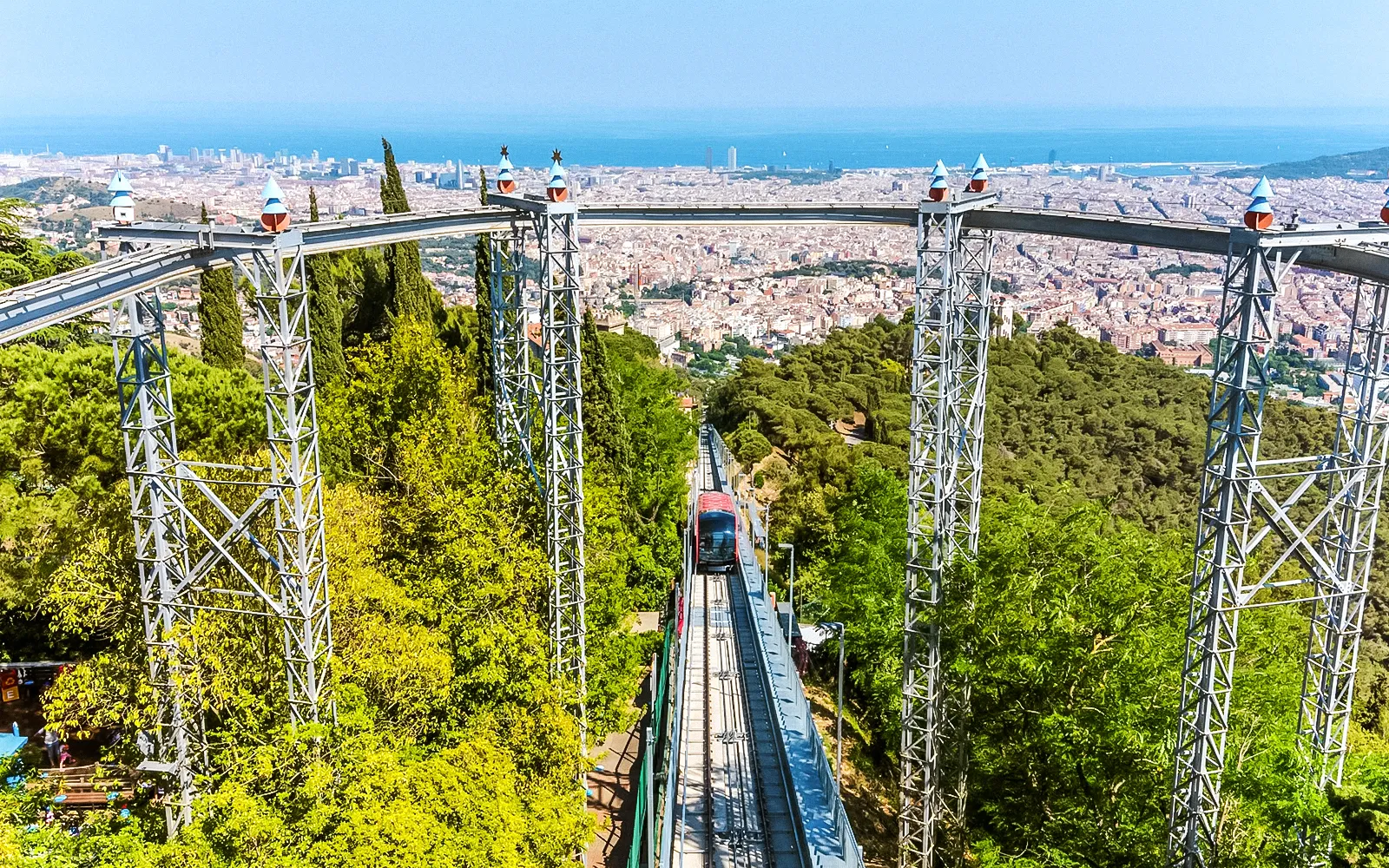
Many visitors assume the primary goal is simply reaching the summit of Tibidabo Mountain. However, the reality is quite different—the journey itself becomes the highlight. As the funicular steadily climbs, the urban landscape gradually unfolds under you. First come the clustered rooftops, then best landmarks, and eventually the shimmering Mediterranean horizon stretching endlessly.
Whether you are:
- A couple seeking a romantic vantage point
- A family heading toward an exciting amusement park
- A solo traveler exploring lesser-known treasures
…the Tibidabo funicular offers a distinctive perspective that sets it apart from other beauties in the city.
In this comprehensive 2026 guide, you will explore:
- Ticket options and pricing details
- Route structure and system mechanics
- The upgraded Cuca de Llum experience
- Practical travel tips and local insights
- A clear evaluation of whether it’s worth visiting
Let’s explore everything you need to know.
What is the Funicular Tibidabo?
The funicular Tibidabo, officially known as the Funicular del Tibidabo, is a cable-operated railway system designed to transport passengers between the base and summit of Tibidabo Mountain.
It connects:
- Lower Station: Plaça Doctor Andreu
- Upper Station: Tibidabo Summit
This short yet captivating journey serves as the primary access route to the top.
Key Facts About the Tibidabo Funicular
| Feature | Details |
| Opened | 1901 |
| Distance | ~1.1 km |
| Travel Time | ~4 minutes |
| Elevation Gain | ~275 meters |
| System Type | Cable funicular |
What Can You Access from the Top?
Upon reaching the summit, visitors can discover:
- The iconic Tibidabo Amusement Park
- The majestic Temple of the Sacred Heart of Jesus
- One of the most spectacular panoramic viewpoints in Barcelona
This transforms the funicular into more than transportation—it becomes a gateway to unforgettable experiences.
Why the Tibidabo Funicular Is a Must-Do Experience
A Journey, Not Just Transportation
Unlike conventional transit options such as buses or metros, the funicular Tibidabo delivers an immersive journey.
During the ride:
- The cityscape gradually expands beneath you
- The atmosphere becomes calmer and fresher
- The coastline emerges in the distance
Although the trip lasts only around four minutes, it feels far more enriching and memorable.
A Classic European Scenic Ride
Across Europe, scenic rail journeys are celebrated for their beauty and engineering. While countries like Switzerland and Austria dominate this category, the Tibidabo funicular represents:
- Spain’s interpretation of a scenic ascent
- A compact yet highly rewarding experience
- An accessible activity suitable for all visitors
What Makes It Unique?
Key highlights include:
- Historic origins dating back to 1901
- A modern transformation through Cuca de Llum
- Expansive panoramic windows
- A smooth, efficient ride
- Accessibility for all age groups
History of the Funicular Tibidabo
The Beginning (1901)
The Tibidabo funicular began operation in 1901, becoming the first funicular railway in Spain.
During this period:
- Barcelona was undergoing rapid urban expansion
- Leisure destinations were gaining popularity
- Tibidabo Mountain emerged as a recreational escape
The funicular provided efficient access to elevated terrain, revolutionizing travel to the summit.
Growth and Development
Over decades, the system underwent continuous enhancements:
- Replacement of early wooden carriages
- Introduction of advanced safety mechanisms
- Increased passenger capacity
These improvements ensured the funicular remained relevant, reliable, and appealing.
A Cultural Symbol
Today, the funicular represents more than infrastructure. It stands as:
- A historical landmark
- A symbol of engineering progress
- A cherished experience for locals and visitors alike
The “Cuca de Llum” Experience (Modern Upgrade)
What is Cuca de Llum?
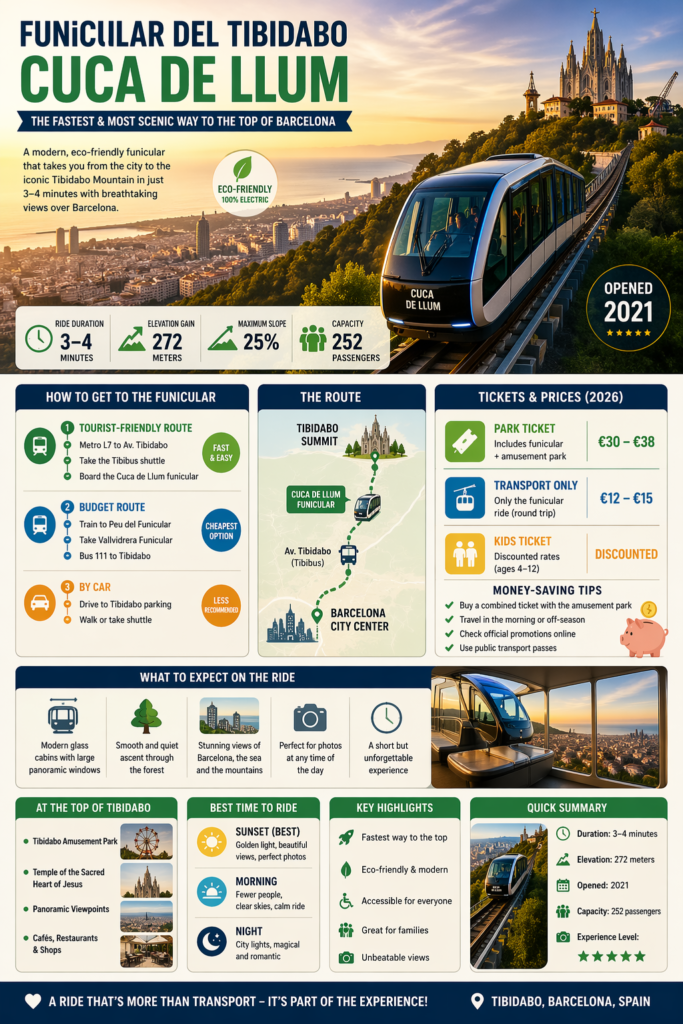
In 2021, the funicular underwent a complete transformation and was rebranded as Cuca de Llum, meaning “Firefly” in Catalan.
What Changed?
The modernization introduced:
- Sleek trains featuring large glass panels
- A sustainable electric system
- Greater passenger capacity
- Enhanced comfort and accessibility
Why It’s Special Now
The updated system delivers:
- A more immersive visual experience
- Environmentally friendly operation
- Improved ride quality
It is now considered a standalone attraction, not just transportation.
Route, Stations & How It Works
Route Overview
The system connects:
- Plaça Doctor Andreu
- Tibidabo Summit
How the System Works
The funicular operates using a counterbalanced cable mechanism:
- One carriage ascends while another descends
- The system balances weight efficiently
This results in a ride that is:
- Smooth
- Energy-efficient
- Highly secure
Travel Experience
| Feature | Details |
| Duration | ~4 minutes |
| Frequency | Every few minutes |
| Accessibility | Wheelchair-friendly |
Tickets, Prices & What’s Included
Important Notice
The funicular Tibidabo is not included in standard public transport passes.
Ticket Options Explained
| Ticket Type | Includes | Best For |
| Funicular Only | Round-trip ride | Short visits |
| Combined Ticket | Ride + park entry | Families |
| Panorama Ticket | Views + access | Sightseers |
Which Ticket Should You Choose?
???? The combined ticket is generally the most advantageous because:
- It offers better value
- Provides full access
- Enhances the overall experience
Pro Tip
Booking online:
- Reduces waiting time
- Prevents queues
- Secures entry during peak periods
How to Get to the Tibidabo Funicular
Step-by-Step Directions
- Take Metro Line L7
- Stop at Avinguda Tibidabo
- Transfer to bus or tram
- Arrive at Plaça Doctor Andreu
- Board the funicular
Travel Time Overview
| Step | Transport | Time |
| City Center | Metro | 15–20 min |
| Transfer | Bus/Tram | 10–15 min |
| Funicular | Ride | 4 min |
Helpful Tip
Use navigation apps for real-time updates and route optimization.
Alternative Ways to Reach Tibidabo
Comparison Table
| Option | Cost | Experience | Difficulty |
| Funicular | Medium | ⭐⭐⭐⭐⭐ | Easy |
| Bus | Low | ⭐⭐⭐ | Easy |
| Car | Medium | ⭐⭐⭐ | Moderate |
| Hiking | Free | ⭐⭐⭐⭐ | Hard |
Detailed Breakdown
Bus
- Budget-friendly
- Less scenic
Car
- Flexible schedule
- Parking challenges
Hiking
- Adventurous
- Physically demanding
Is the Funicular Tibidabo Worth It?
Short Answer: YES
Detailed Pros and Cons
Pros
- Stunning views
- Unique travel experience
- Quick and convenient
- Suitable for families
Cons
- Not included in metro tickets
- Potential crowds
- Slightly higher cost
Final Verdict
For travelers seeking scenery, comfort, and a memorable experience, the funicular is absolutely worthwhile.
Best Time to Visit Tibidabo
Morning vs Sunset
- Morning → quieter, relaxed
- Sunset → dramatic lighting, golden views
Best Days
- Weekdays → fewer crowds
- Weekends → busier atmosphere
Weather Tips
- Clear days provide optimal visibility
- Avoid foggy conditions
Tips for First-Time Visitors
Simple Advice
- Visit early or late
- Choose the downhill-facing seat
- Bring a camera
- Book in advance
Insider Insight
Weekdays offer a more peaceful experience.
Do’s and Don’ts
Do’s
- Reserve tickets early
- Check schedules
- Explore the summit
Don’ts
- Avoid peak hours
- Don’t skip viewpoints
- Don’t rush
Funicular Tibidabo vs Other European Mountain Transport
Comparison Table
| Destination | Transport Type | Experience |
| Barcelona | Funicular | City + mountain |
| Switzerland | Cog railway | Alpine views |
| Austria | Cable car | High altitude |
Key Insight
The Tibidabo experience uniquely combines:
- Urban landscapes
- Mountain scenery
- Historical and modern elements
FAQs (SEO Optimized)
1. How long is the Tibidabo funicular ride?
About 4 minutes.
2. Is the Tibidabo funicular included in metro tickets?
No, you need a separate ticket.
3. What is the Cuca de Llum?
It’s the modern version of the funicular.
4. Is it suitable for children?
Yes, very safe and smooth.
5. Best time to ride?
Morning or sunset.
6. Can you walk instead?
Yes, but it’s challenging.
7. Is it worth visiting without the park?
Yes, views alone are worth it.
Conclusion: Why You Should Not Miss It
The funicular Tibidabo shows far more than a mode of transportation. It gives a rich blend of history, innovation, and panoramic beauty.
From its origins in 1901 to the modern Cuca de Llum, it remains one of Europe’s most charming and accessible scenic rides.