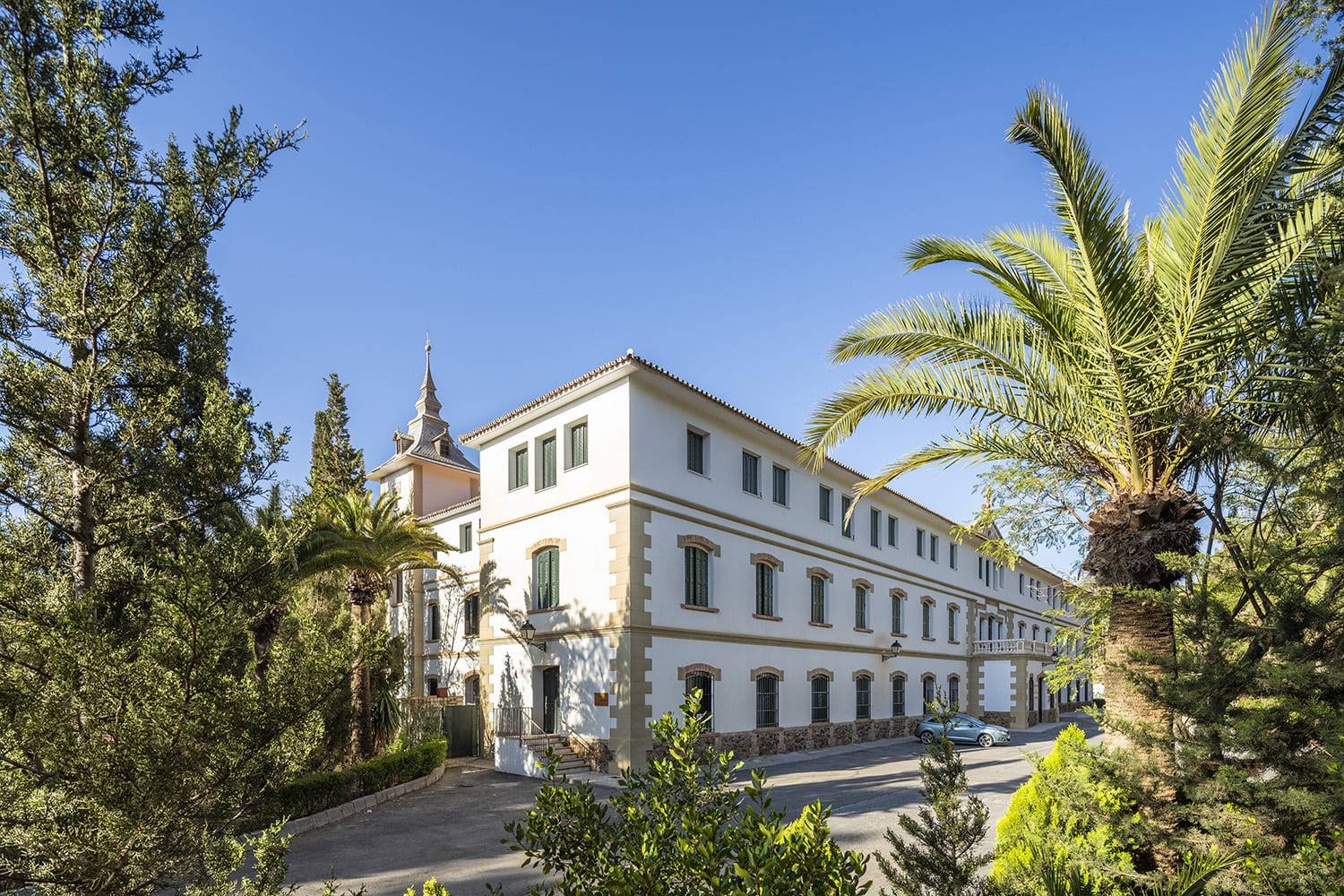
Introduction: Choosing the Right School in Málaga
Picking a school in Málaga? That choice weighs heavily on what comes next for a family. Moving within Spain – or landing from abroad – shapes how things unfold once classes begin. A child’s learning path often mirrors the classroom they join. Emotions settle faster when routines feel familiar. Friendships form more easily if the environment fits just right. The building itself matters less than who fills it each morning.
Folks at home tend to circle back to certain worries again and again
Could this place really be worth it?
Will my child adapt comfortably?
Can you handle the price?
Is the program good at teaching more than one language? What about how well it supports students speaking different languages?
Among schools popping up often online and in chats between parents, Colegio Sagrada Familia El Monte FESD stands out. This choice keeps coming up – especially when Spanish locals or foreigners talk about clear routines, fair pricing, and steady learning paths.
- This full look, now wider in scope, walks through each key point one by one
- Authentic parent perspectives and reviews
- Detailed cost breakdown (including hidden fees)
- Teaching philosophy and methodology
- Facilities, infrastructure, and extracurricular offerings
- Comparisons with other schools in Málaga and across Europe
- Once you finish reading, it’ll be obvious if this place fits what your family truly wants. A full picture forms slowly, shaped by details that matter most over time.
What is Colegio Sagrada Familia El Monte FESD?
The Colegio Sagrada Familia El Monte FESD is a concertado school, a unique model within the Spanish education system.
What Does “Concertado” Mean?
A concertado school operates under a hybrid structure:
- Partially financed by the government
- Privately administered and managed
- Significantly lower cost than private institutions
This model provides a compelling combination:
- The affordability of public education
- The organization and discipline of private schooling
The school belongs to the Fundación Educativa Santo Domingo, a recognized educational network known for its commitment to academic quality and value-based teaching across Spain.
Key Highlights
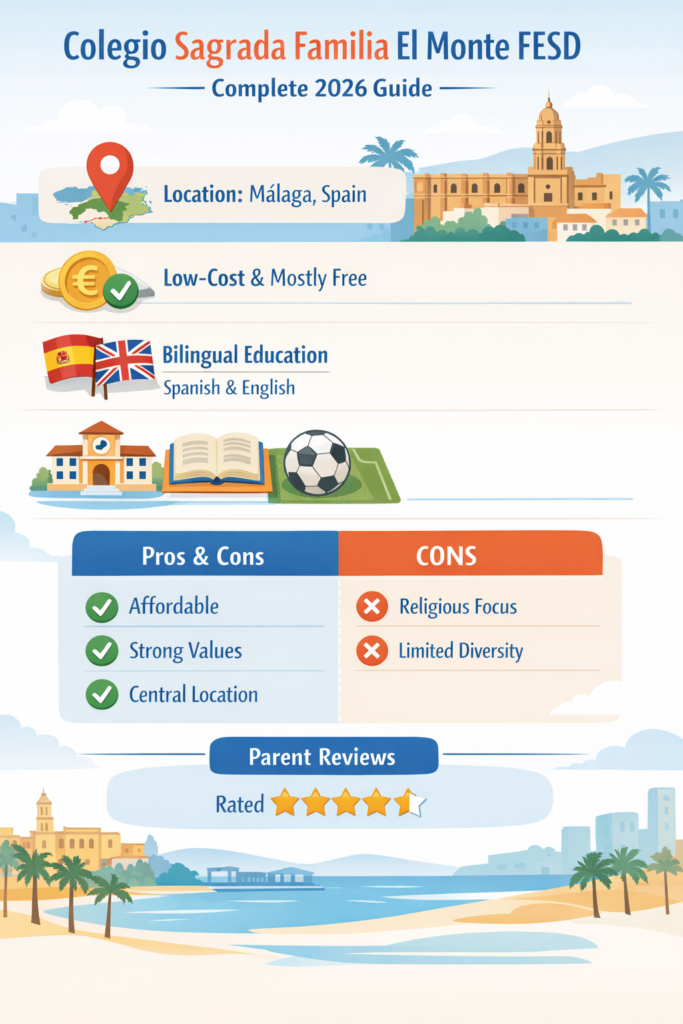
- Type: Concertado (semi-private)
- Location: Central Málaga
- Education Model: Co-educational
- Curriculum: Spanish national curriculum with bilingual elements
- Religious Orientation: Catholic (Dominican philosophy)
- Age Range: 3 to 16+ years
- Affordability: Mostly free tuition
This blend makes the school particularly appealing for middle-income families, long-term expatriates, and those seeking stability without excessive financial pressure.
Location and Accessibility
The institution is strategically situated in central Málaga, making it highly accessible for families living across different neighborhoods.
Location Advantages
- Close proximity to the historic city center
- Well-connected through public transportation
- Located in a secure residential environment
- Surrounded by essential services, shops, and amenities
For expatriates, accessibility is a major benefit, as it reduces commuting time and simplifies daily logistics.
Quick Facts Table
| Feature | Details |
| School Type | Concertado |
| Main Language | Spanish |
| Additional Language | English |
| Third Language | French |
| Age Range | 3–16+ |
| Religious Orientation | Catholic |
| Monthly Cost | Mostly free |
Educational Methodology: How Does FESD Teach?
One of the most compelling aspects of Colegio Sagrada Familia El Monte FESD is its instructional approach, which combines structured academics with progressive methodologies.
1. Project-Based Learning (PBL)
Instead of relying solely on rote memorization, students engage in:
- Practical problem-solving
- Collaborative teamwork
- Analytical thinking
For instance, rather than merely reading about environmental science, students may:
- Design recycling initiatives
- Analyze local ecosystems
- Present sustainability projects
This immersive approach enhances retention and develops real-world competencies.
2. Multiple Intelligences Framework
The school recognizes that each child has a distinct learning style. It promotes development across:
- Logical-mathematical intelligence
- Emotional awareness
- Creativity and artistic expression
- Social and interpersonal skills
This holistic model ensures students are not limited to academic metrics alone.
3. Values-Based Education
The Dominican philosophy embedded within the school emphasizes:
- Respect and empathy
- Accountability and responsibility
- Integrity and honesty
- Constructive dialogue
For many families, this ethical foundation is just as important as academic achievement.
Educational Stages Offered
A major advantage is continuity. Students can complete their entire foundational education within the same institution.
Available Stages
1. Early Childhood Education (Infantil)
- Ages: 3–6
- Focus: Play-based learning and foundational skills
2. Primary Education (Primaria)
- Ages: 6–12
- Focus: Core academic subjects and language development
3. Secondary Education (ESO)
- Ages: 12–16
- Focus: Academic consolidation and preparation for higher studies
4. Special Educational Support
- Tailored assistance for students with learning differences
This continuity eliminates the need for disruptive school transitions.
Languages and Bilingual Programs
In today’s interconnected world, multilingual competence is essential.
English Bilingual Program
The school offers:
- Subjects taught in English
- Strong emphasis on communication skills
- Preparation for recognized language certifications
This significantly enhances students’ future academic and professional opportunities.
French as a Third Language
- Introduced during secondary education
- Adds a competitive edge within the European context
Multilingual proficiency is increasingly valuable across the EU.
Facilities and Services
Education extends beyond textbooks and classrooms.
Facilities
- Fully equipped science laboratories
- Library and reading spaces
- Sports infrastructure
- Digital classrooms with modern technology
Services
- School cafeteria
- Early drop-off programs
- Psychological and academic counseling
- Special education support
These resources contribute to a well-rounded educational experience.
Extracurricular Activities
Extracurricular engagement plays a crucial role in personal development.
Popular Activities
- Football and basketball
- Dance and performing arts
- Robotics and STEM programs
- Language enrichment clubs
Example:
A student interested in technology can:
- Join robotics workshops
- Develop engineering projects
- Learn coding fundamentals
These activities cultivate practical skills and creativity.
Opinions from Parents and Students
Feedback from families provides valuable insight into the school’s real-world performance.
Positive Feedback
- Supportive and committed teachers
- Strong sense of community
- Balanced academic and personal development
- Effective discipline and structure
Negative Feedback
- Cafeteria quality could be improved
- Occasional communication challenges
- Limited international diversity
Average Rating
Around 4.2 – 4.3 out of 5, which places the school above average in Málaga.
Pricing: How Much Does It Cost?
One of the strongest advantages is affordability.
Cost Breakdown
| Category | Cost |
| Tuition | Free |
| Meals | €80–€120/month |
| Activities | €20–€60/month |
| Materials | Variable |
Compared to private institutions (€500–€1500/month), this represents exceptional value.
Pros and Cons
Advantages
- Affordable and accessible
- Strong ethical and moral framework
- Bilingual education opportunities
- Central and convenient location
- Dedicated teaching staff
Disadvantages
- Religious orientation may not suit all families
- Some service limitations
- Less international exposure compared to elite schools
Comparison with Other Schools in Málaga
| Feature | Sagrada Familia El Monte | Private International School | Public School |
| Cost | Low | High | Free |
| Language | Bilingual | English | Spanish |
| Facilities | Good | Premium | Basic |
| Values | Religious | Neutral | Neutral |
| Flexibility | Medium | High | Low |
Key Insight
- International schools are ideal for global mobility
- This school is better for cultural integration
The best choice depends on your priorities.
Who Should Choose This School?
Ideal for Families Who:
- Seek affordable yet structured education
- Plan long-term residence in Spain
- Value discipline and moral teaching
- Prefer balanced academic systems
Also Suitable For:
- European families relocating within the EU
- Budget-conscious expatriates
- Families prioritizing cultural immersion
Travel & Lifestyle Perspective (European Context)
Living in Spain offers a distinctive lifestyle advantage.
Why This School Works
- Stable academic environment
- Integration into Spanish culture
- Lower cost of living compared to other EU countries
Europe Comparison
| Country | Education Style |
| Spain | Affordable, flexible |
| UK | Expensive, globally oriented |
| Germany | Structured, disciplined |
| France | Balanced, competitive |
Spain offers a high quality of life with reasonable costs.
Frequently Asked Questions (FAQ)
Fine pick, honestly – plenty of thumbs-up, plus learning that doesn’t lean too far one way. It holds up.
Besides zero fees for classes, there are still charges for extras.
French shows up alongside English dual-language options. Bilingual setups in English come part of the package too.
True, though knowing some Spanish makes things easier.
Application form
Available seats
Required documentation
Conclusion: Is Colegio Sagrada Familia El Monte FESD Worth It?
The Colegio Sagrada Familia El Monte FESD stands out as a balanced, economical, and reliable educational institution in Málaga.
Its key strengths include:
- Strong community environment
- Consistent academic performance
- Cultural immersion opportunities
- Low financial burden
While it may not offer the international exposure of elite private schools, it delivers substantial value for families seeking stability, affordability, and quality education.