Sagrada Familia Barcelona – The Complete Guide to Gaudí’s Greatest Masterpiece
The Sagrada Familia is far more than a religious structure or a famous tourist attraction. It is the spiritual heart of Barcelona, a living architectural experiment, and one of the most extraordinary monuments ever attempted by humankind.
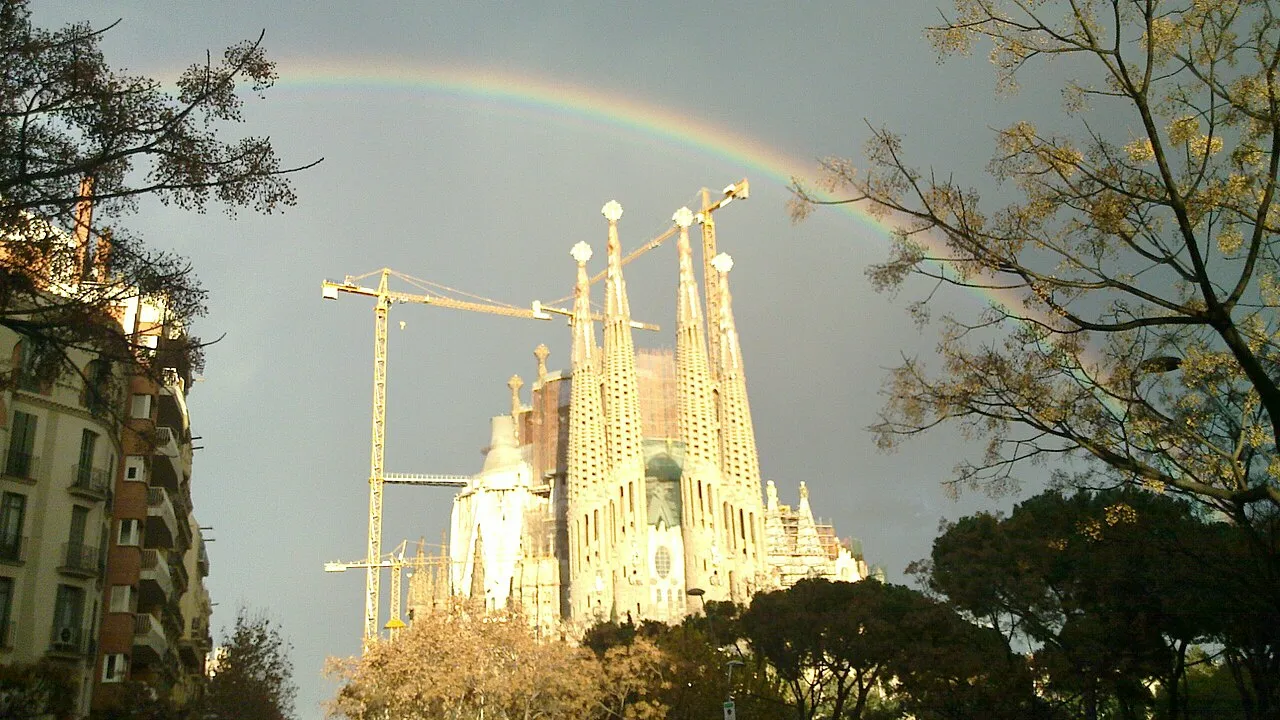
Towering above the Eixample skyline, this unfinished basilica represents faith, perseverance, artistic rebellion, and visionary genius. Conceived by the legendary Catalan architect Antoni Gaudí, the Sagrada Familia has been under continuous construction since 1882, making it one of the longest-running architectural projects in history.
Unlike many historic churches that belong solely to the past, the Sagrada Familia exists between centuries — rooted in tradition yet shaped by modern technology. Watching it evolve in real time is what makes visiting the basilica a truly once-in-a-lifetime experience.
For travelers discovering Spain or planning a broader European itinerary, the Sagrada Familia proudly stands alongside iconic landmarks such as:
- Notre-Dame Cathedral in Paris
- St. Peter’s Basilica in Vatican City
- Westminster Abbey in London
Yet none of these monuments shares the Sagrada Familia’s defining characteristic: it is still being built.
This Sagrada Familia Barcelona complete guide is designed to help you:
- Understand its rich history and symbolic meaning
- Choose the right ticket and tower access
- Visit at the best possible time
- Avoid common visitor mistakes
- Discover local insights most tourists never learn
Whether you are a first-time traveler, an architecture enthusiast, a couple seeking romance, or a cultural explorer, this guide gives you everything you need — clearly explained, deeply researched, and honestly presented.
What Is the Sagrada Familia?
The Basílica de la Sagrada Família, officially named the Basílica i Temple Expiatori de la Sagrada Família, is a monumental Roman Catholic basilica located in Barcelona’s Eixample district.
It is internationally recognized as:
- The most visited monument in Spain
- One of the most photographed landmarks in Europe
- A partially designated UNESCO World Heritage Site
- A symbol of Catalan identity and innovation
Key Facts at a Glance
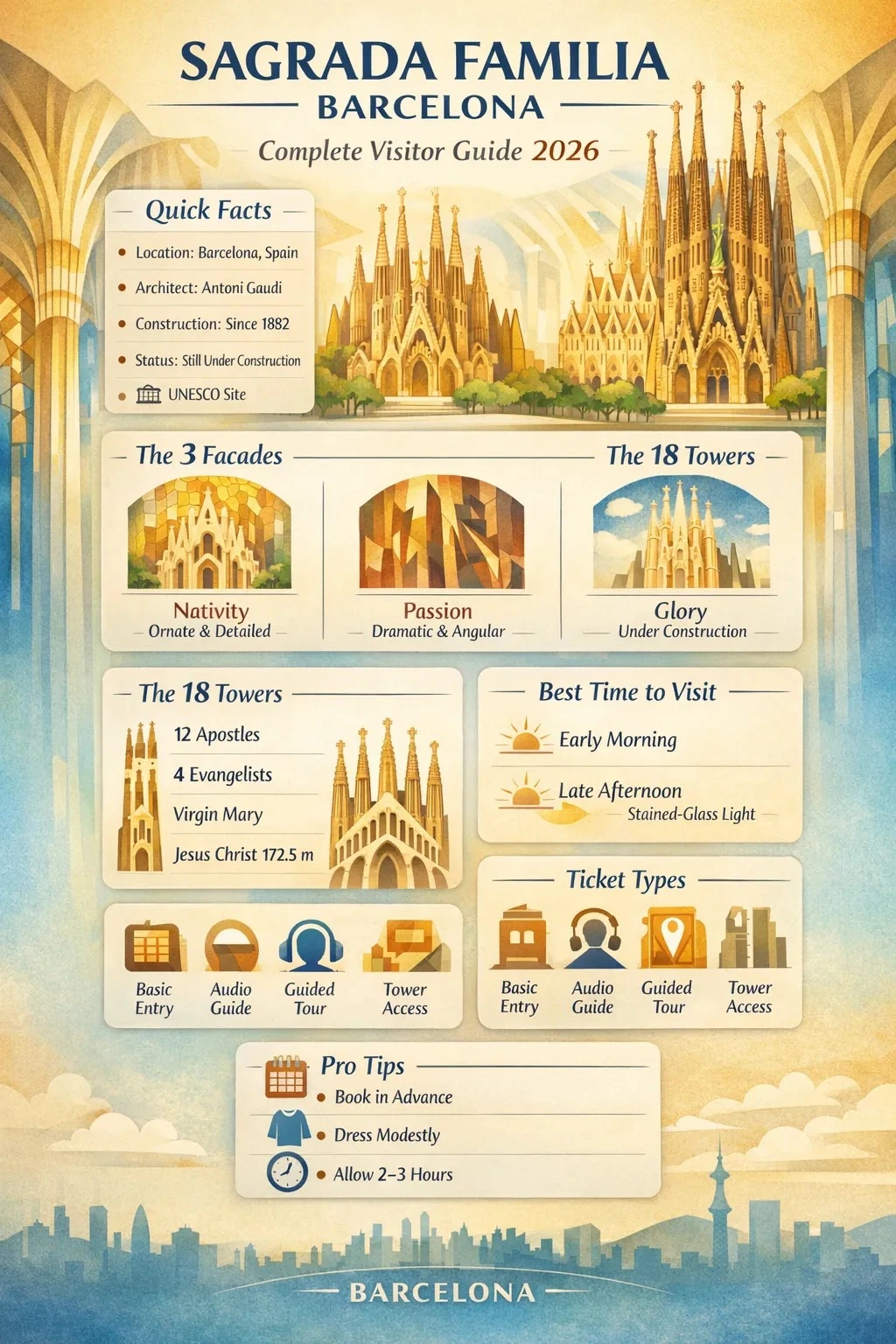
| Feature | Details |
| Location | Barcelona, Catalonia, Spain |
| Architect | Antoni Gaudí |
| Construction Began | 1882 |
| Current Status | Still under construction |
| Architectural Style | Catalan Modernism |
| UNESCO Status | Parts listed as World Heritage |
| Record | World’s tallest church upon completion |
???? Important to know:
The Sagrada Familia is funded entirely through ticket sales and private donations, not government budgets. This independent financing model is a major reason construction has progressed slowly but carefully.
The Long and Fascinating History of Sagrada Familia (1882–Today)
Humble Origins (1882)
The story of the Sagrada Familia did not begin with Gaudí.
In 1882, the project was initiated under architect Francisco de Paula del Villar, who envisioned a relatively modest neo-Gothic church inspired by traditional European cathedrals.
However, disagreements with the project’s patrons led Villar to resign after just one year. That single departure changed architectural history forever.
Antoni Gaudí Takes Over
In 1883, a young and relatively unknown Antoni Gaudí assumed leadership of the project.
Instead of continuing Villar’s conservative Gothic design, Gaudí made radical decisions:
- He redesigned the entire basilica
- Replaced straight lines with organic, flowing forms
- Transformed the church into a visual representation of Christian teachings
Gaudí believed architecture should act as a “Bible in stone”, capable of communicating faith visually to everyone — including those who could not read.
Gaudí’s Life Devoted to One Dream
Gaudí dedicated more than 40 years of his life to the Sagrada Familia.
During the final 15 years, he worked on nothing else.
He lived modestly, often sleeping in a workshop near the site, fully consumed by the project. When critics complained about the slow pace of construction, Gaudí responded with his now-famous words:
“My client is not in a hurry.”
To Gaudí, the client was God, and divine work required patience.
Tragedy, War, and Survival
- 1926: Gaudí dies after being struck by a tram
- 1936: The Spanish Civil War severely damages the basilica
- Workshops are burned
- Original plans and scale models are destroyed
For decades afterward, architects faced an enormous challenge: how to continue Gaudí’s vision without complete blueprints.
They relied on:
- Surviving plaster models
- Archival photographs
- Handwritten notes
- Mathematical principles Gaudí used
Modern Technology Speeds Things Up
In recent decades, construction has accelerated thanks to:
- 3D scanning and digital modeling
- Computer-aided design (CAD)
- Precision stone-cutting technology
These tools allow modern architects to stay faithful to Gaudí’s ideas while building faster and more accurately.
???? Today, the central Jesus Christ tower has already made the Sagrada Familia the tallest church in the world, even before completion.
Gaudí’s Architecture – Why Sagrada Familia Is Unlike Any Church
Nature as the Blueprint
Gaudí rejected rigid geometry in favor of natural harmony.
Inside the basilica:
- Columns resemble tree trunks
- Ceilings branch like forest canopies
- Light filters through stained glass like sunlight in nature
Walking through the interior feels less like entering a traditional church and more like stepping into a stone forest designed by nature itself.
Powerful Symbolism Everywhere
Every element carries symbolic meaning.
Key Symbolic Elements
- Columns → Trees of life
- Light → Divine presence
- Geometry → Universal order
- Vertical height → Spiritual ascent
This layered symbolism makes the Sagrada Familia intellectually and emotionally richer than most historic cathedrals.
The Three Sagrada Familia Facades Explained
Each facade represents a different chapter of Christian belief.
Facade Overview Table
| Facade | Meaning | Style |
| Nativity Facade | Birth of Christ | Ornate, joyful, organic |
| Passion Facade | Suffering and death | Stark, angular, dramatic |
| Glory Facade | Resurrection and eternity | Monumental, still under construction |
Nativity Facade (East Side)
Built during Gaudí’s lifetime, this facade celebrates life, joy, and creation.
- Filled with animals, plants, and biblical scenes
- Extremely detailed and expressive
- Designed to inspire hope
???? Best for close-up photography
Passion Facade (West Side)
This facade tells a much darker story.
- Sharp, skeletal figures
- Stark lines and minimal ornamentation
- Designed to provoke emotional discomfort
???? Best for dramatic images and sunset lighting
Glory Facade (Main Entrance – Ongoing)
The future main entrance will be the Basilica’s most ambitious facade.
- Symbolizes resurrection and eternal life
- Will include grand stairways and symbolic passages
- Still under construction
The 18 Towers – A Vertical Story of Faith
When fully completed, the Sagrada Familia will feature 18 towers, each representing a biblical figure.
Tower Breakdown
| Tower Type | Number | Height |
| Apostles | 12 | 90–112 m |
| Evangelists | 4 | 135 m |
| Virgin Mary | 1 | 138 m |
| Jesus Christ | 1 | 172.5 m |
???? Gaudí deliberately designed the tallest tower to remain shorter than Montjuïc hill, symbolizing humility before God’s creation.
Which Sagrada Familia Tower Should You Visit?
Nativity Tower
- Highly detailed views
- Narrow spiral staircases
- Historic perspective
Best for: First-time visitors and architecture lovers
Passion Tower
- Wider city panoramas
- Modern elevator access
- Faster descent
???? Best choice for couples and photographers
Visiting Sagrada Familia – Tickets, Tips & Planning
Ticket Types Explained
| Ticket Type | Best For |
| Basic Entry | Budget travelers |
| Audio Guide | Independent visitors |
| Guided Tour | First-time visitors |
| Tower Access | Photography lovers |
⚠️ Always book through the official website to avoid overpriced resellers.
Best Time to Visit Sagrada Familia
- Early Morning (9–10 AM): Quietest experience
- Late Afternoon: Magical stained-glass colors
- Avoid: Summer midday and weekends
Dress Code & Visitor Rules
As an active basilica:
- Shoulders must be covered
- Knees must be covered
- No beachwear or hats
- Maintain respectful behavior
How Long Should You Plan?
| Visit Style | Time |
| Express | 1.5 hours |
| Standard | 2–3 hours |
| In-depth | Half day |
FAQs
A: Due to architectural complexity, historical disruptions, and reliance on private funding.
A: Absolutely. The interior alone justifies the visit.
A: Passion Tower for panoramas; Nativity Tower for details.
A: Yes, especially for first-time visitors.
A: Typically 9:00 AM–6:00 PM, with extended summer hours.
Local Tips & Hidden Gems Near Sagrada Familia
???? Best photo spot: Plaça de Gaudí for reflection shots
???? Quiet escape: Plaça de la Sagrada Família park
☕ Nearby cafés: Local bakeries within five minutes
Pros & Cons of Visiting Sagrada Familia
Pros
- One-of-a-kind architecture
- Profound symbolism
- Excellent visitor facilities
- Central location
Cons
- Requires booking
- Crowded during peak seasons
- Ongoing construction
Final Verdict – Is Sagrada Familia Worth Visiting?
Without hesitation — yes.
The Sagrada Familia is not merely a tourist attraction. It is a deeply emotional, artistic, and spiritual journey that leaves a lasting impression.
If you Visit Barcelona and skip the Sagrada Familia, you miss the city’s soul.
Plan Your Visit Smartly
???? Book tickets early
???? Choose the right tower
???? Visit at the best time
Your experience depends on preparation — and now you are fully prepared.