Introduction
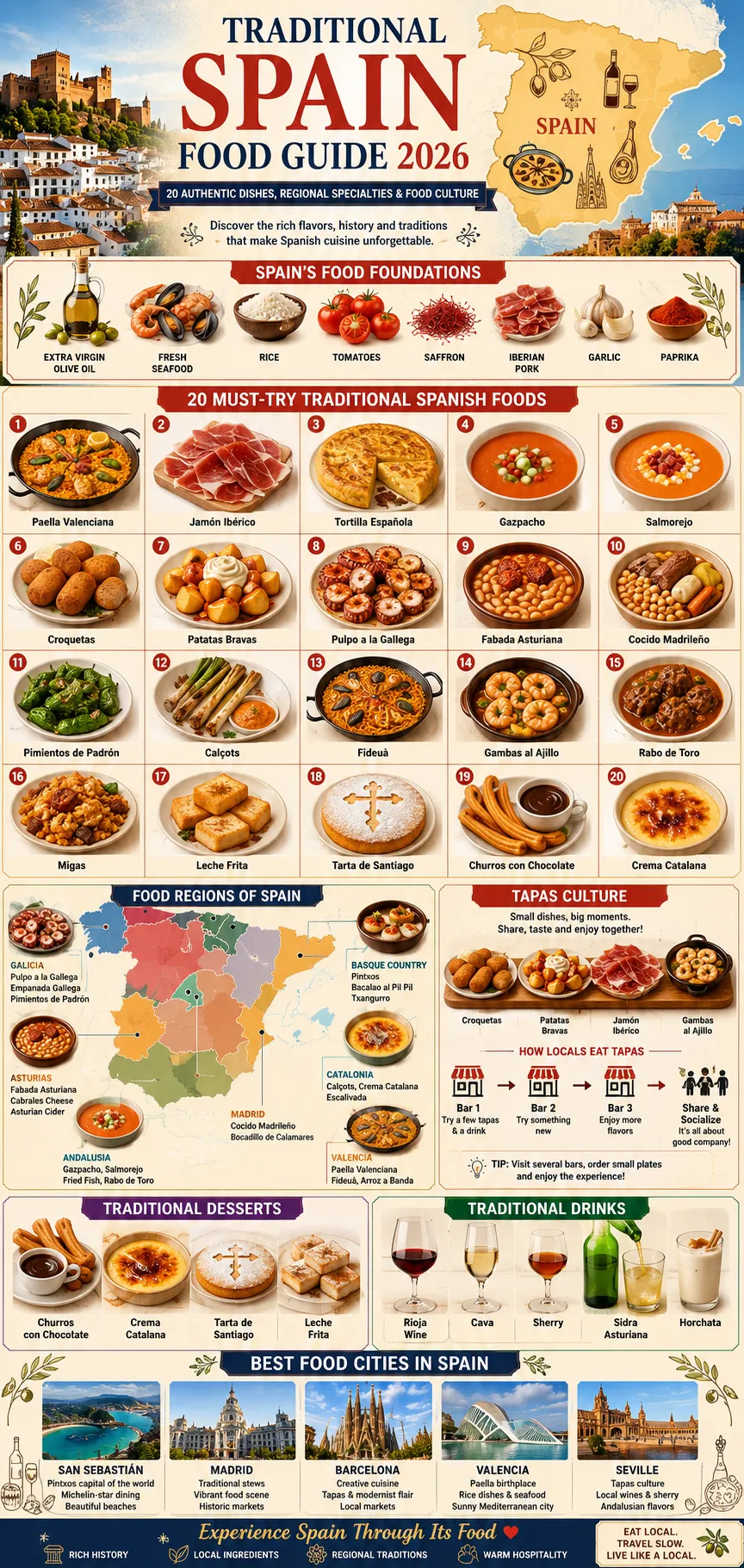
Spain is one of the world’s most exciting culinary destinations. From the saffron-infused rice dishes of Valencia to the seafood-rich shores of Galicia, Spanish cuisine combines centuries of history, regional traditions, and fresh local ingredients into unforgettable meals.
If you’ve ever searched for authentic food of Spain recipes, you’ve likely found simple recipe collections that only focus on paella and tapas. While those dishes are iconic, they represent only a small part of Spain’s incredible culinary heritage.
This comprehensive guide goes beyond basic recipe roundups. You’ll discover the most famous Spanish dishes, learn about their origins, explore regional specialties, and find practical tips for recreating authentic Spanish flavors
at home.
Whether you’re planning a trip to Spain, looking for traditional Spanish recipes, or simply wanting to bring Mediterranean flavors into your kitchen, this guide covers everything you need to know about Spanish food.
By the end, you’ll understand why Spain consistently ranks among the world’s top culinary destinations.
What Makes Spanish Food Unique?
Spanish cuisine stands apart because it focuses on quality ingredients rather than complicated cooking techniques.
Traditional Spanish cooking celebrates simplicity. Fresh vegetables, olive oil, seafood, meats, rice, and aromatic spices are transformed into dishes packed with flavor.
Three factors make Spanish cuisine unique:
Regional Diversity
Every region of Spain has developed its own culinary identity.
| Region | Famous Foods |
| Andalusia | Gazpacho, Salmorejo |
| Valencia | Paella Valenciana, Fideuà |
| Galicia | Pulpo a la Gallega, Seafood |
| Asturias | Fabada Asturiana |
| Catalonia | Crema Catalana, Escalivada |
| Basque Country | Pintxos, Bacalao |
Mediterranean Influence
Many Spanish dishes follow Mediterranean dietary traditions based on:
- Olive oil
- Fresh vegetables
- Seafood
- Legumes
- Whole grains
- Nuts
- Herbs
Social Dining Culture
Spanish food is designed to be shared.
Popular traditions include:
- Tapas
- Family-style meals
- Long lunches
- Evening dining
- Regional wine pairings
The result is a cuisine that feels both comforting and sophisticated.
Essential Ingredients in Spanish Cooking
Before exploring the most famous food of Spain recipes, it helps to understand the ingredients found in many Spanish kitchens.
Pantry Staples
- Extra virgin olive oil
- Smoked paprika (Pimentón)
- Saffron
- Garlic
- Tomatoes
- Rice
- Onion
- Almonds
- Sherry vinegar
Popular Proteins
- Jamón Ibérico
- Chorizo
- Seafood
- Chicken
- Rabbit
- Salt cod
Ingredient Substitutions
| Spanish Ingredient | Substitute |
| Saffron | Turmeric + paprika |
| Jamón Ibérico | Prosciutto |
| Manchego Cheese | Pecorino |
| Piquillo Peppers | Roasted red peppers |
| Spanish Rice | Arborio rice |
Understanding these ingredients makes cooking traditional Spanish recipes much easier.
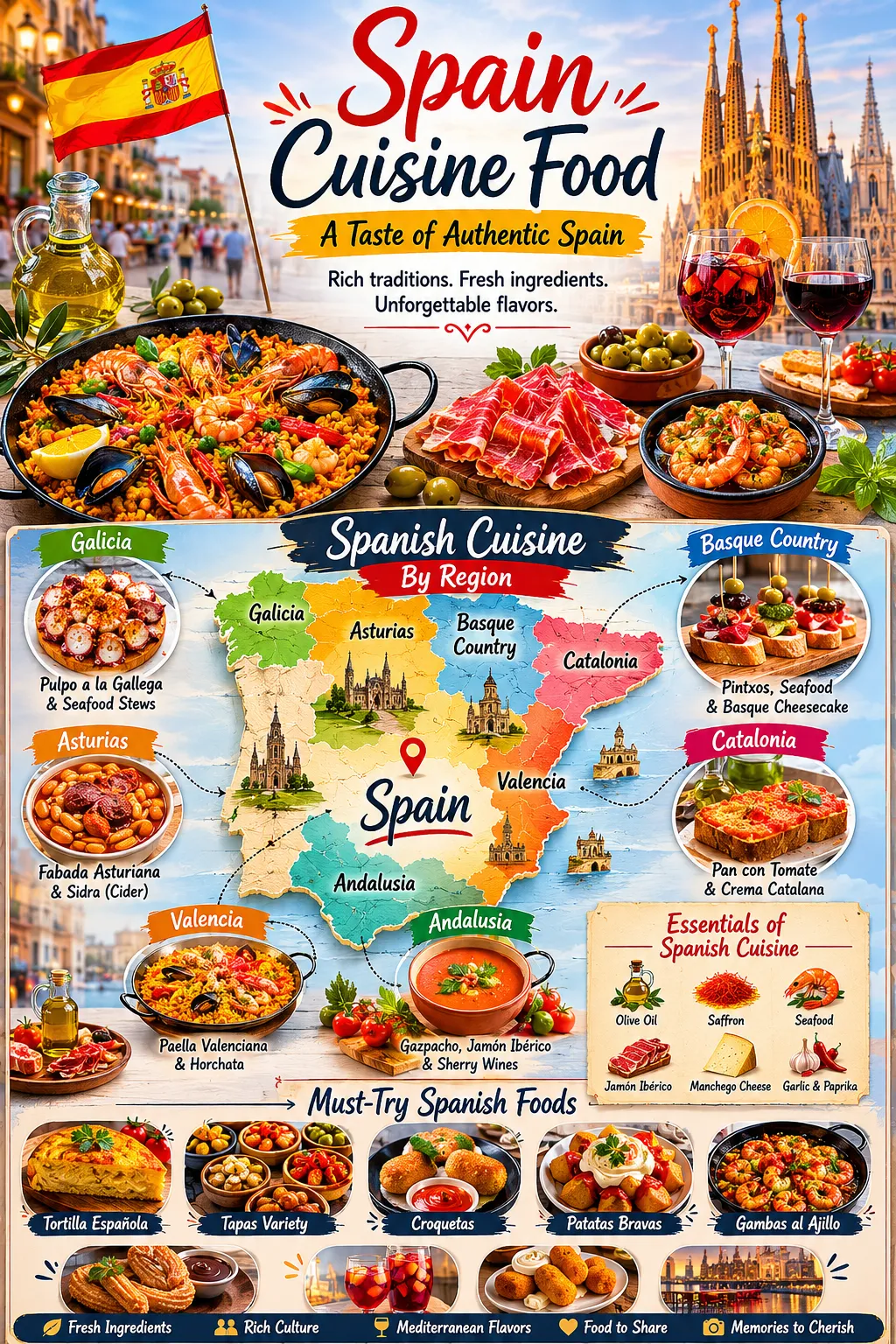
Most Popular Food of Spain Recipes
1. Paella Valenciana
Paella Valenciana is Spain’s most internationally recognized dish.
Originating in Valencia, this iconic rice dish traditionally contains chicken, rabbit, green beans, saffron, and short-grain rice.
Key Ingredients
- Rice
- Saffron
- Chicken
- Rabbit
- Green beans
- Olive oil
Preparation Time
Approximately 90 minutes
Cooking Tip
Never stir the rice after adding the broth. This helps create the prized crispy bottom layer known as socarrat.
2. Tortilla Española
Tortilla Española, often called Spanish omelet, is one of Spain’s national dishes.
Made with potatoes, eggs, and olive oil, it can be served hot or cold and is enjoyed for breakfast, lunch, dinner, or as a tapa.
Key Ingredients
- Eggs
- Potatoes
- Olive oil
- Onion (optional)
Why It Works
Slow-cooked potatoes create a creamy texture unlike traditional omelets.
3. Gazpacho Andaluz
Gazpacho is a refreshing cold soup from Andalusia.
Perfect during Spain’s hot summers, this dish showcases the country’s love of fresh produce.
Key Ingredients
- Tomatoes
- Cucumber
- Bell peppers
- Garlic
- Olive oil
- Vinegar
Serving Suggestion
Serve chilled with diced vegetables and crusty bread.
4. Patatas Bravas
Patatas Bravas are one of the most popular tapas dishes in Spain.
Crispy potatoes are topped with a spicy tomato sauce and sometimes served with garlic aioli.
Key Ingredients
- Potatoes
- Tomatoes
- Paprika
- Garlic
Difficulty Level
Easy
5. Croquetas de Jamón
Croquetas are creamy béchamel fritters filled with ham, chicken, cod, or mushrooms.
Secret to Success
Allow the filling to cool and firm up before shaping and frying.
6. Albóndigas
Spanish meatballs cooked in rich tomato sauce.
These are commonly served as tapas or family-style dinners.
7. Gambas al Ajillo
One of Spain’s most beloved seafood dishes.
Shrimp are quickly cooked in olive oil with garlic and chili flakes.
8. Pulpo a la Gallega
This Galician specialty combines tender octopus with potatoes, paprika, and olive oil.
9. Fabada Asturiana
A hearty bean stew from Asturias.
Perfect for colder weather and packed with traditional Spanish flavors.
10. Fideuà
A Valencian seafood dish similar to paella but made with noodles instead of rice.
Traditional Spanish Tapas Recipes
Tapas are small plates designed for sharing.
They represent one of Spain’s most beloved dining traditions.
Popular tapas include:
- Patatas Bravas
- Croquetas
- Tortilla Española
- Gambas al Ajillo
- Albóndigas
- Chorizo al Vino
- Pimientos de Padrón
Why Tapas Are So Popular
Tapas allow diners to experience a variety of flavors in a single meal.
For travelers visiting Spain, a tapas crawl is often one of the most memorable experiences.
Regional Spanish Recipes
One of the reasons Spanish cuisine is so fascinating is its regional diversity.
Andalusian Recipes
Famous dishes include:
- Gazpacho
- Salmorejo
- Ajo Blanco
Andalusian cuisine is known for fresh ingredients and lighter flavors suited to warm weather.
Catalan Recipes
Popular dishes include:
- Crema Catalana
- Escalivada
- Suquet de Peix
Catalonia blends Mediterranean and French culinary influences.
Basque Country Recipes
Known for:
- Pintxos
- Bacalao al Pil Pil
- Seafood specialties
The Basque Country is widely considered one of Europe’s greatest food destinations.
Galician Recipes
Highlights include:
- Pulpo a la Gallega
- Empanada Gallega
- Seafood stews
Galicia’s Atlantic coastline provides some of Spain’s finest seafood.
Valencian Recipes
The region is famous for:
- Paella Valenciana
- Fideuà
- Arroz a Banda
Rice dishes dominate Valencian cuisine.
Spanish Seafood Recipes
Spain’s long coastline contributes to its rich seafood traditions.
Must-Try Seafood Dishes
| Dish | Region |
| Pulpo a la Gallega | Galicia |
| Gambas al Ajillo | Nationwide |
| Fideuà | Valencia |
| Bacalao al Pil Pil | Basque Country |
| Calamares a la Romana | Madrid |
Seafood Cooking Tip
Fresh seafood requires minimal seasoning. Olive oil, garlic, and paprika are often enough to highlight natural flavors.
Traditional Spanish Meat Recipes
Many of Spain’s most famous comfort foods are meat-based.
Popular options include:
- Paella Valenciana
- Albóndigas
- Cocido Madrileño
- Chorizo al Vino
- Fabada Asturiana
Pros
- Rich flavor
- High protein
- Traditional recipes
Cons
- Longer cooking times
- Specialty ingredients may be harder to find
Spanish Vegetarian Recipes
Spanish cuisine also offers excellent vegetarian options.
Popular choices include:
- Gazpacho
- Salmorejo
- Escalivada
- Pisto Manchego
- Patatas Bravas
- Tortilla Española
Vegetarian travelers often find Spain easier than expected thanks to its strong vegetable-based culinary traditions.
Traditional Spanish Desserts Recipes
Spanish desserts are simple, comforting, and delicious.
Crema Catalana
A creamy custard topped with caramelized sugar.
Churros con Chocolate
Crispy fried dough served with thick hot chocolate.
Tarta de Santiago
An almond cake from Galicia traditionally associated with pilgrims walking the Camino de Santiago.
Arroz con Leche
Spanish rice pudding flavored with cinnamon and citrus.
How to Create a Traditional Spanish Meal
Want to enjoy a complete Spanish dining experience at home?
Follow these steps:
Step 1: Start with Tapas
Choose two or three:
- Patatas Bravas
- Croquetas
- Gambas al Ajillo
Step 2: Serve a Main Course
Options include:
- Paella Valenciana
- Fabada Asturiana
- Fideuà
Step 3: Finish with Dessert
Choose:
- Crema Catalana
- Churros con Chocolate
- Tarta de Santiago
Step 4: Add Traditional Drinks
Popular pairings include:
- Rioja wine
- Sangria
- Cava
- Sparkling water
Why Food Lovers Should Visit Spain
Spanish cuisine is one of the best reasons to visit the country.
Each region offers unique culinary experiences tied to local culture and history.
Food experiences worth planning include:
- Eating authentic paella in Valencia
- Enjoying pintxos in San Sebastián
- Exploring seafood markets in Galicia
- Going tapas hopping in Seville
- Visiting wine regions like La Rioja
For many travelers, food becomes the highlight of their trip.
Common Tourist Mistakes to Avoid
Eating Too Early
Many restaurants do not serve dinner until after 8 PM.
Ordering Only Paella
Spain offers hundreds of dishes beyond paella.
Skipping Local Markets
Markets provide authentic culinary experiences and local products.
Ignoring Regional Specialties
Each region has unique dishes worth trying.
Staying in Tourist Restaurants
Neighborhood restaurants often offer better quality and value.
Insider Tips Most Travelers Miss
Visit Local Food Markets
Markets reveal Spain’s culinary culture better than many restaurants.
Learn Basic Food Vocabulary
Understanding common menu terms improves your dining experience.
Follow Local Dining Hours
Eating when locals eat provides a more authentic experience.
Explore Beyond Tourist Centers
The best food is often found a few streets away from major attractions.
Future Food Travel Trends in Spain
Spain continues to evolve as a culinary destination.
Emerging trends include:
- Sustainable seafood
- Farm-to-table dining
- Olive oil tourism
- Regional cooking classes
- Culinary village experiences
- Local food tours
Travelers increasingly seek authentic experiences that connect food, culture, and local traditions.
Frequently Asked Questions
What is the most famous food in Spain?
Paella Valenciana is generally considered Spain’s most famous dish.
What are the most popular Spanish tapas?
Patatas Bravas, Croquetas, Tortilla Española, Albóndigas, and Gambas al Ajillo are among the most popular tapas.
Is Spanish food healthy?
Yes. Many Spanish dishes follow Mediterranean dietary principles emphasizing vegetables, olive oil, legumes, seafood, and fresh ingredients.
What ingredients are essential in Spanish cooking?
Olive oil, saffron, paprika, garlic, tomatoes, rice, seafood, and cured meats are among the most important ingredients.
What is the easiest Spanish recipe for beginners?
Tortilla Española is one of the easiest and most rewarding Spanish recipes for beginners.
What are the best Spanish seafood dishes?
Pulpo a la Gallega, Gambas al Ajillo, Fideuà, Bacalao al Pil Pil, and Calamares a la Romana are excellent choices.
Which Spanish dessert is most famous?
Churros con Chocolate and Crema Catalana are among Spain’s most iconic desserts.
Conclusion
Spanish cuisine offers far more than paella and tapas. Every region contributes unique recipes, ingredients, and culinary traditions that tell the story of Spain’s diverse history and culture.
From the seafood-rich coasts of Galicia to the rice fields of Valencia
and the sun-drenched kitchens of Andalusia, Spanish food continues to captivate travelers and home cooks alike.
Whether you’re preparing traditional Spanish recipes in your own kitchen or planning a culinary adventure across Spain, these dishes provide the perfect introduction to one of the world’s most celebrated food cultures.
For more Spain travel guides, regional food experiences, destination inspiration, and insider travel tips, explore additional articles on VisitEspanly.com.
Suggested Internal Links
- Best Tapas Bars in Spain
- Ultimate Valencia Travel Guide
- Traditional Spanish Desserts Guide
- Regional Foods of Spain
- Best Food Markets in Spain
Recommended Authority Sources
- Spain Tourism Board
- UNESCO World Heritage Centre
- European Union Travel Portal
- Renfe
- AENA Airports
- Spanish Ministry of Tourism
Legal Disclaimer
Travel regulations, restaurant availability, transportation schedules, prices, opening hours, and local policies may change. Always verify information with official sources before making travel plans.
This version is identical in structure but completely removes all horizontal divider lines, making it cleaner for WordPress, Elementor, Gutenberg, Rank Math, and AdSense-friendly blog layouts.