Sagrada Familia
Introduction
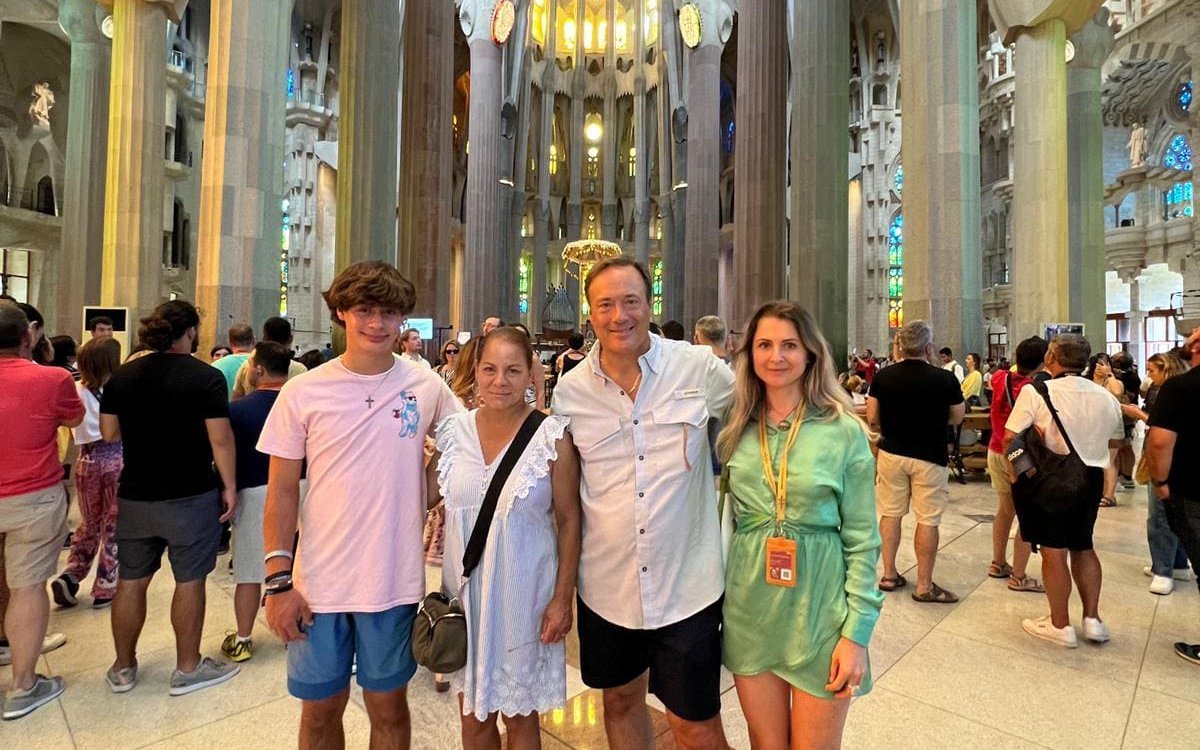
Standing inside Sagrada Familia often feels unlike anything else in Spain. Its towering forms rise slowly into view, shaped by decades of imagination, faith, and local pride. People arrive every day from distant places, drawn not just to see it but to feel its presence. The building breathes history without saying a word.
Floating high above the city, those spires draw eyes upward. The outside walls twist with detailed carvings that pull you closer. Inside, space opens wide, filling visitors with quiet wonder. Not merely a place tourists pass through – this spot carries weight of belief and history alike.
More tips
Bet most folks miss this one key thing when they travel
Failing to dress appropriately might result in being turned away at the door. Entry hinges on meeting basic clothing expectations – come unprepared, face consequences.
Just because you bought your ticket early doesn’t mean it can’t change.
What sets the Sagrada Familia apart isn’t just its towering spires; it functions as a living place of worship. Because services happen regularly, guests need clothing suitable for such spaces – think modesty and mindfulness. Though crowds come daily, behavior inside leans toward quiet reverence, much like any house of prayer. Rules aren’t posted loudly, yet they’re clear: shoulders covered, knees mostly hidden. Even on hot days, lightweight scarves or shawls help meet expectations without discomfort. Since Mass still shapes part of the rhythm here, timing your visit around ceremonies makes sense. Footwear matters less than fabric choices when entering these halls. Despite being one of Barcelona’s most photographed sites, cameras stay silent during prayers.
Year after year, people show up only to be stopped at the door – no ticket issues involved, just what they’re wearing fails the standard.
This full walkthrough from 2026 shows how to sidestep that problem completely.
By the end, you will clearly understand:
- The official dress code requirements
- What clothing is acceptable and what is prohibited
- Practical outfit ideas for different seasons
- Common mistakes that lead to denied entry
- Smart strategies to ensure a smooth visit
Whether you’re traveling alone, with friends, or as a family, this guide will help you enjoy your visit without stress or surprises.
Why Does Sagrada Familia Have a Dress Code?
The Sagrada Familia is not merely a tourist destination—it is a consecrated place of worship.
Key Reasons Behind the Dress Code
- It functions as an active religious site
- Catholic Mass and ceremonies are held regularly
- Visitors are expected to behave with reverence and dignity
- Modest attire helps preserve a respectful atmosphere
Think of it as entering any historic church in Europe—your clothing should reflect awareness and respect for the setting.
European Context: Dress Codes in Churches
Dress codes are not unique to Barcelona. Across Europe, many religious landmarks enforce similar guidelines.
| Location | Dress Code Strictness |
| Vatican City | Very strict |
| Florence Cathedral | Strict |
| Notre-Dame (Paris) | Moderate |
| Seville Cathedral | Strict |
| Sagrada Familia | High enforcement |
Insight: Due to the immense number of tourists visiting daily, enforcement at the Sagrada Familia tends to be stricter and more consistent than in many other locations.
Sagrada Familia Dress Code (Quick Summary)
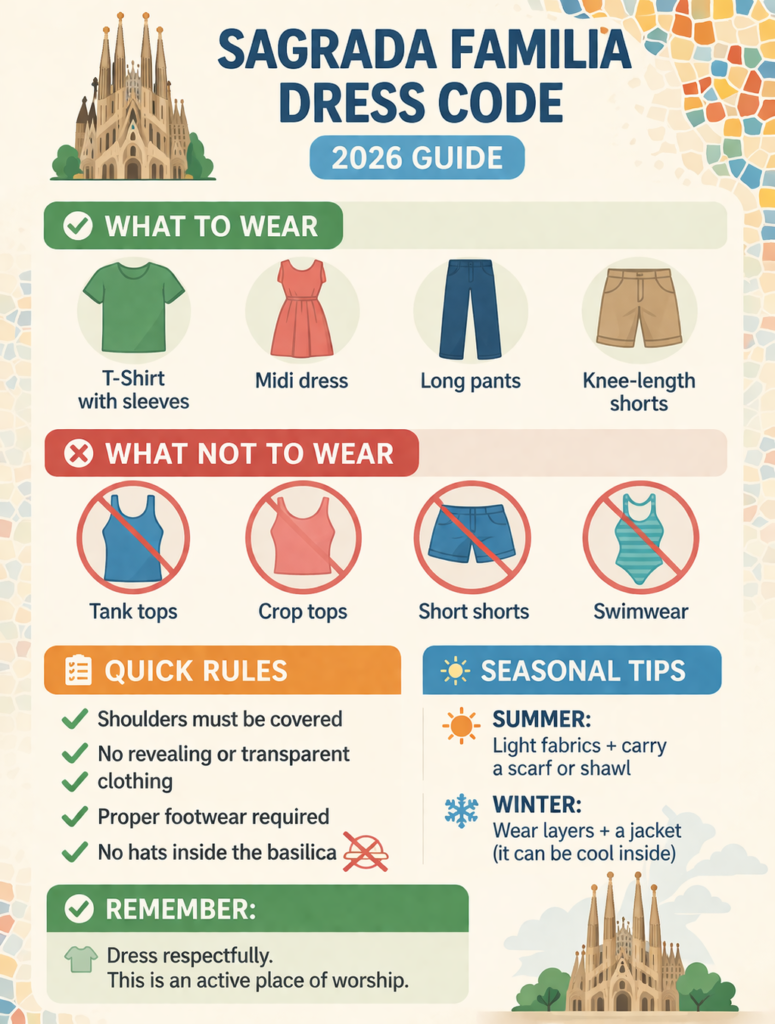
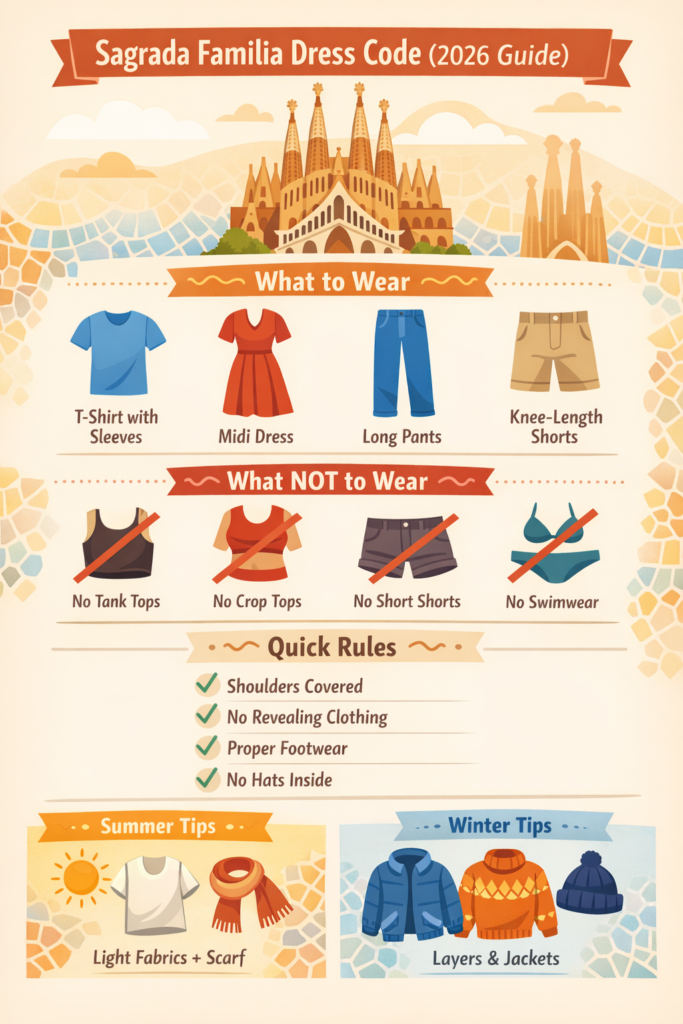
- Here is a simple checklist to keep in mind before you leave your accommodation:
- Shoulders must be covered
- Mid-thigh is the shortest allowed length for shorts and skirts
- Nothing sheer should show skin through. Revealing outfits stay out of bounds. See-through fabrics do not belong here. Outfits that expose too much miss the mark entirely. Barely-there styles find no place in this setting
- Inside, head coverings stay off. No caps past the door. Wear nothing on your head once you step in. Keep hats outside where they belong. Headgear comes off before entering
- Proper footwear is required
- Everyone follows these rules – men, women, kids – all treated the same way under them.
What NOT to Wear (Real Examples That Get You Stopped)
Many travel guides offer vague advice, but here are specific items that frequently result in denied entry.
Common Dress Code Violations
- Sleeveless tops or tank tops
- Crop tops (even slightly shortened ones)
- Very short shorts or mini skirts
- Sheer, mesh, or see-through garments
- Swimwear or beach-style outfits
- Flip-flops (occasionally refused depending on appearance)
Areas of Strict Enforcement
Security personnel pay particular attention to:
- Bare shoulders
- Extremely short hemlines
- Transparent fabrics
Real Insight: Even if your outfit appears “almost acceptable,” staff may still refuse entry if it does not fully meet the guidelines.
What TO Wear (Safe Outfit Ideas)
To avoid uncertainty, it’s best to follow clearly acceptable clothing options.
For Women
T-shirts or blouses with sleeves
Midi or maxi dresses
Long skirts
Jeans or full-length trousers
Smart Tip: Carry a lightweight scarf or shawl. It can quickly solve most dress code issues.
For Men
T-shirts
Polo shirts
Button-down shirts
Chinos or jeans
Knee-length shorts
Avoid:
- Sleeveless shirts
- Gym vests
For Kids
While rules are slightly more flexible, they still apply.
Avoid sleeveless tops
Avoid extremely short shorts
Family Tip: Dressing children appropriately in advance helps prevent delays at security checkpoints.
What to Wear in Summer (Barcelona Heat Survival Guide)
Summer in Barcelona can be intensely hot, often exceeding 30°C (86°F). This is when most dress code issues occur.
Smart Summer Strategy
- Choose breathable materials like cotton and linen
- Opt for loose-fitting garments
- Always carry a light covering layer
Example Summer Outfits
Linen shirt with knee-length shorts
Maxi dress with a shawl
Cotton blouse paired with wide-leg trousers
Pro Tip: The key is balancing comfort with modesty.
Common Summer Mistakes
Visitors frequently wear:
- Tank tops
- Crop tops
- Short shorts
These are the most common reasons for being denied entry during peak season.
What to Wear in Winter
Winter simplifies dress code compliance significantly.
Recommended Winter Clothing
Sweaters
Long-sleeve tops
Jackets or coats
Full-length trousers or jeans
Tip: Layer your clothing—you may notice temperature differences inside the basilica.
Footwear Rules (Often Overlooked)
Footwear guidelines are less strict but still relevant.
Acceptable Footwear
Sneakers
Comfortable walking shoes
Secure sandals
Not Recommended
Barefoot
Beach-style flip-flops
You’ll likely walk extensively, so comfort is just as important as compliance.
What Happens If You Break the Dress Code?
Many visitors underestimate how strictly the rules are enforced.
What Actually Happens
- Security staff will assess your outfit
- You may be refused entry
- Refunds are typically not guaranteed
Possible Outcomes
- You may need to leave and change
- Purchase appropriate clothing nearby
- Reschedule your visit
Important: This situation is especially common during summer months.
Can You Wear Shorts to Sagrada Familia?
Short Answer: Yes—but with conditions
Shorts must reach mid-thigh or longer
They should not be overly tight or revealing
Not Allowed:
- Very short shorts
- Beach-style shorts
Comparison: Similar to Italian churches, though enforcement in Barcelona is often stricter.
Quick Fixes If You’re Not Dressed Properly
If you arrive and realize your outfit is not compliant, there are quick solutions.
Use a scarf or shawl
Put on a lightweight jacket
Purchase a wrap from nearby vendors
Many travelers successfully resolve dress code issues with these simple adjustments.
Dress Code During Mass
If you plan to attend a religious service, expectations are slightly higher.
Recommended Attire
Modest clothing
Covered shoulders and knees
Slightly formal appearance
Think of what you would wear to a Sunday church service.
Sagrada Familia vs Other European Churches
| Feature | Sagrada Familia | Vatican | Notre-Dame |
| Shoulder Coverage | Strict | Very strict | Moderate |
| Shorts Allowed | Limited | Rare | Usually |
| Enforcement | High | Very high | Medium |
| Tourist Volume Impact | Very high | High | High |
Insight: Sagrada Familia ranks among the most strictly monitored religious sites in Europe.
Final Checklist Before You Go
Before heading out, double-check:
Shoulders are covered
Bottoms are long enough
No revealing or transparent clothing
Comfortable footwear
Backup layer (scarf or jacket)
Pros & Cons of the Dress Code
Advantages
- Encourages respect for religious traditions
- Preserves cultural heritage
- Maintains a peaceful atmosphere
- Aligns with European norms
Disadvantages
- Can confuse tourists
- Strict enforcement may feel inconvenient
- Difficult to manage in hot weather
Pro Traveler Tips (Outranking Edge)
To ensure a seamless experience:
- Dress slightly more conservatively than required
- Avoid borderline outfits
- Plan your clothing ahead of time
- Always bring a backup layer
These small decisions can make the difference between entry and disappointment.
FAQs (SEO Optimized)
Only if a scarf hides your shoulders. Otherwise, forget it.
True – provided they’re tidy, not the loose kind you wear to shore. Yet keep in mind that frayed edges won’t help. So smooth lines matter more than material. Still, a clean look beats bold design. Even so, skip anything too casual. Because appearance shifts perception quietly. Always remember: detail speaks first.
Fewer spots available when crowds grow large.
True, though length matters – too brief might expose more than intended.
Start over if your outfit feels off. Money back? Not always possible.
Fewer people wear them, yet they draw extra attention at screenings.
A bit of formality helps when picking what to wear. Clothes that aren’t too bold tend to fit better. Going subtle often makes sense in these situations.
Conclusion
The dress code at the Sagrada Familia may seem strict at first glance, but it is entirely manageable with a bit of preparation.
The golden rule is simple:
Dress as if you are entering a sacred place—not a beach.
If you:
- Cover your shoulders
- Wear appropriate-length clothing
- Bring a backup layer
You will enjoy a smooth, hassle-free visit.
Most importantly, you will be able to fully appreciate the architectural beauty and spiritual ambiance of one of the world’s most remarkable landmarks.