Puta de Sagrada Familia: History, Meaning and Curiosities of Gaudí’s Famous Church
Introduction
The phrase “Puta de Sagrada Familia” is really a strange phrase. The people of Spain say this phrase to be funny. “Puta de Sagrada Familia” is said when people are surprised or really amazed. You will often hear this phrase in conversations, see this phrase in pictures on the internet, or even read this phrase on social media.
If you are going to visit Barcelona, it is a good idea to know what “puta de Sagrada Familia” means to be able to understand the culture of the country and to be able to visit one of the most famous places in the world.
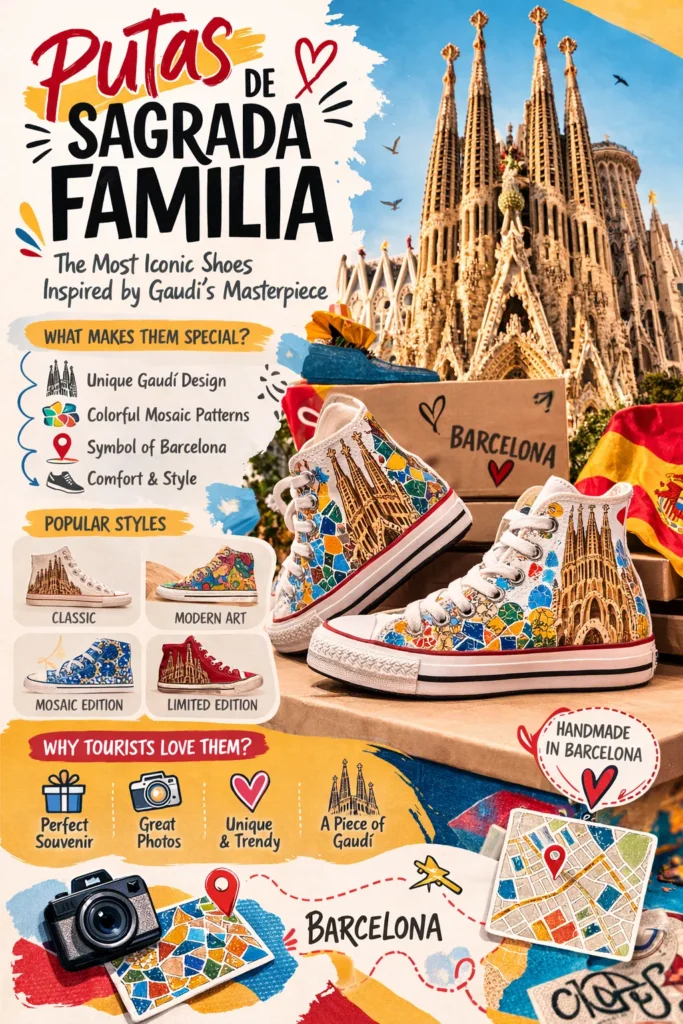
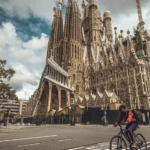
Sagrada Família is a special church designed by the famous architect Antoni Gaudí. It is an example of the style of the 20th century. This church is a place for tourists to visit. It is still being built, which is really cool because it is like a work of art.
When you look up “puta de Sagrada Familia” on the internet, you will probably see a lot of pictures but not a lot of information, like the history of the place, which can be really confusing if you are trying to learn about it.
In the following article, we will talk about the origins of the expression “Sagrada Família,” its meaning in the culture, and some interesting facts about the church.
We will learn about the history of the Sagrada Família.
We will learn about the meaning of the expression
1. Introduction to the Sagrada Família
Brief History
The Sagrada Família is a basilica. They started to build the Sagrada Família in 1882. The Sagrada Família was originally going to be a Neo- building. It was going to be designed by a guy named Francisco de Paula del Villar.
Then the year Gaudí took over the Sagrada Família. Gaudí used a style for the Sagrada Família. This style is really cool because it’s a combination of nature, geometry, and spirituality.
Gaudí spent more than 40 years on the Sagrada Família. When Gaudí died, the Sagrada Família still wasn’t finished. But people continued to build the Sagrada Família the way Gaudí wanted. The Sagrada Família is a really complex building. It has really tall towers, and the sculptures have a lot of details.
The Sagrada Família is something people are really proud of.
Quick Facts Table
| Fact | Detail |
| Construction Start | 1882 |
| Architect | Antoni Gaudí |
| Style | Catalan Modernism |
| Estimated Completion | Around 2030 |
| UNESCO Status | World Heritage Site (2005) |
Gaudí and Modernist Architecture
Antoni Gaudí’s modernism was truly innovative. He combined natural forms, vivid colors, and complex geometries to create something completely new.
Key Characteristics
- Hyperbolic vaults inspired by nature
- Facades that function almost like sculptures and tell biblical stories
- Light and color used to create a spiritual atmosphere
- Columns that resemble natural trees
Many visitors compare his techniques with other modernist works across Europe. However, few architects managed to combine faith, art, and architecture as successfully as Gaudí.
2. Origin of the Phrase “Puta de Sagrada Familia”
Linguistic and Cultural Context
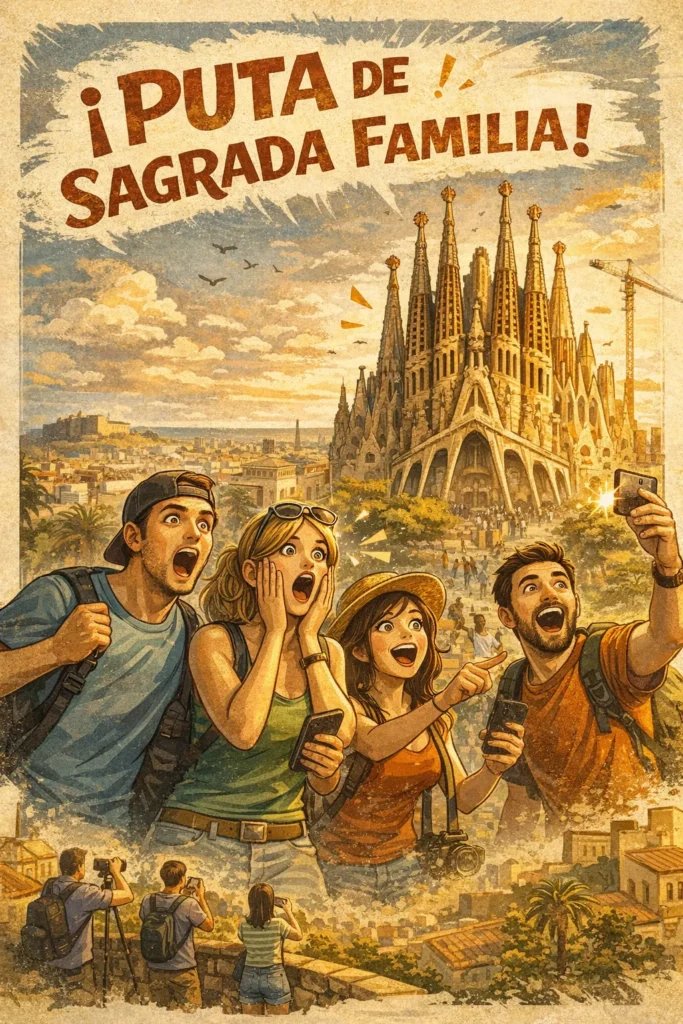
‘Puta de Sagrada Familia’ is something Spaniards say when they are really surprised or shocked.
They do not mean it in a way even though it sounds like it.
When people in Barcelona talk about the buildings, they like to make a big deal out of them.
This phrase was probably started because people are so amazed, by how huge the Sagrada Família’s they use humor to express that.
Current Use in Spain
Today the phrase is mostly used in informal conversations, particularly among younger people. People may use it when they are amazed by impressive architecture or unexpected situations.
The phrase is also common in social media memes related to tourist experiences.
It is considered very Spanish because it combines irreverence with cultural pride.
The phrase expresses both humor and admiration at the same time.
Some examples
- “It’s insane, the Sagrada Familia! Did you see those towers?” — expressing amazement.
- Memes about tourists’ reactions when they first see the basilica.
- Social media posts highlighting cultural aspects of Barcelona.
3. Cultural Meaning and Controversies
Perception on Social Media and Memes
Social media has really made this phrase super well known. People make memes that have this phrase combined with pictures of people who are acting crazy as tourists when they see the basilica. They show how big it is and how pretty it is. The humor is that when people actually see it, it is nothing like what they expected.
Local and Tourist Reactions
People who live there think that this phrase is super funny. Tourists may think it is funny also. The reason for this is that it is a very beautiful temple, and people do not like this phrase because they think it makes the temple sound less important. They think that it is not something you should say when you are talking about something special, like the basilica. The basilica is a deal, to them, and they don’t want people to forget that.
Comparison Table: Local vs Tourist Reactions
| Audience | Typical Reaction | Context of Use |
| Local Residents | Humorous, accepted | Everyday conversations |
| Tourists | Surprised or amused | Social media, travel anecdotes |
| Traditionalists | Disapproval or caution | Cultural discussions, guided tours |
4. Interesting Facts About the Sagrada Família
Historical Facts
Construction began in 1882. It still hasn’t been completed.
It is expected to be completed by the year 2030.
Most of the money for the construction comes from people donating and selling tickets.
The UNESCO team declared it a World Heritage Site, and it happened in 2005.
Remarkable Architectural Elements
The Nativity Facade is quite a thing. It is about life and how everything was created.
The Passion Facade is quite different from the Nativity Facade and Glory Facade. It is minimalist. It depicts Christ’s suffering.
The Glory Facade is the entrance of the building. The Glory Facade is still being constructed. It represents heaven’s glory.
Lesser-Known Sculptures and Works
Some of the sculptures depict a mixture of people from the Bible and tales that are told by people from Catalonia.
Some of the columns are shaped in a way that resembles hyperbolic paraboloids, thus resembling trees.
The Nativity Facade, the Passion Facade, and the Glory Facade all have things that are not easily visible. There are writings that give us an insight into Gaudí’s spiritual vision and what he believed in.
5. Tips for Visitors and Responsible Tourism
Best Times to Visit
Spring is a good time to go as the weather is nice and there are not a lot of people around. It is a time to go in the Spring. The best time to go in the Spring is from April to June.
Autumn is also a good time to go as the light is very nice and golden, which is ideal for taking pictures. It is a time to go in the Autumn, for photography. The best time to go in the Autumn is September and October.
Cultural Rules and Etiquette
When you are inside the basilica, there are some rules to follow:
- Do not speak loudly near sacred areas.
- Photography is allowed, but tripods are prohibited.
Unique Experiences
- Take a guided tour explaining the symbolism and architecture.
- Climb the towers to enjoy panoramic views of Barcelona.
- Attend night events or cultural exhibitions.
6. Popular Phrases and Related Expressions
Examples of Spanish Colloquial Language
People sometimes soften the expression by saying:
- “Madre mía de la Sagrada.”
- “Qué bestialidad” when something is very impressive.
- “Incredible, dude” in an informal context.
The way language connects with cultural references is fascinating.
These expressions are widely used in memes and travel blogs.
They are also common in informal conversations with friends.
And connect modern humor with historically important places.
They describe Spanish culture in an informal yet culturally meaningful way.
7. Conclusion
“puta de Sagrada Familia” is really something than just a bad word. It is one of the ways that Spanish people show how they are feeling in a fun and lively way.
If you think about the Sagrada Família, which is a really amazing work of art, you can see how all of this works together and it is easy to understand why it is part of our culture now.
If the people who are visiting understand what all of these words mean, they can look at it in a certain way. They do not just see the Sagrada Família as a place where tourists go, but they can also get to know what is funny and what life is like, for the people who live there, the people of the Sagrada Família.
FAQ
It means you are surprised or shocked like when you say “Oh my God”.
No it’s usually a phrase. Just be careful how you use it.\
You can say it to friends or in situations… Do not use it in formal events or near the church.
Antoni Gaudí took over the project in 1883. He made it a famous Catalan building.
The best time to visit the Sagrada Família is in the spring from April to June… You can also visit in the fall from September to October. The weather is nice. There are fewer people.
Yes, there are tours that explain the building, its meaning, and its histori.