Introduction:
When decide a trip to Barcelona, most visitors focus on central beauties such as beaches, historic streets, and architecture. However, one of the most attractive experiences is located above the city at Tibidabo Mountain.
The journey to this location does not begin at the mountain itself. It begins at Av. Tibidabo Barcelona, which serves as an essential access corridor connecting the city with the hillside region.
This area is not a tourist attraction but a transport gateway that allows travelers to move from central Barcelona into the Collserola mountain region and eventually reach Tibidabo amusement park and viewpoints.
Many travlers are confused because there is no direct metro to the summit. Instead, the journey involves a combination of rail, bus, and funicular connections.
This guide explains everything in detail including routes, transport options, travel time, and common mistakes.
What is Av. Tibidabo Barcelona
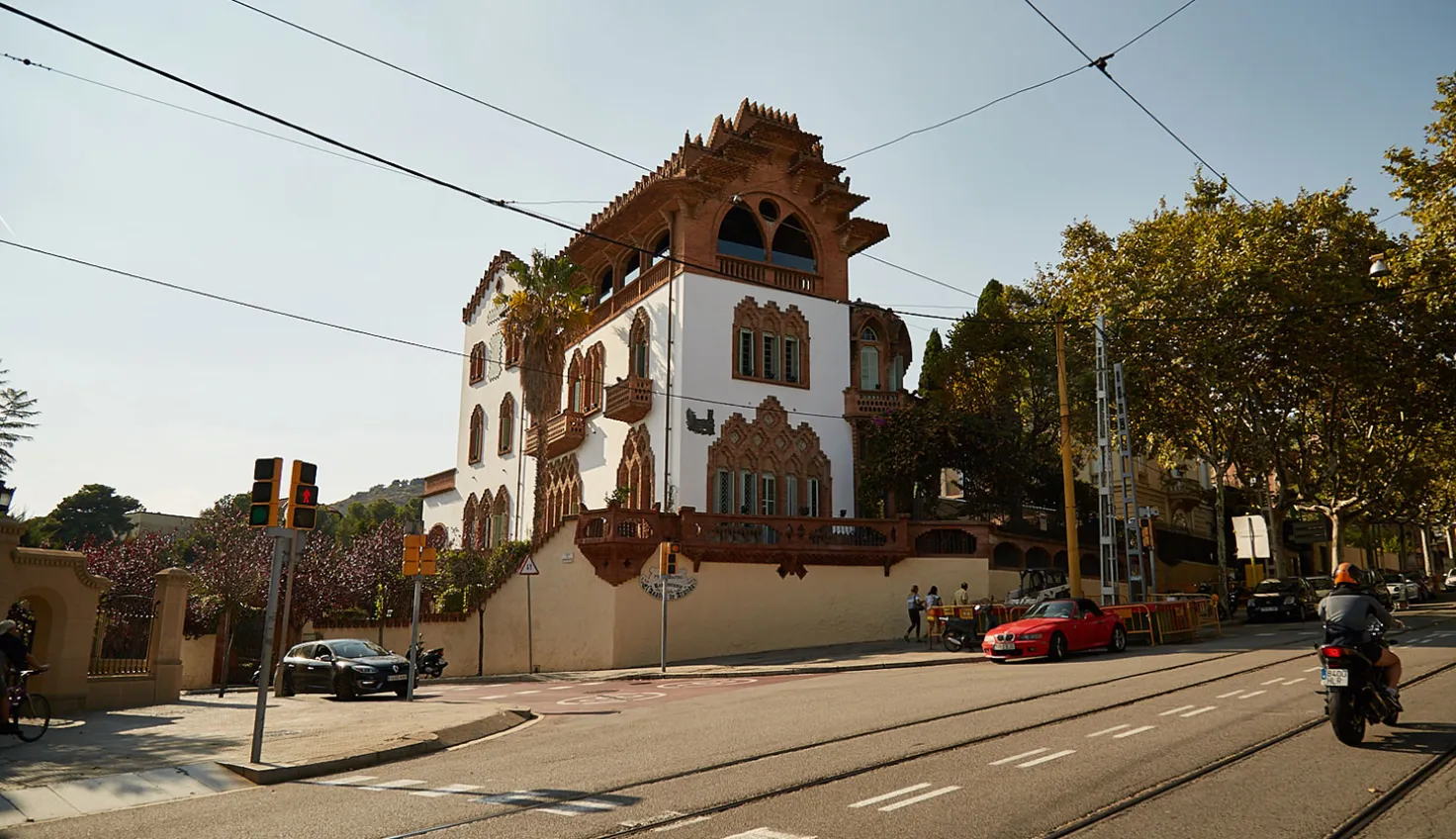
Av. Tibidabo is a residential avenue located in the Sarrià Sant Gervasi district of Barcelona. It is mainly known for transport access rather than tourism.
It connects the city with the upper hillside region leading toward Tibidabo Mountain.
Key characteristics include:
• Located in northern Barcelona
• Connected to FGC Line L7
• Acts as a transition point to Tibidabo routes
• Surrounded by residential buildings and greenery
• Serves as a transport hub rather than attraction
Why Av. Tibidabo is Important
Most visitors misunderstand how to reach Tibidabo. Common assumptions include direct metro access or simple walking routes. These are incorrect.
The real system works in layers.
Av. Tibidabo is important because it:
• Connects metro and regional train systems
• Links city transport with mountain transport
• Acts as the final urban stop before ascent
• Organizes passenger flow toward Bus 111
Understanding this system makes the journey much easier.
How to Reach Av. Tibidabo Barcelona
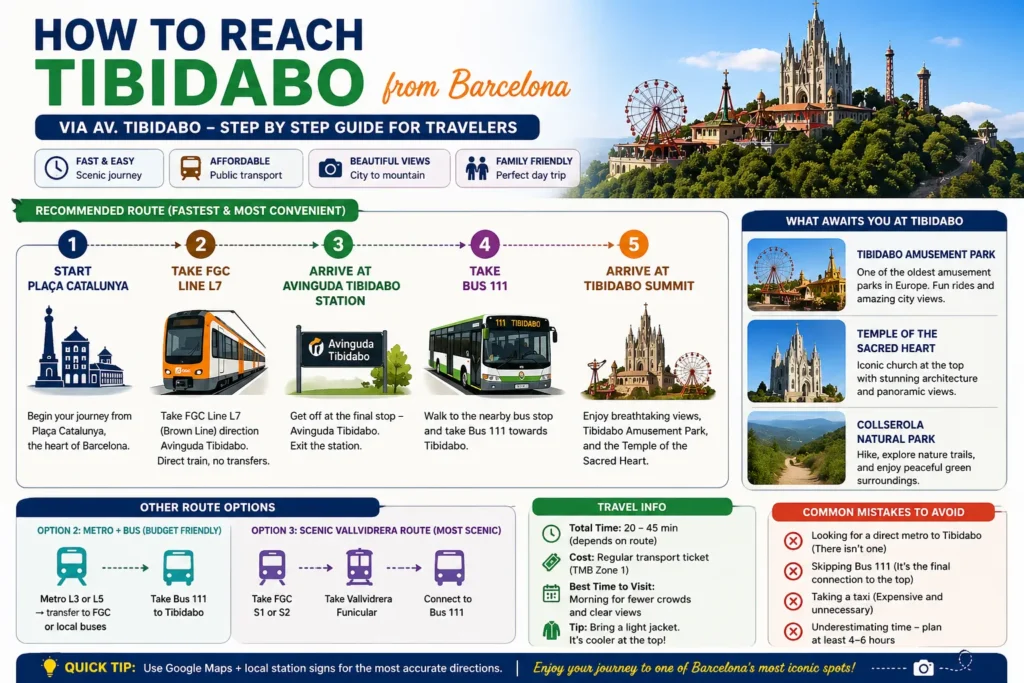
There are three main travel options depending on budget and preference.
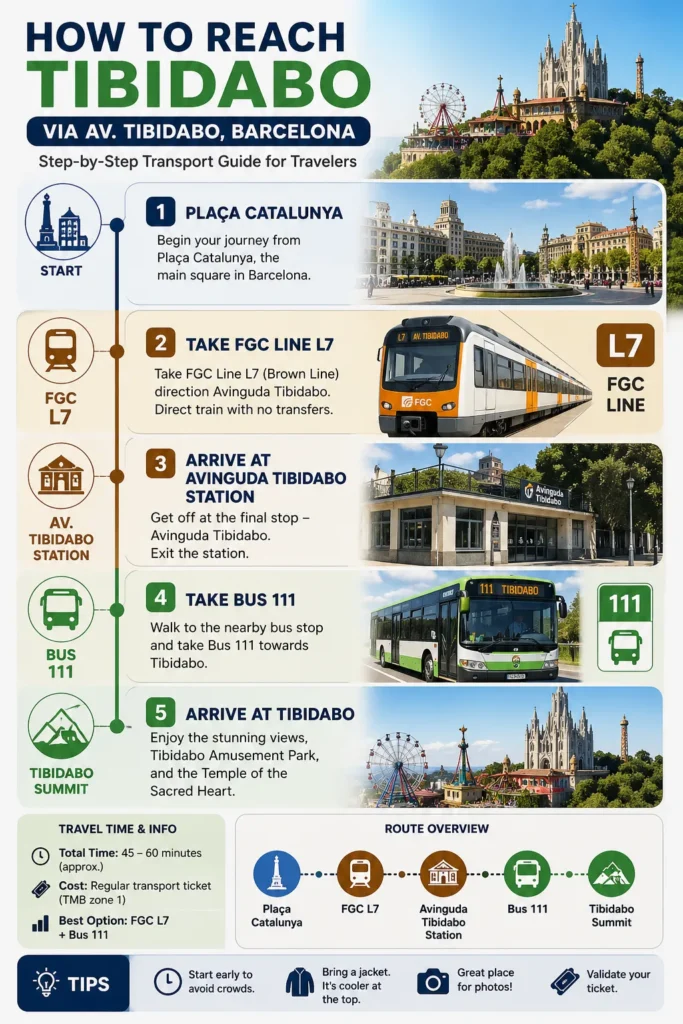
Option 1 FGC Train Route
This is the most direct and recommended option.
Steps:
• Start at Plaça Catalunya
• Take FGC Line L7 toward Avinguda Tibidabo
• Travel to final station Avinguda Tibidabo
• Exit and walk toward bus connection points
Details:
• Travel time approximately 20 to 25 minutes
• Simple navigation
• Direct connection from central Barcelona
• Reliable and frequent service
Advantages:
• Fast and efficient
• No complicated transfers
• Ideal for first time visitors
Limitation:
• Requires Bus 111 for final mountain access
Option 2 Metro and Bus Combination
This option is more economical and flexible.
Steps:
• Take Metro Line L3 or L5
• Transfer to regional or FGC lines
• Travel toward Sarrià district
• Connect to Bus 111
• Continue toward Tibidabo access area
Advantages:
• Low cost
• Flexible routes
• Good for budget travelers
Disadvantages:
• Multiple transfers required
• Can be confusing for beginners
• Slightly longer travel time
Option 3 Scenic Vallvidrera Route
This is the most scenic travel option.
Steps:
• Take FGC S1 or S2 line
• Exit at Peu del Funicular
• Take Vallvidrera Funicular
• Connect to Bus 111
• Continue toward Tibidabo area
Advantages:
• Forest and mountain scenery
• Quiet environment
• Excellent for photography
Disadvantages:
• Longer travel time
• Multiple transport stages
Transport Comparison
FGC L7 Route
• Duration 20 to 25 minutes
• Low cost
• Simple navigation
• Best for tourists
Metro and Bus Route
• Medium duration
• Very low cost
• Flexible structure
• Best for budget travelers
Vallvidrera Route
• Longer duration
• Medium cost
• Scenic experience
• Best for nature travelers
Why Av. Tibidabo Leads to Tibidabo Attractions
Av. Tibidabo is the entry point to several major destinations.
Tibidabo Amusement Park
• One of the oldest amusement parks in Europe
• Located at the top of the mountain
• Offers rides and panoramic views
• Suitable for families
Temple of the Sacred Heart
• Large religious monument
• Visible from many parts of Barcelona
• Architectural landmark
• Located at the summit
Collserola Natural Park
• Large protected natural area
• Hiking and cycling trails
• Forest environment
• Scenic viewpoints
Common Mistakes to Avoid
Mistake 1
• Assuming there is a direct metro to Tibidabo
Mistake 2
• Ignoring Bus 111 which is required for final access
Mistake 3
• Using taxis which are unnecessary and expensive
Mistake 4
• Thinking Av. Tibidabo is a tourist attraction
Recommended Route Summary
Best route for most travelers:
• Start at Plaça Catalunya
• Take FGC L7 to Avinguda Tibidabo
• Walk to Bus 111 stop
• Take Bus 111
• Arrive at Tibidabo area
What the Area Looks Like
Av. Tibidabo area is calm and residential.
It includes:
• Quiet streets
• Residential buildings
• Small cafes
• Green surroundings
• Low tourist density
Advantages and Disadvantages
Advantages
• Direct access to Tibidabo routes
• Peaceful environment
• Good transport connections
• Close to nature
Disadvantages
• Not a tourist attraction
• Requires multiple transport steps
• Can be confusing initially
Travel Tips
• Start early in the morning
• Validate all transport tickets
• Bring a light jacket
• Use navigation apps
• Plan at least four to six hours
Suggested Itinerary
• 0900 depart city center
• 0930 arrive Av. Tibidabo
• 1000 take Bus 111
• 1030 reach Tibidabo summit
• 1100 explore attractions
• 1400 return
Frequently Asked Questions
Question 1
Is Av. Tibidabo the same as Tibidabo Mountain
Answer
No it is a transport access route
Question 2
Which metro line goes to Av. Tibidabo
Answer
FGC Line L7
Question 3
Can you walk to Tibidabo
Answer
No the distance is too steep and long
Question 4
What is the fastest route
Answer
FGC L7 plus Bus 111
Question 5
Is Av. Tibidabo worth visiting
Answer
Yes as a transport hub
Question 6
Is Tibidabo family friendly
Answer
Yes it is suitable for families
Question 7
How much time is needed
Answer
Four to six hours minimum
Conclusion
Av. Tibidabo Barcelona is not a visitors destination but an essential transport gateway that connects the city with Tibidabo Mountain.
Understanding this way makes the journey simple and effective.
The key points are:
• It connects city and mountain transport
• It leads to Tibidabo attractions
• It requires FGC and Bus 111
• It simplifies travel when understood correctly