Introduction
Few places in Europe leave such a strong impression as La Sagrada Familia. Though it stands in Barcelona, this basilica feels apart from the city, almost floating between earth and sky. Because it serves as both church and monument, visitors often pause before stepping inside. Its walls draw eyes upward with twisting towers and carvings that seem alive under sunlight. While many come for Gaudí’s vision, they stay for the quiet that fills the nave like breath. Each year, crowds grow – drawn less by fame than by something harder to name. Afternoon light spills through stained glass, painting the stone floor in slow motion. Even those who pass quickly can’t help but glance back once, maybe twice.
- Still, a single key point escapes most travelers.
- Folks must stick to the clothing rules – someone always checks. Outfits get reviewed without fail.
- Every year, people show up full of excitement, tickets ready, then get stopped at the door – clothes deemed too bold. Picture it. You’ve waited months, finally here, yet they won’t let you pass. It happens often. Rules about dress catch folks off guard more than most assume.
- This full walkthrough from 2026 shows a clear way out of that mess. Instead, it lays things bare so confusion never takes hold. From the start, each part moves with purpose – no gaps, no guesswork. Because clarity sticks when details make sense on their own. So hesitation fades before it even settles in.
You’ll grasp the right clothes to wear just by looking through this. Some items are not allowed – there’s a clear list. Rules exist for solid reasons, not random choices. Every time of year has fitting outfit examples that actually work. Seasoned advice helps avoid trouble at entry points. What fits where becomes obvious without confusion.
You’ll walk away ready, calm in your skin, a quiet kind of sureness humming underneath.
Sagrada Familia Dress Code: Quick Overview
- Hold on. A quick list sits below, clear enough to keep close while moving ahead.
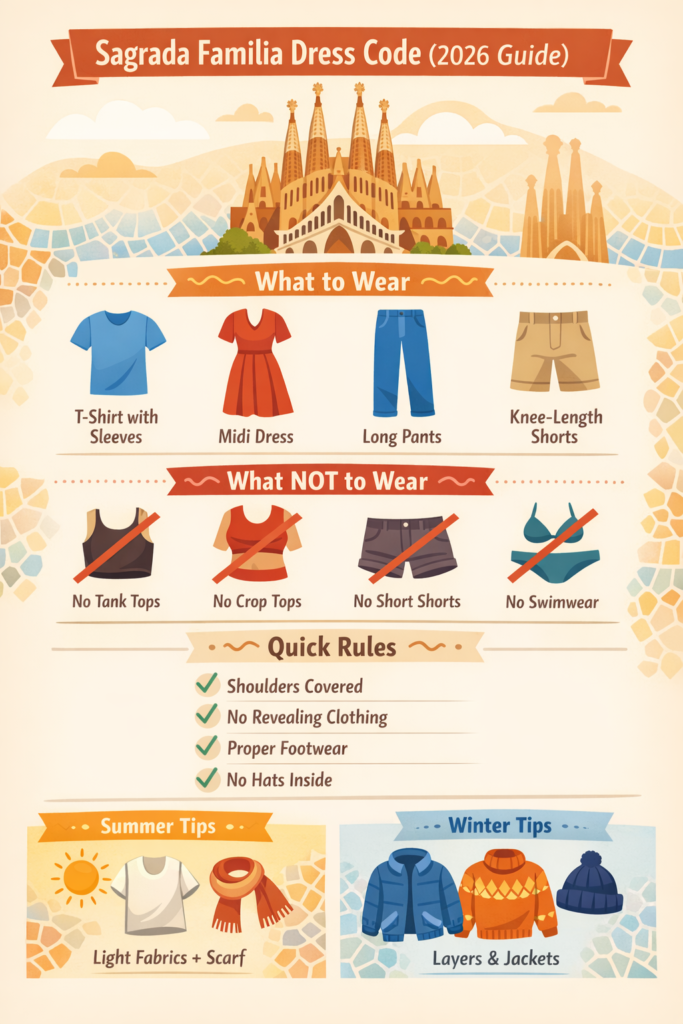
- Pants that go past the knee work fine, also long skirts. Tops need sleeves, so nothing strapless. Shoulders must stay under fabric at all times. Footwear can be sandals, but flip-flops are out. Closed shoes like sneakers make the list too. Dresses have to cover front and back fully. Length matters just as much as fit.
- Clothing that falls outside the rules means going without sleeves on top – think tanks or bare shoulders. Shorts cut too high sit out of bounds just like tiny skirts do. Swim gear stays at the shore; it does not show up indoors. See-through layers give off a signal they should not. Head coverings find acceptance only when faith or health says so.
- Watch out – clothes get checked closely by security right at the door. If you do not follow the rules, entry could be refused with no refund given. Each item worn matters when passing through.
Why Does Sagrada Familia Have a Dress Code
Many travelers wonder why a popular tourist attraction enforces clothing rules. The explanation is straightforward. It is not merely a tourist attraction.
La Sagrada Familia is a consecrated Catholic basilica. This means religious services are regularly held, visitors come to pray and reflect, and the space is treated as sacred. Wearing modest clothing demonstrates respect for these traditions.
Across Spain and much of Europe, churches expect respectful attire. Visitors are encouraged to dress conservatively, and these customs are deeply rooted in cultural and historical traditions.
The dress code also helps maintain a calm and respectful environment, reduces distractions, and preserves a harmonious atmosphere for all visitors.
European Context Comparison
Dress codes vary across Europe. At Vatican City, the rules are very strict and both shoulders and knees must be covered. And in Spain, particularly at Sagrada Familia, the dress code is moderate to strict and actively enforced. In France, such as at Notre Dame, the rules are more moderate. In Germany, they are generally relaxed but still respectful.
Spain sits in the middle, but enforcement at Sagrada Familia is consistently applied and should not be taken lightly.
What to Wear to Sagrada Familia Complete Guide
For Women
Recommended clothing includes T-shirts or blouses with sleeves, midi or maxi dresses, long skirts, lightweight trousers or linen pants, and a scarf or shawl for additional coverage.
Avoid strapless tops, crop tops, backless dresses, mini skirts, and sheer or transparent fabrics.
A practical tip is to always carry a light scarf. It allows you to quickly adjust your outfit and ensures compliance with the dress code.
For Men
- Recommended clothing includes T-shirts with sleeves, polo shirts, casual button-down shirts, jeans or chinos, and knee-length shorts.
- Avoid tank tops, sleeveless athletic wear, and extremely short shorts.
- A helpful style approach is to dress as if you are exploring a city rather than heading to the beach.
For Children
Families benefit from slightly more flexibility. The dress code is less strictly enforced for children, but modest clothing is still recommended.
The best approach is to focus on comfort while maintaining respectful attire.
Footwear Rules Explained
Acceptable footwear includes sneakers, sandals, and flats. Flip-flops are sometimes allowed but are not ideal. Bare feet are strictly prohibited.
Footwear should reflect a respectful indoor environment rather than beachwear.
Sagrada Familia Dress Code in Summer
- Summer in Barcelona often exceeds 30 degrees Celsius, making appropriate clothing choices more challenging.
- Common mistakes include wearing tank tops, choosing beach outfits, wearing shorts that are too short, and crop tops.
- A smart summer strategy is to select breathable fabrics such as cotton or linen, wear loose-fitting garments, and carry a cover-up at all times.
- An ideal summer outfit includes a lightweight cotton T-shirt, a midi skirt or knee-length shorts, a scarf or shawl, and comfortable sandals. This approach keeps you cool while respecting the guidelines.
What Not to Wear
Avoid swimwear, transparent clothing, sleeveless tops, very short shorts, and clothing with offensive graphics.
Entry checks are quick and firm, and there is no flexibility at the entrance.
What Happens If You Break the Dress Code
If you do not follow the rules, you may be refused entry, you will not receive a refund for your ticket, and you may be required to change your clothing before entering.
Nearby shops sell scarves and cover-ups, but prices are often higher than usual. Preparing in advance helps you avoid unnecessary expenses.
Smart Tips to Avoid Getting Rejected
Always carry a scarf or shawl, dress slightly more conservatively than required, avoid beachwear entirely, wear layers for flexibility, and check your outfit before leaving your accommodation.
When in doubt, choose modest clothing.
Outfit Ideas for Travel
For women, good options include a city dress with sneakers and a scarf, a blouse with linen trousers and sandals, or a maxi dress with a light cardigan.
For men, recommended outfits include a polo shirt with chinos and sneakers, a T-shirt with knee-length shorts and loafers, or a button-up shirt with jeans and casual shoes.
These outfits are versatile and suitable for travel across Europe
Dress Code Summary
Shoulders must be covered, shorts should be knee-length, tops must have sleeves, footwear should include sandals or sneakers, and hats are not allowed inside.
Pros and Cons
- Advantages include preserving respect, protecting traditions, enhancing the visitor experience, and aligning with European customs.
- Disadvantages include difficulty during hot weather, lack of clear communication in some cases, the need for outfit adjustments, and limited flexibility at entry.
Spain vs Europe Dress Culture
Across Europe, Vatican City has the strictest regulations, Spain offers a balanced but enforced approach, France is more relaxed, and the United Kingdom is generally lenient.
Spain provides a middle ground, but enforcement at Sagrada Familia remains consistent and serious.
Extra Travel Tips
- Booking tickets in advance is essential because they often sell out quickly. Early morning and late afternoon are the best times to visit.
- When taking photos, respect quiet areas and avoid using flash during services.
- Always respect the environment by speaking softly, following guidelines, and being mindful of worshippers.
FAQ
Can you wear shorts in Sagrada Familia
Yes, but they must be mid-thigh or knee-length.
Can you wear sandals
Yes, sandals are permitted. Avoid flip-flops.
Can you wear sleeveless tops
No, shoulders must be covered.
Is the dress code strictly enforced
Yes, enforcement is consistent.
What happens if you don’t follow the dress code
You may be denied entry without a refund.
Do they provide cover-ups
No, visitors must bring their own.
Conclusion
- Visiting La Sagrada Familia is truly a once-in-a-lifetime experience, but preparation is essential.
- The dress code is simple, clear, and strictly enforced.
- The most important rule to remember is to cover your shoulders, avoid revealing clothing, and dress respectfully.
- By following these guidelines, your visit will be smooth, enjoyable, and unforgettable.