Sagrada Familia Interior:
Walking into the Sagrada Familia in Barcelona is not just a typical tourist activity—it feels like crossing into a different dimension. Designed by the visionary architect Antoni Gaudí, this basilica redefines what a sacred space can be.
Instead of the shadowy interiors and heavy atmosphere associated with traditional cathedrals, you encounter brilliance, vibrancy, and organic forms inspired by the natural environment. The structure feels dynamic, almost breathing, as if it were alive.
For travelers exploring Spain or Europe, the Sagrada Familia interior is one of the most immersive and transformative experiences imaginable. It harmoniously combines art, spirituality, mathematics, and nature into one cohesive environment.
In this comprehensive guide, you will discover everything you need to know:
- What is inside the Sagrada Familia
- The deeper meaning behind its design
- The best time to visit
- Hidden details most visitors overlook
- Expert insights to elevate your experience
What Is Inside Sagrada Familia?
The Sagrada Familia interior is a sophisticated fusion of:
- Nature-inspired structural design
- Christian symbolism and theology
- Advanced geometric and mathematical innovation
Unlike conventional churches that replicate Gothic or Romanesque traditions, Gaudí envisioned something entirely original—a living structure modeled after forests, light patterns, and natural systems.
Key Elements Inside
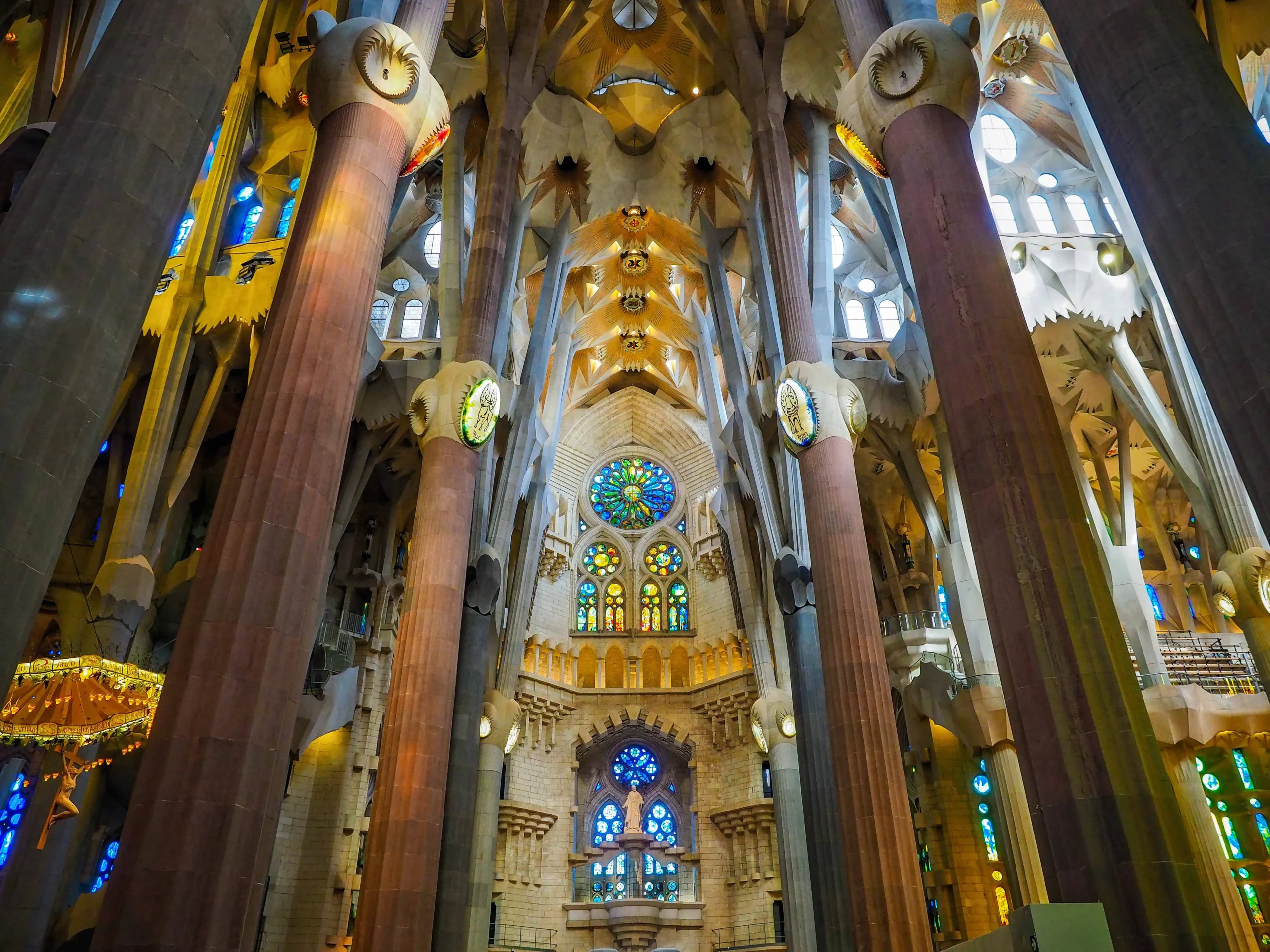
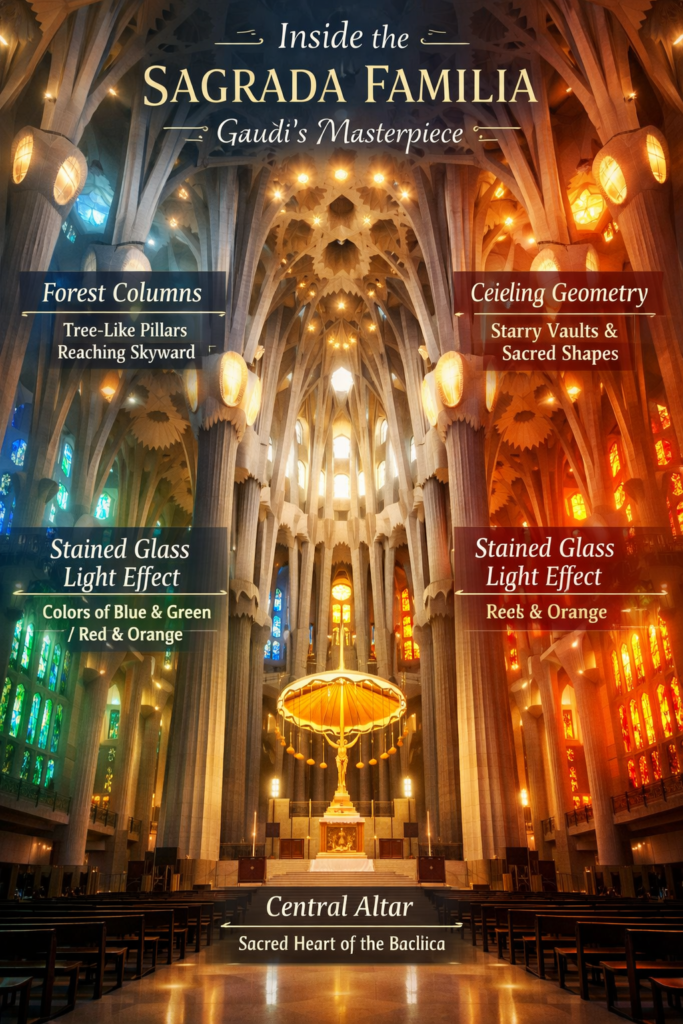
- Tree-like columns forming a stone woodland
- Radiant stained glass windows filled with color
- Complex geometric ceilings resembling the heavens
- A symbolic altar positioned at the core
Quick Insight: Many visitors describe it as a “luminous forest.”
First Impression: Entering the Basilica
The instant you step through the doors, your perception shifts dramatically.
Rather than darkness, you are welcomed by:
- A cascade of multicolored light
- Towering pillars rising like ancient trees
- A sense of infinite openness
Visitors frequently describe the experience as:
- “Surreal”
- “Tranquil yet powerful”
- “Completely unlike any cathedral in Europe”
Compared to Notre-Dame Cathedral, this basilica feels brighter, warmer, and more vibrant.
The Forest of Columns
Nature as Architecture
One of the most iconic aspects of the Sagrada Familia interior is its extraordinary system of columns.
What Makes Them Unique?
- Columns branch outward like tree limbs
- They expand in diameter as they rise
- Their shapes evolve organically
Symbolic Meaning
Gaudí used these columns to represent:
- Nature as a manifestation of divine creation
- Unity among humanity
- A bridge between earth and the heavens
Column Types Explained
| Column Type | Material | Symbolism |
| Central columns | Basalt | Strength and evangelists |
| Secondary columns | Granite | Stability and endurance |
| Smaller columns | Limestone | Diversity of humanity |
Travel Tip: Stand at the center and look upward—it feels like standing beneath a mystical canopy.
The Stained Glass Windows
A Symphony of Light
The stained glass windows are among the most captivating features of the Sagrada Familia interior.
Color Philosophy
Gaudí designed the colors based on sunlight direction:
- East (Morning): Blues and greens → serenity and calmness
- West (Afternoon): Reds and oranges → warmth and intensity
Why It’s Unique
Unlike traditional churches:
- The windows function as a dynamic lighting system
- Colors shift continuously throughout the day
- The ambiance evolves hour by hour
In most cathedrals, stained glass is decorative. Here, illumination becomes the central experience.
Ceiling & Vaults Explained
A Mathematical Masterpiece
The ceiling is one of the most intricate and awe-inspiring components of the basilica.
Key Features
- Height reaching up to 60 meters
- Hyperboloid and star-like geometries
- Patterns that create a sense of infinity
What It Represents
- The sky and celestial realm
- Divine perfection
- Infinite space and eternity
Gaudí believed geometry was the language through which God communicates.
Symbolism & Hidden Meanings
The Sagrada Familia interior is filled with layered symbolism.
Key Symbols
- Triangles → Representation of the Holy Trinity
- Numbers → Biblical significance
- Columns → Saints and unity
Hidden Details Tourists Miss ????
- Names engraved into structural elements
- Subtle geometric motifs
- Color gradients that narrate spiritual stories
Expert Tip: A guided tour significantly enhances understanding of these elements.
The Altar & Sacred Space
At the heart of the basilica lies the altar.
Features
- Positioned beneath the tallest tower
- Bathed in natural light
- Minimalist yet profound
Spiritual Meaning
- Connection between heaven and earth
- A space for contemplation and reflection
Compared to traditional altars, this one is understated yet emotionally powerful.
How Light Transforms the Interior
A Living Space
The Sagrada Familia interior evolves throughout the day.
Light Phases
| Time | Atmosphere |
| Morning | Calm and peaceful |
| Afternoon | Bright and energetic |
| Sunset | Dramatic and emotional |
Why It Matters
- Each visit feels unique
- Light shapes emotional perception
- Ideal for photography
This dynamic lighting is what makes the basilica truly exceptional.
Best Time to Visit Sagrada Familia Interior
Ideal Visiting Hours
- Morning (9–11 AM): Quiet and serene
- Late Afternoon: Best color effects
Avoid
- Midday crowds
- Harsh overhead lighting
Seasonal Tips
- Winter → softer illumination
- Summer → more intense colors
Photography Tips Inside
Want breathtaking photos?
Best Techniques
- Use a wide-angle lens
- Focus on vertical compositions
- Capture beams of light
Timing Matters
- Morning → cooler tones
- Evening → warmer hues
Pro Tip: Avoid flash—it diminishes the natural ambiance.
Things Most Tourists Miss
Even seasoned travelers overlook:
- Hidden inscriptions
- Mathematical ceiling designs
- Seasonal variations in light
Slow observation reveals the basilica’s true depth.
Is the Sagrada Familia Interior Worth It?
Absolutely yes.
While the exterior is iconic, the interior is unforgettable.
Why It’s Worth It
- Unique architectural innovation
- Deep emotional impact
- Constantly changing visual experience
Many visitors consider it the highlight of their trip to Spain.
Practical Visitor Tips
Before You Go
- Reserve tickets in advance
- Consider guided tours
- Check dress code requirements
Inside the Basilica
- Maintain silence
- Take your time
- Avoid peak hours
Pros & Cons of Visiting
Pros
- Extraordinary design
- Stunning lighting effects
- Rich symbolism
Cons
- Large crowds
- Expensive tickets
- Limited availability
Comparison: Sagrada Familia vs Traditional Cathedrals
| Feature | Sagrada Familia | Gothic Cathedrals |
| Lighting | Bright and colorful | Dark and static |
| Design | Nature-inspired | Stone-based |
| Atmosphere | Vibrant | Quiet |
| Experience | Emotional | Historical |
Internal Linking Suggestions
- Barcelona Travel Guide
- Best Things to Do in Barcelona
- Gaudí Architecture Guide
- Park Güell Guide
- Spain Travel Itinerary
FAQs (SEO Optimized)
The interior includes tree-like columns, stained glass windows, geometric ceilings, and symbolic Christian elements.
Because of its unique mix of light, color, and nature-inspired design.
About 1.5 to 2 hours.
Morning for peace, afternoon for colors.
Yes, but no flash.
It’s different—more modern and emotional.
Conclusion: A Must-Experience Wonder of Europe
\
The Sagrada Familia interior is not merely Architecture—it is a profound sensory experience.
It transforms with light, time, and perspective. Unlike traditional cathedrals, it encourages you to feel rather than simply observe.
Final Expert Tip: Visit twice—once in the morning and once in the evening—to fully appreciate its beauty.