Introduction
Planning a winter escape and wondering about the weather in Spain in January? You are not alone. Thousands of travelers search for the warmest places in Spain every winter, hoping to find sunshine, affordable prices, fewer crowds, and a relaxing European getaway.
The good news is that Spain provides one of the most diverse winter climates in Europe. While northern cities experience chilly rain and snow, southern coastal regions enjoy mild sunshine, outdoor dining, and pleasant sightseeing weather. Meanwhile, the Canary Islands stay hot enough for beaches, hiking, surfing, and even swimming.
January is also one of the cheapest months to explore Spain. Flights are often lower, hotels become more affordable, and famous attractions are far less crowded compared to summer.
This complete 2026 guide covers everything travelers need to know, including weathers by region, the warmest cities, what to wear, where to stay, budget tips, hidden gems, winter activities, and local insider advice that most travel blogs miss.
If you want a realistic, practical, and experience-based guide to Spain in January, this is the only article you need.
What Is the Weather Like in Spain in January?
January is the coldest month across much of Spain, but “cold” means something very different depending on where you go.
Spain has several climate zones, which creates huge differences between regions.
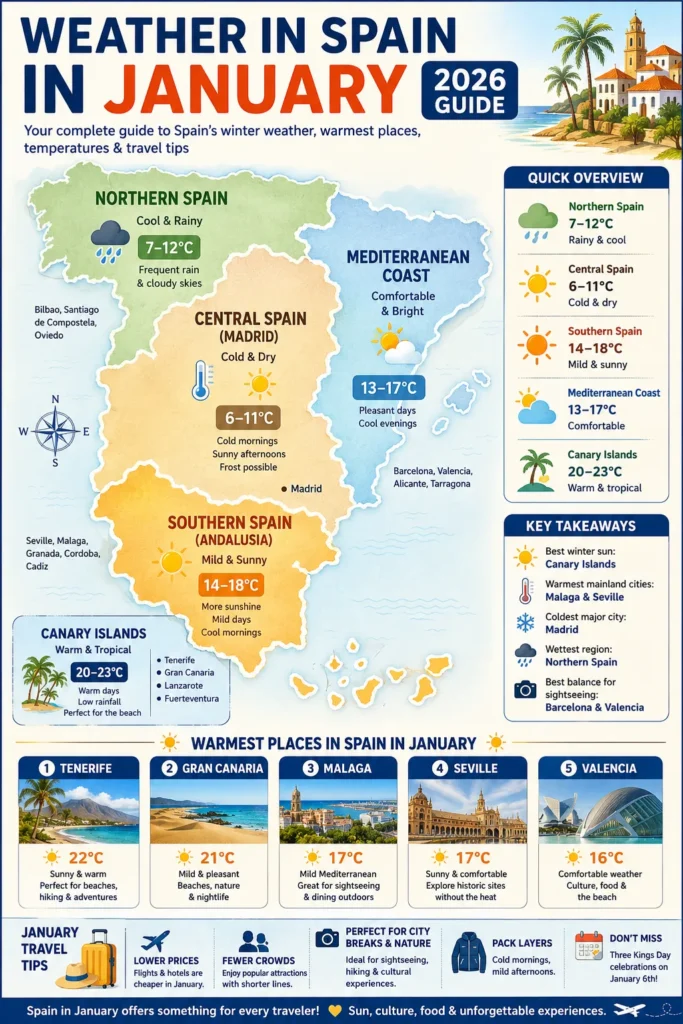
Quick Overview of Spain’s January Climate
| Region | Weather Style | Average Day Temperature |
| Northern Spain | Rainy and cool | 7–12°C |
| Central Spain | Cold and dry | 6–11°C |
| Southern Spain | Mild and sunny | 14–18°C |
| Mediterranean Coast | Comfortable and bright | 13–17°C |
| Canary Islands | Warm and spring-like | 20–23°C |
In general:
- Northern Spain is wetter and colder
- Madrid and inland areas can feel freezing at night
- Southern Spain stays relatively mild
- The Canary Islands offer the best winter weather
Is Spain Warm in January?
Southern Spain can feel pleasantly mild during the day, especially in Andalusia and the Canary Islands. However, mornings and nights are often cold.
If you are expecting tropical beach weather across mainland Spain, you may be disappointed. But compared to most of Europe, Spain remains one of the best winter destinations.
Mini Summary
- Best winter sun: Canary Islands
- Best city weather: Malaga and Seville
- Coldest major city: Madrid
- Wettest region: Northern Spain
- Best balance for sightseeing: Barcelona and Valencia
Is January a Good Time to Visit Spain?
Yes — January is actually one of the smartest times to visit Spain if you value affordability, fewer tourists, and authentic local experiences.
Many travelers only think about Spain during summer. But winter offers advantages that experienced travelers love.
Why Travelers Love Spain in January
1. Fewer Tourists
Tourist hotspots like Barcelona, Seville, Granada, and Madrid become far less crowded.
You can:
- Visit museums comfortably
- Avoid long attraction lines
- Enjoy quieter streets
- Take better photos
- Experience local culture more naturally
2. Lower Prices
January is part of Spain’s low travel season.
You can often save money on:
- Hotels
- Flights
- Train tickets
- Vacation rentals
- Tours
Luxury hotels especially become much cheaper compared to summer.
3. Better Sightseeing Weather
Summer in Spain can become extremely hot, especially in Andalusia. January temperatures are much more comfortable for walking and exploring cities.
4. Winter Festivals & Traditions
January includes:
- Three Kings Day celebrations
- Winter food festivals
- Seasonal markets
- Local cultural events
Downsides of Visiting Spain in January
There are also a few disadvantages.
Pros
- Lower costs
- Fewer crowds
- Mild weather in the south
- Excellent city-break season
- Ski season in full swing
Cons
- Shorter daylight hours
- Cold mornings
- Rain in northern Spain
- Some beach towns feel quiet
- Swimming limited outside Canary Islands
Mini Summary
January is ideal for travelers who prefer culture, food, sightseeing, and affordable travel rather than hot beach vacations.
Average Temperatures in Spain in January
Temperatures vary dramatically depending on the city and region.
Spain Weather in January by City
| City | Average High | Average Low | Weather Type |
| Madrid | 10°C | 2°C | Cold and dry |
| Barcelona | 14°C | 6°C | Mild coastal |
| Seville | 17°C | 6°C | Sunny and pleasant |
| Malaga | 17°C | 8°C | Mild Mediterranean |
| Valencia | 16°C | 7°C | Comfortable |
| Bilbao | 12°C | 5°C | Cool and rainy |
| Granada | 13°C | 2°C | Cold mornings |
| Alicante | 17°C | 7°C | Sunny coastal |
| Tenerife | 22°C | 16°C | Warm and tropical |
Northern Spain Weather in January
Northern Spain includes regions like:
- Basque Country
- Galicia
- Asturias
- Cantabria
This area is greener because it receives more rain.
What to Expect
- Frequent rain showers
- Cloudy skies
- Cold evenings
- Humid conditions
- Beautiful green landscapes
Cities like Bilbao and Santiago de Compostela can feel much colder due to humidity and wind.
Best For
- Food lovers
- Nature travelers
- Authentic local culture
- Winter photography
Not Ideal For
- Beach holidays
- Guaranteed sunshine
- Warm outdoor travel
Central Spain Weather in January
Central Spain includes:
- Madrid
- Toledo
- Segovia
- Castilla regions
Winter here feels much colder than coastal Spain.
Typical Conditions
- Cold mornings
- Frost possible
- Sunny afternoons
- Dry climate
- Large day-to-night temperature changes
Madrid often surprises travelers because sunshine can make daytime feel pleasant while evenings become freezing.
Insider Tip
Locals dress in layers because temperatures change dramatically throughout the day.
Southern Spain Weather in January
Southern Spain is the best mainland region for winter travel.
Areas include:
- Seville
- Malaga
- Costa del Sol
- Cadiz
- Granada
- Cordoba
Why Southern Spain Is Popular in Winter
- More sunshine
- Mild daytime temperatures
- Outdoor dining
- Less rain
- Beautiful winter light
Best Southern Cities in January
Seville
One of Spain’s best winter cities thanks to sunny weather and fewer crowds.
Malaga
Excellent for beach walks, food, and cultural tourism.
Granada
Cold mornings but magical winter atmosphere, especially with snowy Sierra Nevada views.
Mini Summary
If you want warmth without flying to the Canary Islands, Andalusia is your best choice.
Canary Islands Weather in January
The Canary Islands are Spain’s ultimate winter sun destination.
Located off the coast of northwest Africa, these islands enjoy warm temperatures year-round.
Average January Temperatures
| Island | Average High | Weather |
| Tenerife | 22°C | Sunny |
| Gran Canaria | 21°C | Mild |
| Lanzarote | 21°C | Dry and windy |
| Fuerteventura | 21°C | Great beaches |
Can You Swim in the Canary Islands in January?
Yes.
Many travelers swim comfortably, especially during sunny afternoons.
Sea temperatures are cooler than summer but still manageable.
Best Activities
- Beach vacations
- Whale watching
- Hiking
- Surfing
- Volcano tours
- Remote work escapes
Why the Canary Islands Outrank Most European Winter Destinations
Compared to mainland Europe, the Canary Islands offer:
- More sunshine
- Warmer weather
- Lower rainfall
- Better beach conditions
This is why many Europeans spend winter holidays there.
Warmest Places in Spain in January
If your goal is winter sunshine, these are the best destinations.
1. Tenerife
The warmest and most versatile winter destination.
Perfect for:
- Beaches
- Hiking
- Families
- Couples
- Digital nomads
2. Gran Canaria
Excellent mix of beaches, resorts, mountains, and nightlife.
3. Malaga
One of mainland Spain’s warmest cities with strong winter sunshine.
4. Seville
Warm enough for comfortable sightseeing almost every day.
5. Alicante
Affordable winter destination with sunny Mediterranean weather.
6. Valencia
Great balance between weather, food, culture, and lower costs.
Coldest Places in Spain in January
Some regions experience genuine winter conditions.
Cold Areas Include
- Pyrenees
- Sierra Nevada mountains
- Castilla y León
- Inland Aragón
- High-altitude villages
Does It Snow in Spain in January?
Yes — snow is common in:
- Mountain regions
- Ski resorts
- Northern elevations
Snow occasionally reaches Madrid and nearby regions too.
Best Places to Visit in Spain in January
Barcelona
Barcelona is quieter in winter, making it ideal for:
- Architecture
- Museums
- Food tours
- Photography
January Advantage
You can enjoy Gaudí attractions without massive summer crowds.
Madrid
Perfect for:
- Art museums
- Tapas culture
- Shopping
- Day trips
January sales season also creates excellent shopping opportunities.
Seville
Seville shines during winter.
Summer temperatures can become unbearable, but January feels comfortable and relaxing.
Granada
Granada combines:
- Historic atmosphere
- Flamenco culture
- Snowy mountain views
- Affordable winter travel
Malaga
A top choice for travelers wanting sunshine and relaxed coastal vibes.
Tenerife
The ultimate escape from European winter.
Hidden Gems Locals Love in January
Most tourists stick to famous cities. But winter is ideal for discovering lesser-known destinations.
Ronda
Beautiful cliffside town with dramatic winter scenery.
Cadiz
Sunny coastal atmosphere with authentic Andalusian culture.
Cartagena
Historic Mediterranean port city with fewer tourists.
Altea
Charming whitewashed village near Alicante.
La Palma
Quiet Canary Island perfect for hiking and nature.
Insider Tip
Smaller Spanish towns feel more authentic during winter because they are not overwhelmed by tourists.
Can You Swim in Spain in January?
Mainland Spain
Usually too cold for comfortable swimming.
Sea temperatures are chilly along:
- Barcelona
- Valencia
- Malaga
- Alicante
Some brave travelers still swim briefly.
Canary Islands
Yes — swimming is realistic here.
Best islands for winter beach weather:
- Tenerife
- Gran Canaria
- Fuerteventura
Snippet Answer
Can you swim in Spain in January?
Swimming is usually too cold on mainland Spain, but the Canary Islands stay warm enough for swimming, surfing, and beach vacations during January.
What to Wear in Spain in January
Packing incorrectly is one of the biggest mistakes travelers make.
Spain’s weather changes dramatically by region.
Essential Packing List
Mainland Spain
- Winter coat
- Sweaters
- Long pants
- Waterproof jacket
- Comfortable walking shoes
- Scarf
- Layers
For Southern Spain
- Light jacket
- Sweaters for evenings
- Sunglasses
- Comfortable sneakers
For Canary Islands
- T-shirts
- Swimwear
- Light hoodie
- Sandals
- Sunscreen
Insider Packing Advice
Layering is critical because mornings can feel freezing while afternoons become sunny and warm.
Best Things to Do in Spain in January
1. Explore Spain’s Major Cities
Winter is excellent for:
- Museums
- Architecture tours
- Historic neighborhoods
- Food markets
2. Experience Tapas Culture
January is perfect for cozy food experiences.
Must-try dishes include:
- Patatas bravas
- Jamón ibérico
- Croquetas
- Churros with chocolate
- Cocido madrileño
3. Visit Ski Resorts
Spain surprises many travelers with excellent skiing.
Top ski areas:
- Sierra Nevada
- Baqueira-Beret
- Formigal
4. Enjoy Winter Sun in the Canary Islands
Perfect for:
- Beach days
- Volcano hikes
- Catamaran tours
- Surfing
5. Attend Three Kings Day Celebrations
Celebrated on January 6th across Spain.
Expect:
- Parades
- Local festivals
- Traditional sweets
- Family events
espana vs Other European Destinations in January
espana vs Italy
Spain is often cheaper and sunnier in winter.
Spain vs Greece
Greece becomes quieter and cooler during January, while southern Spain remains more active.
Spain vs Portugal
Portugal offers similar weather, but Spain provides greater regional variety.
Spain vs France
Spain is generally warmer and more affordable during winter.
Mini Summary
Spain is one of Europe’s best all-around winter destinations because it combines:
- Culture
- Food
- Mild weather
- Beaches
- Mountains
- Affordable travel
Budget Travel Guide for Spain in January
January is excellent for budget travelers.
Ways to Save Money
1. Travel After Three Kings Day
Prices often drop significantly after January 6th.
2. Use High-Speed Trains Early
Booking AVE trains early can save large amounts.
3. Stay Outside Tourist Centers
Areas slightly outside city centers are much cheaper.
4. Visit Free Museums
Many museums offer free entry hours.
Average Daily Budget
| Travel Style | Daily Budget |
| Budget | €50–90 |
| Mid-range | €120–220 |
| Luxury | €300+ |
Luxury Travel Guide for Spain in January
Winter is underrated for luxury travel.
Why Luxury Travelers Love January
- Better hotel availability
- Lower suite prices
- Fine dining reservations easier
- More personalized service
Best Luxury Destinations
- Marbella
- Madrid
- Barcelona
- Tenerife resorts
- Seville boutique hotels
Luxury Experiences
- Michelin-star dining
- Wine tours
- Private flamenco shows
- Spa resorts
- Yacht charters in Canary Islands
Best Hotels & Areas to Stay
Madrid
Best areas:
- Salamanca
- Sol
- Gran Vía
Barcelona
Best areas:
- Eixample
- Gothic Quarter
- Gràcia
Seville
Best areas:
- Santa Cruz
- El Arenal
Malaga
Best areas:
- Historic Center
- La Malagueta
Tenerife
Best resort zones:
- Costa Adeje
- Los Cristianos
Food You Must Try in Spain During January
Winter food in Spain is comforting and rich.
Traditional Winter Dishes
Cocido Madrileño
Hearty stew from Madrid.
Fabada Asturiana
Bean stew popular in northern Spain.
Churros con Chocolate
Classic winter breakfast or late-night snack.
Calçots (Catalonia)
Seasonal grilled onions served with sauce.
Turrón
Traditional sweet often available through January.
Transport Tips for Spain in January
Spain has one of Europe’s best transport systems.
Best Ways to Travel
High-Speed Trains
AVE trains connect:
- Madrid
- Barcelona
- Seville
- Valencia
- Malaga
Domestic Flights
Useful for Canary Islands travel.
Car Rental
Great for Andalusia road trips.
Winter Driving Warning
Mountain areas may require caution during snow conditions.
Safety, Laws & Etiquette
Spain is generally very safe for tourists.
Safety Tips
- Watch for pickpockets in tourist zones
- Keep bags secure
- Avoid empty nightlife areas late at night
Etiquette Tips
- Dinner starts late
- Greet politely
- Respect siesta culture in smaller towns
- Dress modestly in religious sites
Spain in January for Families, Couples & Solo Travelers
Families
Best destinations:
- Tenerife
- Valencia
- Malaga
Couples
Most romantic winter cities:
- Seville
- Granada
- Barcelona
Solo Travelers
Best for solo travel:
- Madrid
- Valencia
- Malaga
Spain’s excellent transport network makes solo travel easy.
Common Tourist Mistakes to Avoid
1. Underestimating the Cold
Many travelers assume all of Spain stays warm.
2. Packing Only Light Clothes
Layering is essential.
3. Ignoring Regional Differences
Northern Spain and Canary Islands feel completely different.
4. Forgetting Shorter Daylight Hours
Winter sunsets arrive earlier.
5. Booking Canary Islands Late
Winter demand becomes very high.
Insider Tips Most Tourists Miss
Visit Attractions Early
Winter mornings are quiet and perfect for sightseeing.
Use January Sales
Spain’s winter shopping discounts are excellent.
Mix Cities With Nature
Combine Madrid or Barcelona with mountain or coastal destinations.
Explore Smaller Towns
Winter reveals Spain’s authentic local lifestyle.
Take Advantage of Restaurant Availability
Many famous restaurants become easier to book.
Future Travel Trends for Spain in 2026
Spain continues growing as a year-round destination.
Key Trends
- Winter digital nomad travel
- Off-season luxury tourism
- Slow travel experiences
- Eco-tourism in smaller towns
- Long-stay Canary Islands trips
Travelers increasingly prefer quieter and more authentic experiences, making January more popular every year.
FAQ About Weather in Spain in January
Is Spain hot in January?
No, but southern Spain and the Canary Islands stay mild and sunny compared to most of Europe.
What is the warmest place in Spain in January?
The Canary Islands are the warmest destination in Spain during January.
Is Barcelona cold in January?
Barcelona is cool but generally comfortable during daytime hours.
Does it snow in Spain in January?
Yes. Snow is common in mountain regions and ski resorts.
Is January a cheap time to visit Spain?
Yes. January is one of the cheapest months for hotels and flights.
Can you go to the beach in Spain in January?
Yes, especially in the Canary Islands and southern coastal areas, although mainland sea temperatures remain cold.
Is Madrid worth visiting in January?
Absolutely. Madrid offers excellent museums, food, shopping, and fewer tourists during winter.
Conclusion
The weather in Spain in January depends entirely on where you go — and that is exactly what makes Spain such an incredible winter destination.
You can experience snowy mountains in the morning, sunny tapas terraces in the afternoon, and beach sunsets in the Canary Islands by evening. Few countries in Europe offer this level of climate diversity during winter.
If you want winter sunshine, head south or visit the Canary Islands. If you love culture, museums, food, and authentic local experiences, cities like Madrid, Seville, Barcelona, and Granada become even more enjoyable in January thanks to fewer crowds and lower prices.
January is not just a “good” time to visit Spain — for many visitors , it is actually one of the smartest times to go.
For more expert Spain travel guides, hidden gems, itineraries, food tips, and seasonal travel advice, visit more articles on VisitEspanly.com.